


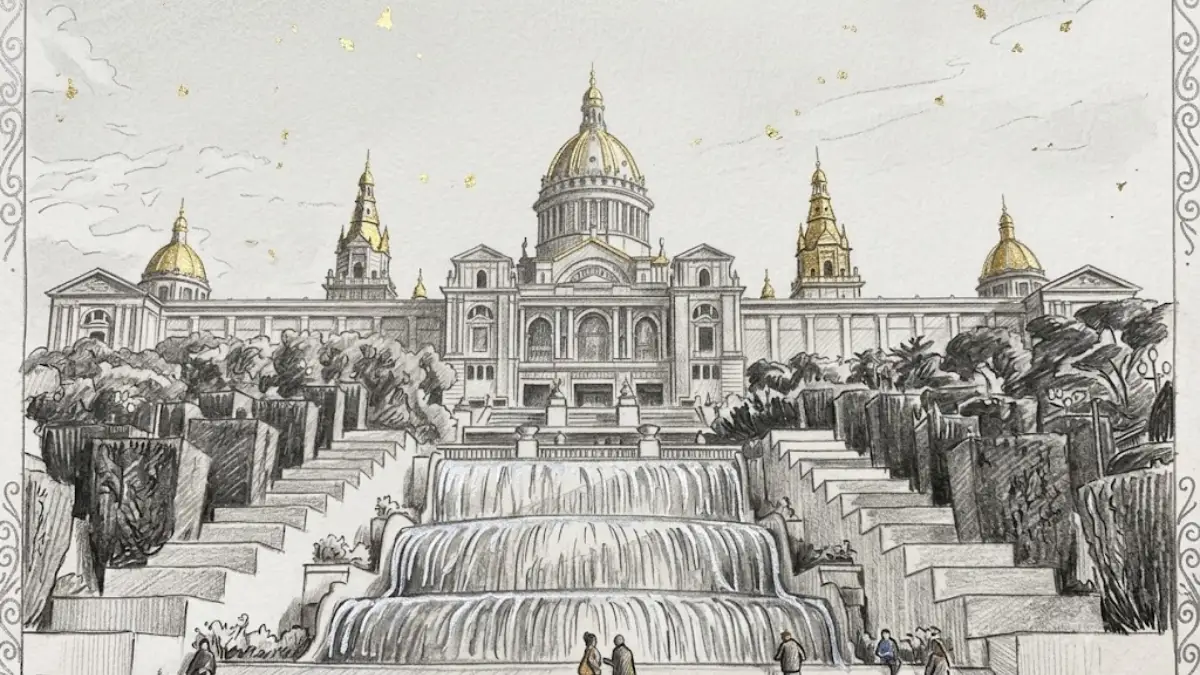
The MNAC (Museu Nacional d’Art de Catalunya) is the great museum of Catalan art, in the imposing Palau Nacional on Montjuïc. It spans a thousand years of art, from Romanesque to the 20th century, and holds the world’s finest collection of Romanesque mural painting. General admission costs €12 (valid two days, includes collection, temporary exhibitions and rooftop viewpoint); it’s free on Saturdays from 3 pm and the first Sunday of the month, and for under-16s and over-65s. Closed on Mondays. It’s easy to reach from Plaça Espanya (metro L1/L3).
Other museums in Barcelona…
- Museu Picasso Barcelona
- Fundació Joan Miró
- MACBA Barcelona
- MEAM Barcelona
- Museo Marítimo Barcelona
- CosmoCaixa Barcelona
- CaixaForum Barcelona
- Fundació Antoni Tàpies Barcelona
- MUHBA Barcelona

What is the MNAC?
Crowning the hill of Montjuïc, at the top of the Avinguda de la Reina Maria Cristina and the Magic Fountain, stands the Palau Nacional, home to the Museu Nacional d’Art de Catalunya, the MNAC. It’s the most important museum of Catalan art and one of the great museums of Spain: a journey through more than a thousand years of history, from medieval Romanesque art to the avant-gardes of the 20th century. Its Romanesque mural painting collection is considered the finest in the world, and from its rooftop terraces you get one of the most spectacular panoramas in Barcelona. Art and views in a single monumental building.
The Palau Nacional, a monumental building
The museum occupies the Palau Nacional, built for the 1929 International Exhibition to a design by architects Eugenio Cendoya and Enric Catà. Classicist and monumental in style, it was the main venue of the Exhibition and, since 1934, has housed the museum. Its great central dome, inspired by St Peter’s Basilica in the Vatican, dominates the Montjuïc skyline. Just climbing the staircase from the Magic Fountain, with the city at your feet, is worth the trip.
What to see at the MNAC?
Romanesque art: the museum’s jewel
The MNAC’s Romanesque mural painting collection is considered the most important in the world. It gathers the frescoes of the churches of the Catalan Pyrenees (especially the Boí Valley, a UNESCO World Heritage Site), removed in the early 20th century to save them and reinstalled in the museum reproducing the original apses. The Pantocrator of Sant Climent de Taüll is the most iconic image of Catalan medieval art.
Gothic, Renaissance and Baroque
The route continues with an outstanding collection of Catalan and European Gothic art, and with Renaissance and Baroque rooms displaying works by great international masters such as El Greco, Velázquez, Zurbarán, Titian, Cranach and Rubens.
Modern art: Modernisme and the avant-gardes
The modern art section covers the 19th century and the first half of the 20th, with a special focus on Catalan Modernisme and Noucentisme. It includes painting, sculpture, photography, poster art and decorative arts, with Modernista furniture designed by Antoni Gaudí and works by artists such as Ramon Casas, Santiago Rusiñol and Isidre Nonell. It’s the best overview of Catalonia’s contribution to modern art.
The rooftop viewpoints
Don’t leave without going up to the Palau Nacional’s rooftop terraces, included with your ticket: they offer a 360° view over the Avinguda Maria Cristina, the Venetian Towers, Plaça d’Espanya, the city and the Mediterranean. It’s one of the best viewpoints in Barcelona.
What are the MNAC opening hours in 2026?
| Season | Days | Hours |
|---|---|---|
| Winter (October – April) | Tuesday to Saturday | 10:00 – 18:00 |
| Winter (October – April) | Sundays and holidays | 10:00 – 15:00 |
| Summer (May – September) | Tuesday to Saturday | 10:00 – 20:00 |
| Summer (May – September) | Sundays and holidays | 10:00 – 15:00 |
| Monday | — | Closed (except holidays) |
How much does it cost to enter the MNAC in 2026?
| Ticket type | Price (2026) |
|---|---|
| General admission (collection + temporary + viewpoint) | €12 |
| Basic ticket (building, viewpoint and self-guided visit only) | €2 |
| Under 16s and over 65s | Free |
| Saturdays from 3 pm | Free (online booking) |
| First Sunday of each month and open-door days | Free (online booking) |
💡 Tip: make the most of the free entry on Saturday afternoons (from 3 pm) and the first Sunday of the month, but book online in advance, as capacity is limited and fills up. If you’re seeing several museums, the Articket BCN includes the MNAC alongside the Fundació Miró, the Picasso Museum, the MACBA, the Tàpies Foundation and the CCCB.
How to get to the MNAC?
The MNAC is in the Palau Nacional, in the Parc de Montjuïc, right above Plaça d’Espanya.
| Transport | Line / Detail | Stop |
|---|---|---|
| Metro | L1 and L3 | Espanya (+ walk up the staircase) |
| Bus | Line 55 (to the museum) · 150 (Parc de Montjuïc) | Museu Nacional / Parc de Montjuïc |
| Bus Turístic | Red Route | MNAC |
| Escalators | From Plaça d’Espanya up the Avinguda Maria Cristina | Free, up to the museum |
From Plaça Espanya (metro L1/L3) you can walk up the Avinguda de la Reina Maria Cristina, past the Magic Fountain, using the escalators that take you almost to the door. It’s the most spectacular approach, with the Palau Nacional rising up before you.
Practical tips for your visit
- Allow 2 to 3 hours for the collection; it’s very large, so prioritise the sections that interest you most (the Romanesque is a must).
- General admission is valid for two days within a month: you can split the visit if it’s a lot in one go.
- Book online for the free windows (Saturdays from 3 pm and the first Sunday of the month), which fill up.
- Don’t miss the rooftop terraces: they’re included with the ticket and offer one of the best views in the city.
- Combine it with other Montjuïc must-sees: the Fundació Joan Miró, the Poble Espanyol, the Magic Fountain or Montjuïc Castle.
- The approach up the Avinguda Maria Cristina and the escalators, especially at sunset, is part of the experience.
What to see near the MNAC on Montjuïc
| Place | Why visit |
|---|---|
| Magic Fountain of Montjuïc | Right at the foot of the museum: water, light and music show (in season) |
| Fundació Joan Miró | The largest collection of the artist, a few minutes away |
| Poble Espanyol | Open-air museum with 117 buildings from across Spain |
| Mies van der Rohe Pavilion | A masterpiece of modern architecture, next to the square |
| Montjuïc Castle | 17th-century fortress with sea views |
Hotel Arc La Rambla, your base for the MNAC and Montjuïc
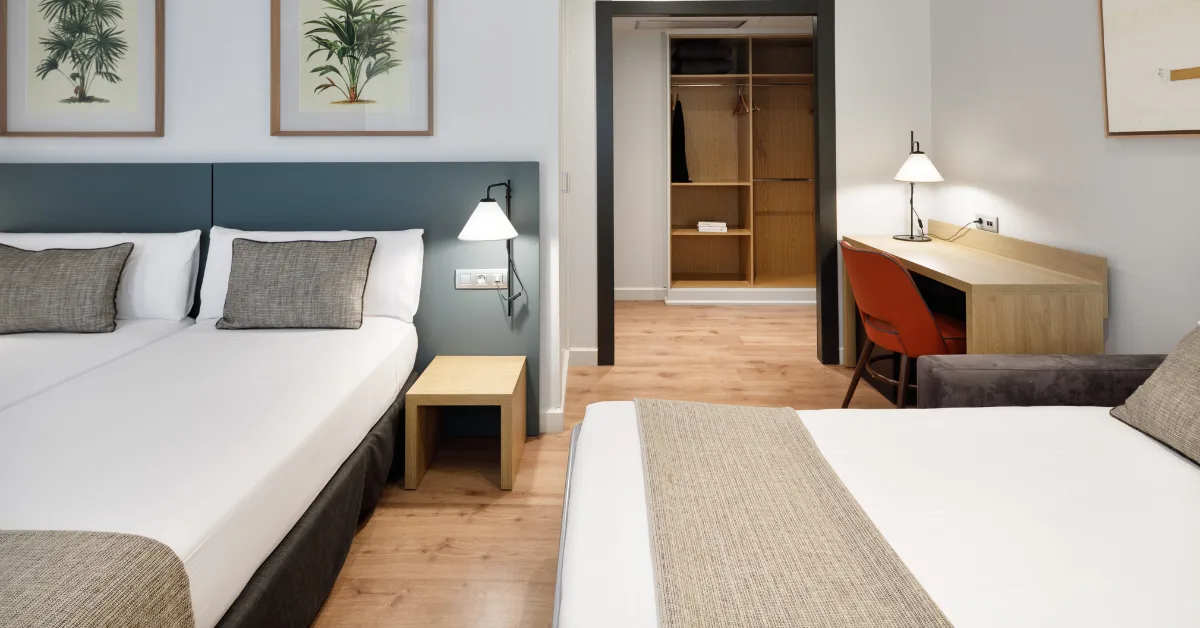
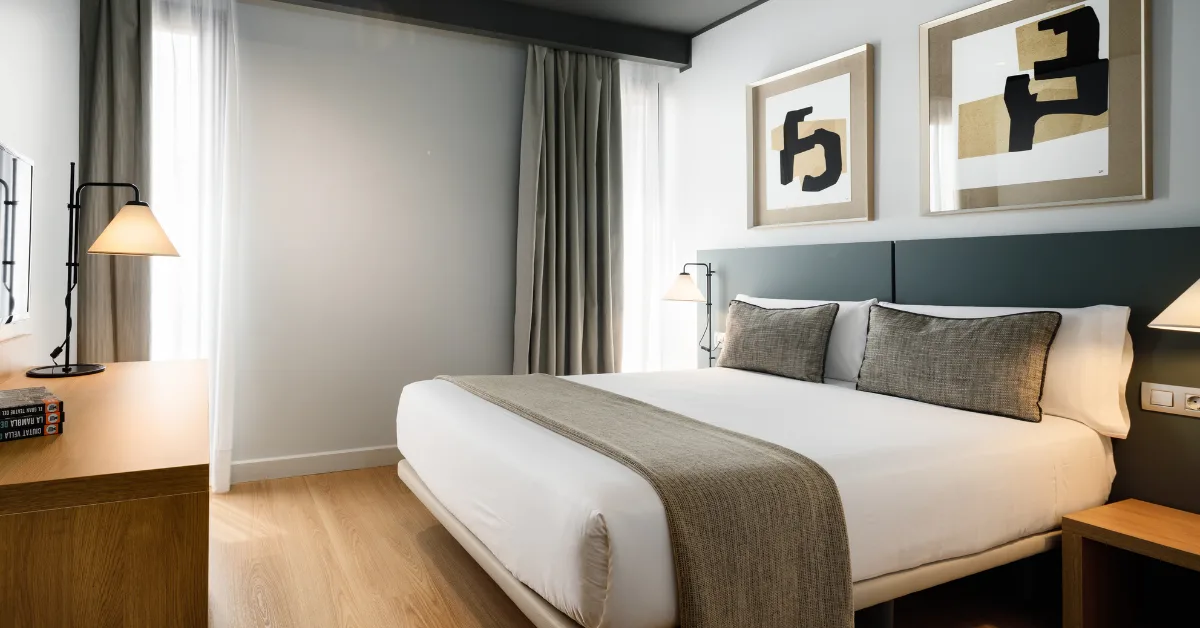
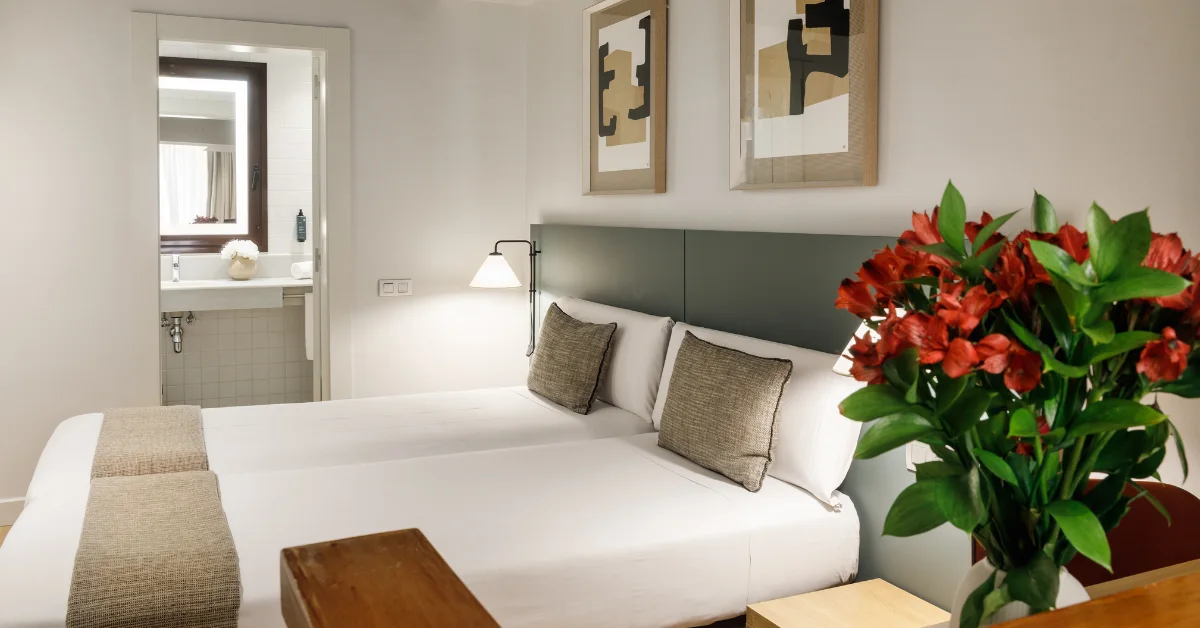
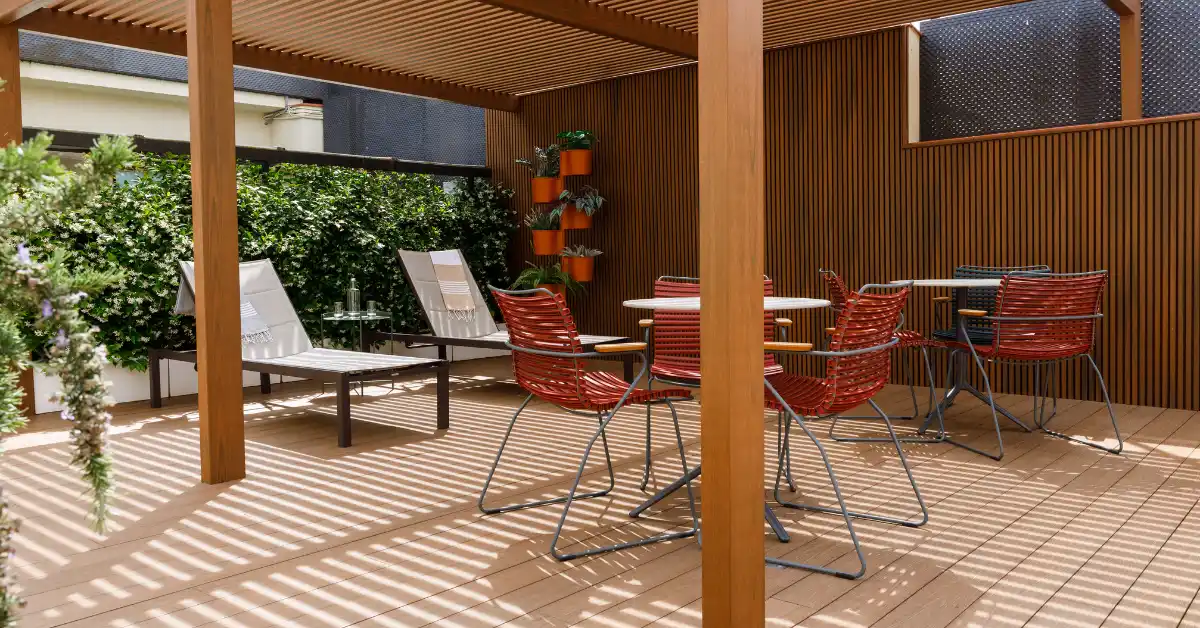
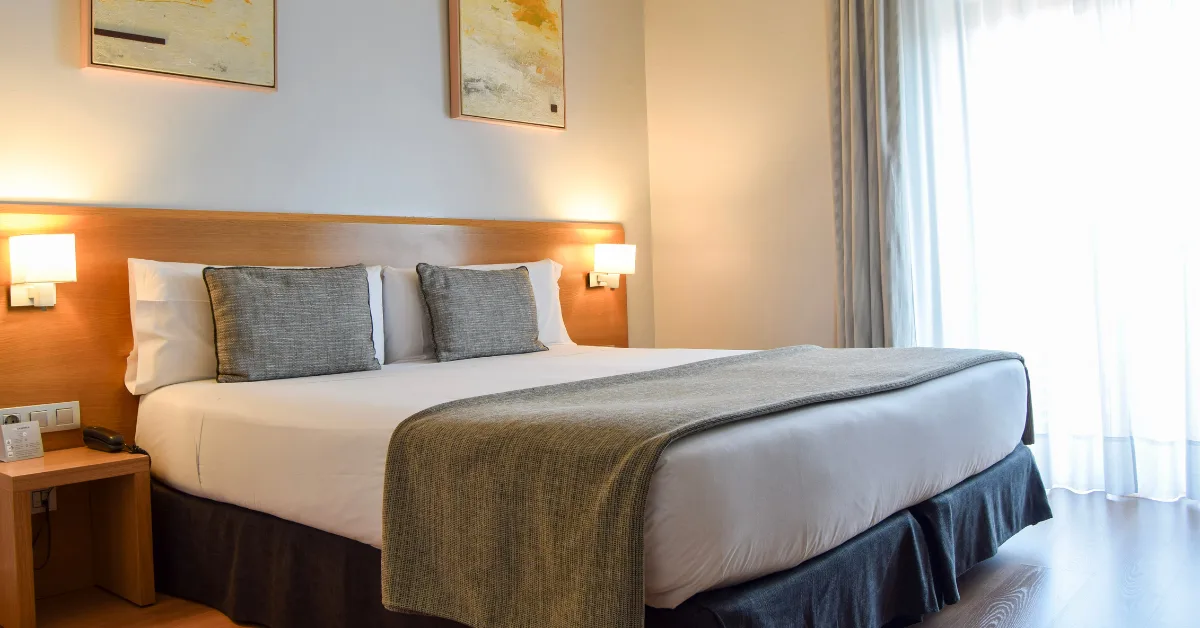
From Hotel Arc La Rambla (La Rambla 19-21, next to Drassanes metro, L3), the MNAC is very handy: connect to Plaça d’Espanya (L1/L3) and walk up the Avinguda Maria Cristina to the Palau Nacional. A perfect base for spending a day on Montjuïc —MNAC, Miró, Poble Espanyol, the Magic Fountain— and returning to the centre to enjoy the Gothic Quarter, the harbour and La Boqueria, all steps from the hotel.
💡 Book on our website with the code ARCBLOG and enjoy a special perk as a blog reader.

MNAC — frequently asked questions
How much does it cost to enter the MNAC?
General admission costs €12 and includes the permanent collection, the temporary exhibitions and the rooftop viewpoints (valid for two days within a month). There’s a basic ticket of €2 (building, viewpoint and self-guided visit only). Under-16s and over-65s enter free. It’s also free on Saturdays from 3 pm and the first Sunday of each month.
What are the MNAC opening hours?
In winter (October-April) it opens Tuesday to Saturday from 10:00 to 18:00 and Sundays and holidays from 10:00 to 15:00. In summer (May-September), Tuesday to Saturday from 10:00 to 20:00 and Sundays and holidays from 10:00 to 15:00. Closed on Mondays (except holidays), 1 January, 1 May and 25 December.
When is the MNAC free?
Every Saturday from 3 pm, the first Sunday of each month and on open-door days. Also for under-16s and over-65s. In all cases it’s best to book online in advance, as capacity is limited.
What are the highlights of the MNAC?
Its Romanesque mural painting collection, considered the finest in the world, with the frescoes of the Catalan Pyrenees and the Pantocrator of Sant Climent de Taüll. Also notable are the Gothic art, the Renaissance and Baroque rooms (El Greco, Velázquez, Rubens) and the Catalan modern art (Modernisme and avant-gardes), plus the rooftop viewpoints.
How do you get to the MNAC?
By metro to Espanya (L1/L3), walking up the Avinguda Maria Cristina with the escalators, or by bus (lines 55 and 150) and the Bus Turístic (Red Route).


