


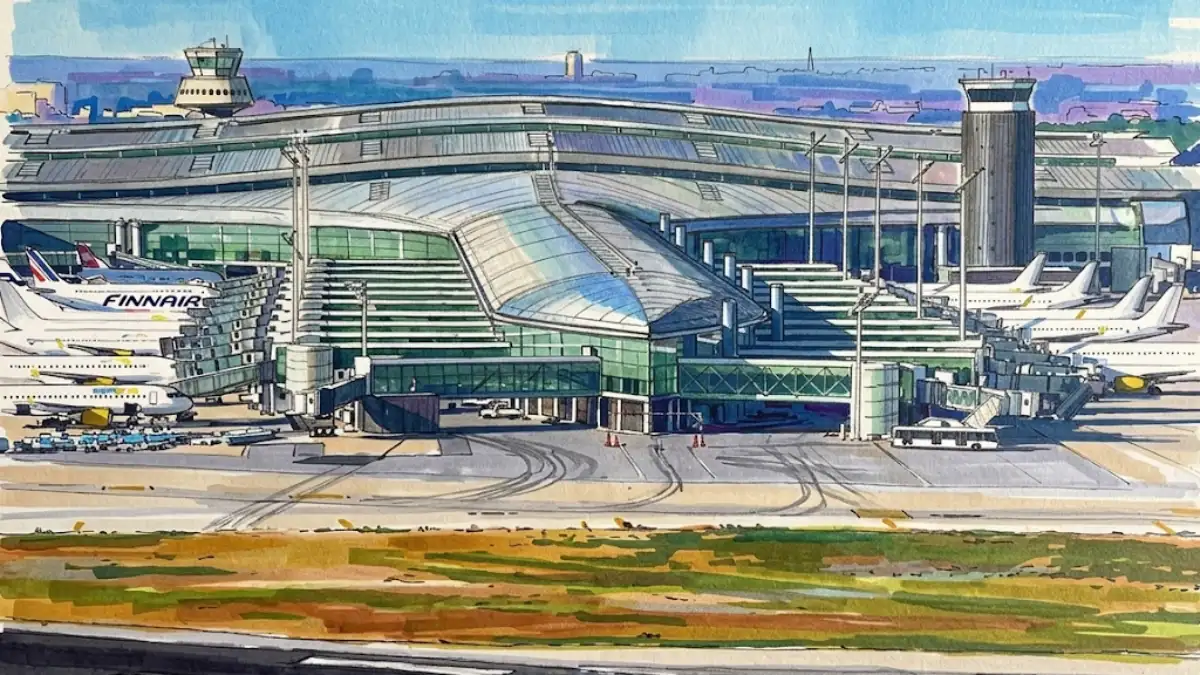
Josep Tarradellas Barcelona-El Prat airport is about 15 km from the centre and has two terminals, T1 and T2, linked by a free shuttle bus. There are four ways into the city: the Aerobús (the most direct, around 35 min to Plaça de Catalunya, from both terminals), the L9 Sud metro (from both terminals, but it requires a special airport ticket), the R2 Nord train (from T2 only, to Sants and Passeig de Gràcia) and a taxi (about 30 min). The cheapest option is the city bus 46, though it’s also the slowest.

The terminals: T1 and T2
Before deciding how to get into town, check which terminal you land at: it determines which options you actually have to hand.
- T1: the main, more modern terminal, used by most major airlines. It has the metro (L9) and the Aerobús, but no train station.
- T2: split into three modules (T2A, T2B and T2C), it mainly handles low-cost carriers. It has the metro, the Aerobús and, unlike T1, a Renfe train station.
💡 A free shuttle bus runs between the terminals — an easily spotted green vehicle. If you land at T1 and want the train, you’ll need it: allow an extra 10-15 minutes plus waiting time.
Getting to the centre: a comparison
| Option | Terminals | Duration | Indicative cost | Best if… |
|---|---|---|---|---|
| Aerobús | T1 and T2 | ~35 min to Plaça de Catalunya | Mid-high | You want the most direct route, no stairs |
| L9 Sud metro | T1 and T2 | ~30-45 min depending on destination | Mid (special ticket) | Your hotel is near the L9 or its interchanges |
| R2 Nord train | T2 only | ~25 min to Sants | Mid-low | You’re heading to Sants, Passeig de Gràcia or onwards across Catalonia |
| Bus 46 | T1 and T2 | ~40-50 min to Plaça d’Espanya | The cheapest | You’re travelling light and not in a hurry |
| Taxi / private hire | T1 and T2 | ~30 min (traffic depending) | The most expensive | There are several of you, you land late or you have lots of luggage |
The metro: line L9 Sud
L9 Sud (the orange line) stops at both terminals: Aeroport T1 and Aeroport T2. It’s a driverless, automated metro and works well if your accommodation is near one of its interchanges.
The key point is that L9 Sud doesn’t reach the centre directly: you always need to change. These are the interchanges:
| Change at | Connects with | Takes you towards |
|---|---|---|
| Zona Universitària | L3 (green) | Passeig de Gràcia, Plaça de Catalunya, Liceu, Drassanes |
| Collblanc | L5 (blue) | Sagrada Família, Hospital de Sant Pau |
| Torrassa | L1 (red) | Plaça de Catalunya, Arc de Triomf |
| Europa | Fira | L8 and FGC | Plaça d’Espanya |
The train: R2 Nord
Renfe’s R2 Nord commuter line connects the airport with the centre in around 25 minutes to Sants. Its useful city stops are Barcelona-Sants, Passeig de Gràcia and El Clot-Aragó.
⚠️ Watch out for this: the train station is located in T2 only. If you land at T1, you first have to take the free shuttle bus, which adds time and cancels out part of the advantage.
Trains run roughly every 30 minutes, and the service doesn’t cover the whole night: the first departures are around 5:40 am and the last shortly before midnight. If your flight lands very late or leaves at dawn, rule this one out.
💡 A little-known advantage: the R2 Nord doesn’t only serve the centre — it connects to the whole Rodalies network. If your final destination is Sitges, Tarragona or anywhere along the coast, you can head straight there without going into central Barcelona.
City and night buses
TMB’s bus 46 is the cheapest option: an ordinary city bus on the standard integrated fare, linking both terminals with Plaça d’Espanya. In exchange, it’s the slowest and least comfortable if you have large suitcases.
For dawn flights there are night buses (lines N17 and N18, among others), covering the route when the metro and train aren’t running. They’re the budget alternative to a taxi at unsociable hours, but expect long journeys and wide gaps between services.
Taxis and private hire
Barcelona’s taxis are yellow and black, and the ranks are right outside both terminals, clearly signposted. The trip into the centre takes around 30 minutes depending on traffic.
It’s the priciest option, but also the most practical in several cases: if there are three or four of you (split between you, it competes with the Aerobús), if you arrive in the small hours, if you’re travelling with young children or with a lot of luggage. Note that there are surcharges for airport departure, luggage and night or holiday travel.
💡 Always take a taxi from the official rank. Avoid anyone approaching you inside the terminal offering a transfer.
Practical tips
- Check your terminal on your boarding pass before choosing transport: it changes what’s available.
- If you’ll use public transport a lot, consider an unlimited-travel tourist card that includes the airport journey: it usually pays off from the second or third day.
- Buy your Aerobús ticket online if you’re arriving at peak time and want to skip the queue.
- Allow generous margin on the way back: at rush hour, traffic towards the airport can stretch the Aerobús or taxi journey considerably.
- The airport is fully equipped: food outlets, pharmacies and shops in both terminals, handy if you face a wait.
- Dawn flights: check actual timetables beforehand, as the metro and train don’t run continuously through the night on weekdays.
Getting to Hotel Arc La Rambla from the airport
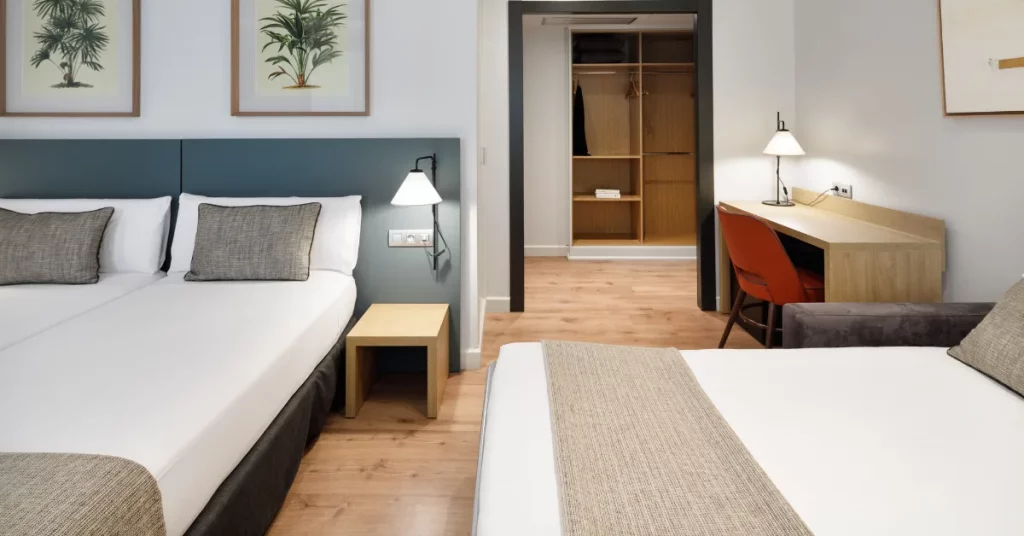
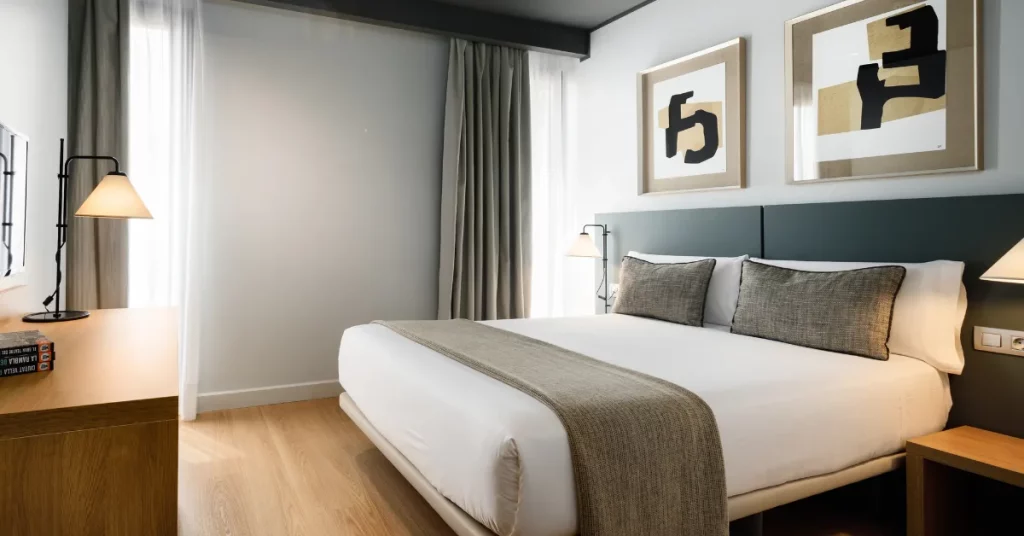
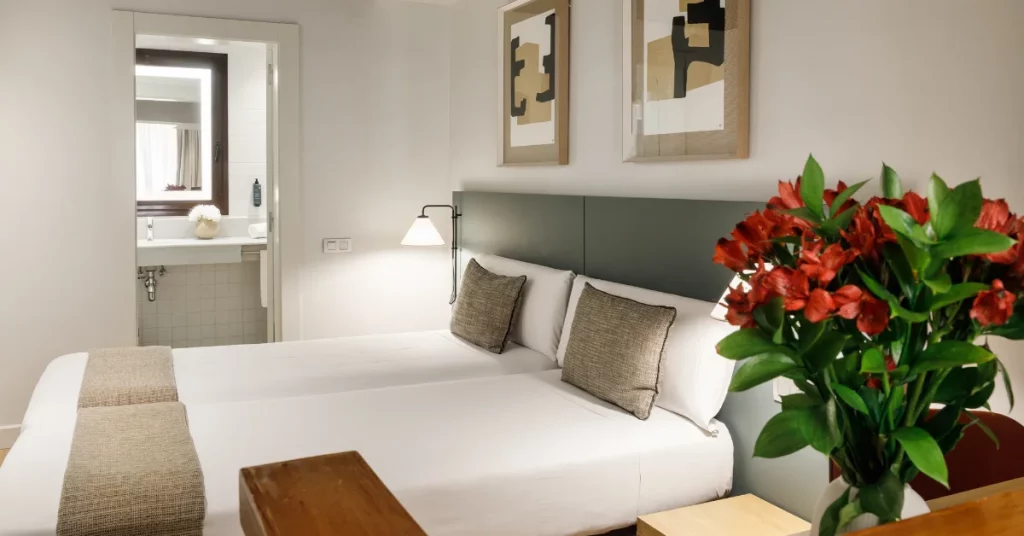
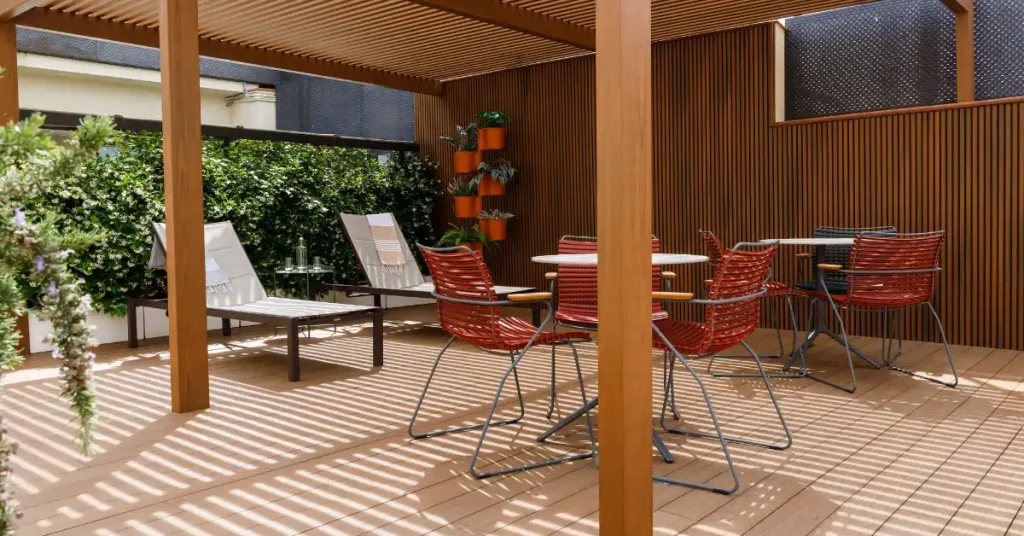
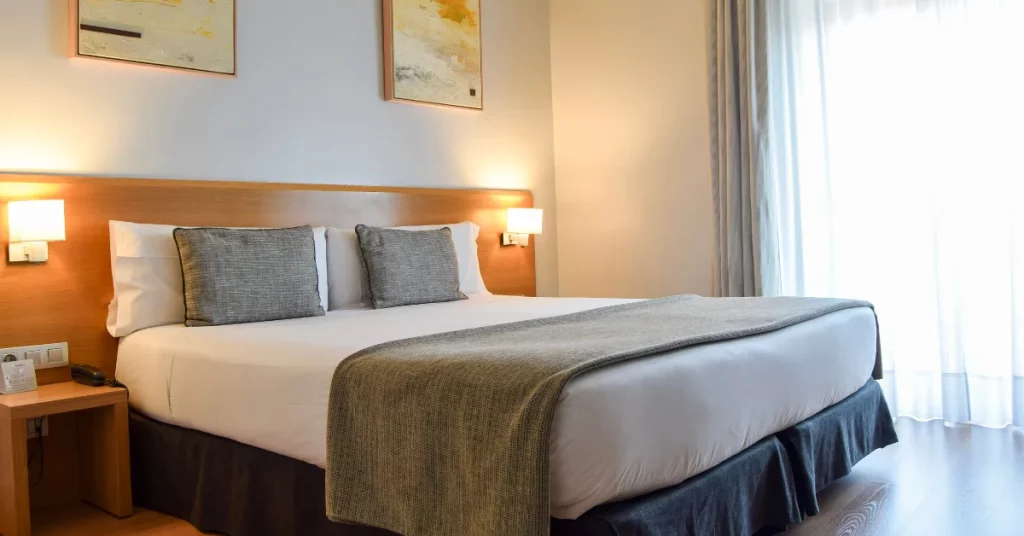
Hotel Arc La Rambla is at La Rambla 19-21, next to Drassanes (L3) metro station, right in the historic centre. There are three easy ways to reach it:
| Option | Route | Approximate time |
|---|---|---|
| Aerobús | To Plaça de Catalunya, then walk down Las Ramblas | ~35 min + 10-12 min on foot |
| Metro | L9 Sud → change at Zona Universitària → L3 to Drassanes | ~45 min, without leaving the metro |
| Train + metro | R2 Nord (from T2) to Passeig de Gràcia or Sants → L3 to Drassanes | ~40 min |
| Taxi | Straight to the hotel door | ~30 min |
If it’s your first time in Barcelona and you’re loaded with bags, the simplest option is the Aerobús to Plaça de Catalunya: from there the hotel is a straight walk down Las Ramblas, with no stairs and no changes. And once you’ve checked in, that same L3 running past the door will take you directly to Passeig de Gràcia, Sants or Plaça d’Espanya for your day trips.
💡 Book on our website with the code ARCBLOG and enjoy a special perk as a blog reader.
Barcelona airport — frequently asked questions
How do you get from Barcelona airport to the city centre?
There are five options. The Aerobús is the official express service and reaches Plaça de Catalunya in about 35 minutes from both terminals. The L9 Sud metro also runs from both terminals, though it always requires a change. Renfe’s R2 Nord train reaches Sants in around 25 minutes, but only departs from T2. City bus 46 is the cheapest option, and a taxi is the fastest and priciest, at around 30 minutes.
Is the T-casual valid on the airport metro?
No. The Aeroport T1 and Aeroport T2 stations on line L9 Sud have their own fare regime and require the specific airport ticket. Neither single tickets nor the T-casual are valid on that section, and if you enter with another fare the gates won’t let you out at the terminal. There are, however, unlimited-travel tourist cards that include the airport journey.
How long does it take from the airport to central Barcelona?
Between 25 and 50 minutes depending on how you travel. The R2 Nord train reaches Sants in about 25 minutes, a taxi takes around 30 depending on traffic, the Aerobús about 35 to Plaça de Catalunya, the metro between 30 and 45 depending on destination and changes, and city bus 46 between 40 and 50 minutes to Plaça d’Espanya.
Does the airport train run from both terminals?
No. The Renfe train station is located in Terminal 2 only. Anyone landing at Terminal 1 must first take the free shuttle bus linking the two terminals, which adds 10 to 15 minutes plus waiting time. The Aerobús and the metro, by contrast, do stop at both terminals.
What’s the cheapest way from the airport to the centre?
TMB’s city bus 46, which charges the standard integrated public transport fare and links both terminals with Plaça d’Espanya. It’s the most economical option, but also the slowest and least comfortable with bulky luggage. Next in price come the commuter train and the metro, while the Aerobús and taxis are the more expensive alternatives.


