


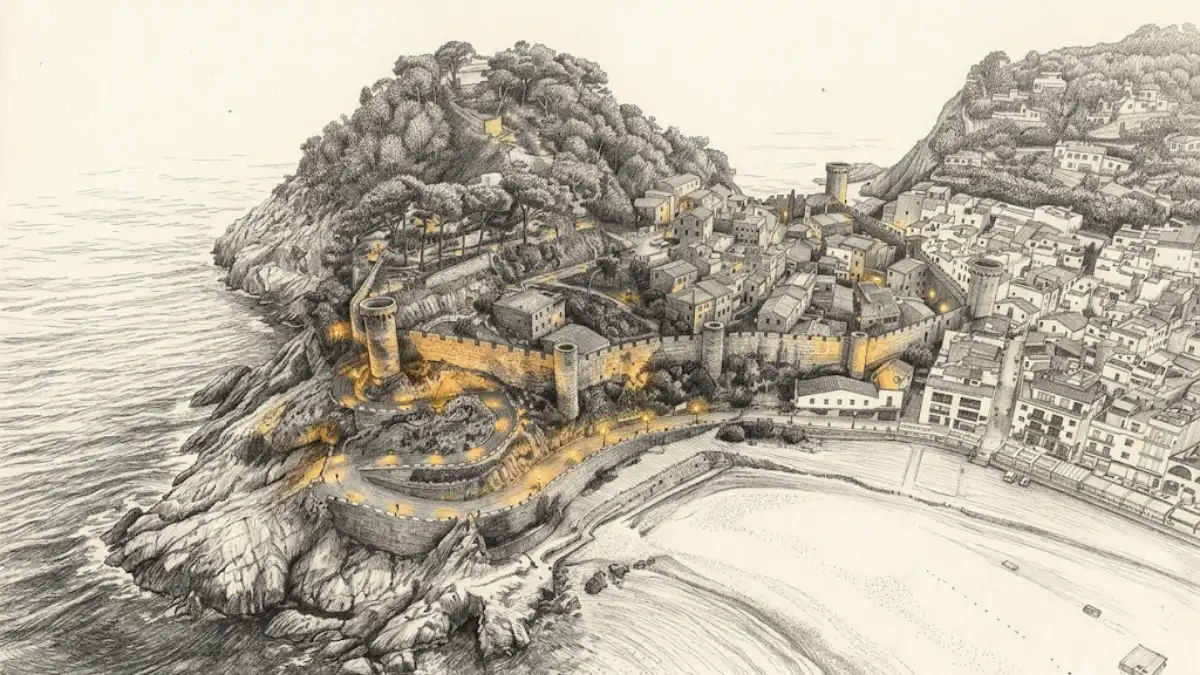
Girona is one of the best day trips from Barcelona: it’s about 100 km away and the high-speed train gets you there in under 40 minutes (a little over an hour by regional train). Its great asset is a spectacularly preserved medieval old town, with the cathedral —whose Gothic nave is the widest in European medieval architecture—, El Call, one of the best-preserved Jewish quarters in Europe, the colourful houses along the River Onyar, the Arab baths and a walk along the city walls. Everything is walkable and the station is right in the centre. One well-planned day covers the essentials comfortably.
Other excursions…

Why make this trip?
Girona is the perfect escape for anyone who has already seen the best of Barcelona and wants a different Catalonia: older, slower and on a human scale. Its Barri Vell (old town) is a maze of cobbled lanes, staircases and courtyards where Christian, Jewish and Muslim cultures coexisted for centuries, and you can still read that mix in the stones today.
Compared with other day trips, it has three very concrete advantages:
- It’s remarkably quick: under 40 minutes by high-speed train.
- The station is central: you step off the train and you’re in the old town in 10-15 minutes on foot. No changes, no taxis, no buses.
- It isn’t overcrowded: even in high season you can stroll with a comfort that’s unthinkable in central Barcelona.
And as a bonus for international visitors: much of the old town has been used as a filming location for films and TV series, which has boosted its popularity in recent years. There are even guided routes focused on the locations.
How to get to Girona from Barcelona
| Option | Departs from | Duration | Station to old town |
|---|---|---|---|
| High speed (AVE / AVANT) | Barcelona-Sants | Under 40 minutes | 10-15 min on foot |
| Regional train (MD / Rodalies) | Sants, Passeig de Gràcia or El Clot-Aragó | Between 1 h and 1 h 30 depending on service | 10-15 min on foot |
| Car | — | About 1 h 15 | Better to park outside the centre and walk |
| Organised excursion | — | Half or full day | Transport and guide included |
💡 Tip: buy your high-speed ticket in advance. Fares rise steeply at the last minute and, booking weeks ahead, the gap with the regional train narrows considerably.
How to plan the day: recommended itinerary
The old town is compact and everything is close together, so this route strings the essentials into a logical order, with no backtracking:
| When | Plan |
|---|---|
| On arrival | From the station to the Pont de Pedra, your first postcard of the Onyar houses |
| Mid-morning | Rambla de la Llibertat and into El Call via carrer de la Força |
| Midday | Cathedral and its great staircase; Sant Feliu Basilica |
| Lunch | Plaça de la Independència or around the Rambla |
| Afternoon | Arab baths, Sant Pere de Galligants and the walk along the city walls |
| Sunset | Back to the Pont de Pedra or the Eiffel bridge for the photo in the best light, then home |
What to see in Girona
The Onyar houses
The image everyone associates with Girona: colourful façades leaning over the river, reflected in the water, with the cathedral behind. The best viewpoint is the Pont de Pedra (1856), and the best light is at sunset. One of those houses, Casa Masó —birthplace of the architect Rafael Masó— can be visited inside.
The Eiffel bridge
The Pont de les Peixateries Velles, a red iron footbridge designed by Gustave Eiffel’s company twelve years before the Eiffel Tower. Crossing it is a must and it offers another of the finest river views.
Santa Maria Cathedral
It rises above an imposing Baroque staircase of ninety steps that is itself one of the city’s defining images. Romanesque in origin and layered with centuries of styles, its greatest feat is inside: the widest Gothic nave in all European medieval architecture. The complex includes the cloister and treasury.
El Call, the Jewish quarter
One of the best-preserved Jewish quarters in Europe and, for many, the most memorable part of the visit: a warren of extremely narrow lanes, steps and covered passages barely changed in centuries. Its spine is carrer de la Força, which runs along the line of the old Roman Via Augusta. There you’ll find the Museum of Jewish History, essential for understanding what this community was until its expulsion.
The Arab baths
Despite the name, this is a Romanesque building from the 12th century inspired by Muslim bathhouses. Small, quiet, with a beautifully lit central chamber beneath the dome. A short stop, but a very photogenic one.
Sant Pere de Galligants
One of the finest examples of Catalan Romanesque, with a lovely cloister. It now houses the archaeology branch of the museum, so the visit combines monument and collection.
The walk along the walls
The Passeig de la Muralla runs along the top of the old medieval walls, with towers you can climb and panoramic views over the rooftops, the cathedral and the valley. It’s free and probably the best half hour of the visit. Beware the heat in summer: there’s little shade.
If you have time to spare
- Museu del Cinema: the first of its kind in Spain, with an exceptional collection of pre-cinema devices.
- Sant Feliu Basilica, with its truncated bell tower, another of the city’s recognisable outlines.
- Pujada de Sant Domènec and the Portal de Sobreportes, two of the most photographed corners of the Barri Vell.
Tips to make the trip run smoothly
- Comfortable shoes, no excuses: the Barri Vell is slopes, cobbles and stairs.
- Set off early: arriving mid-morning gives you time for all the essentials at a relaxed pace and an unhurried lunch.
- Save sunset for the Onyar houses: that’s when the reflections are at their best.
- Buy your return ticket, or at least check the timetable: services thin out later in the day.
- Consider a free tour on arrival: El Call and the city’s legends gain enormously from someone telling them.
- In summer, water and a hat: the walk along the walls has little shade.
Hotel Arc La Rambla, with a direct metro to the Girona trains
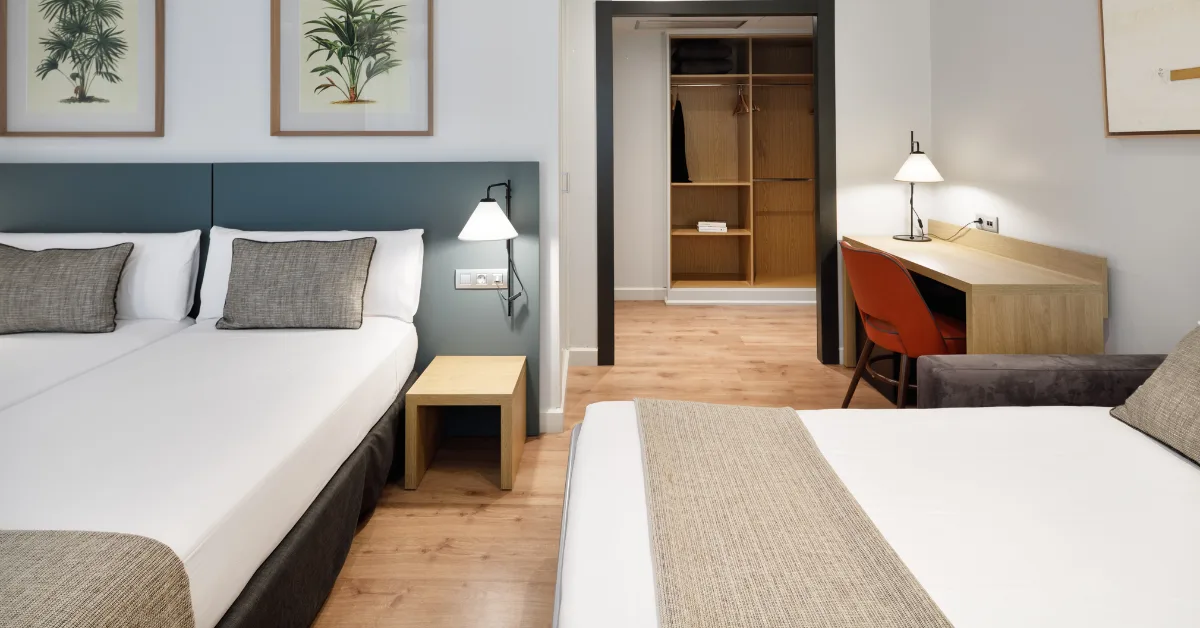
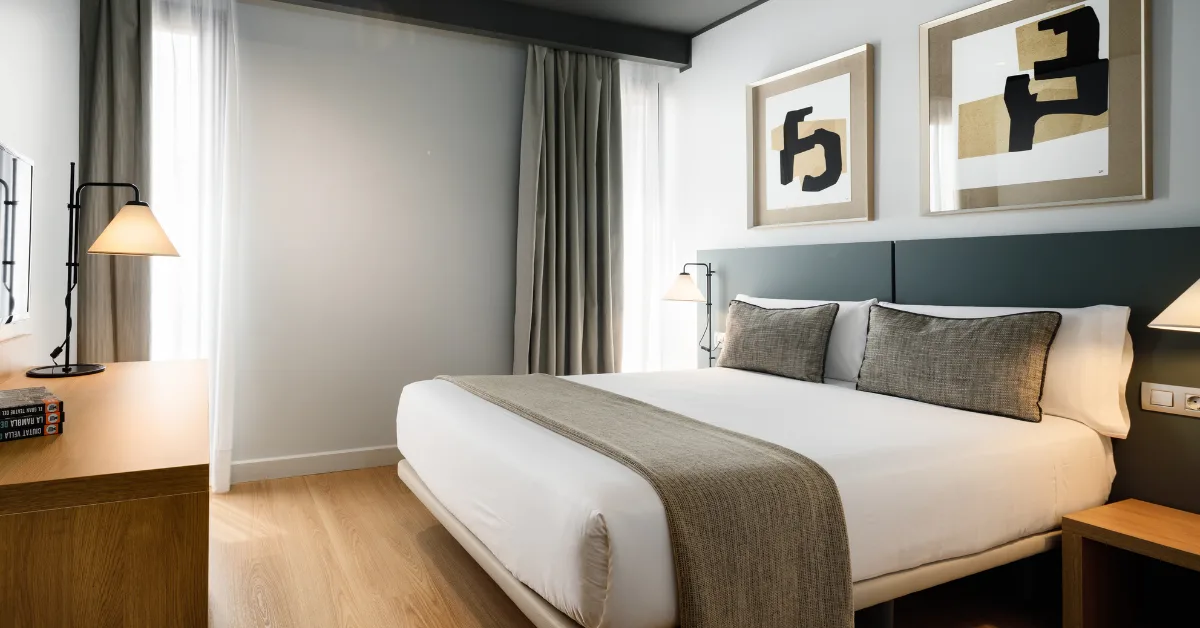
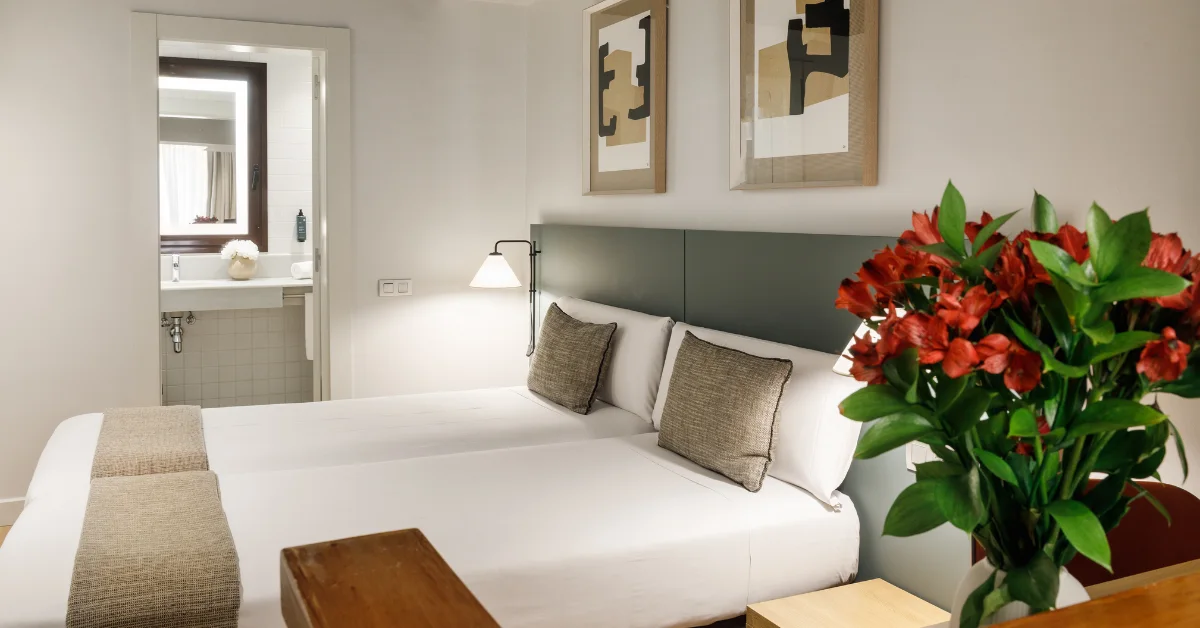
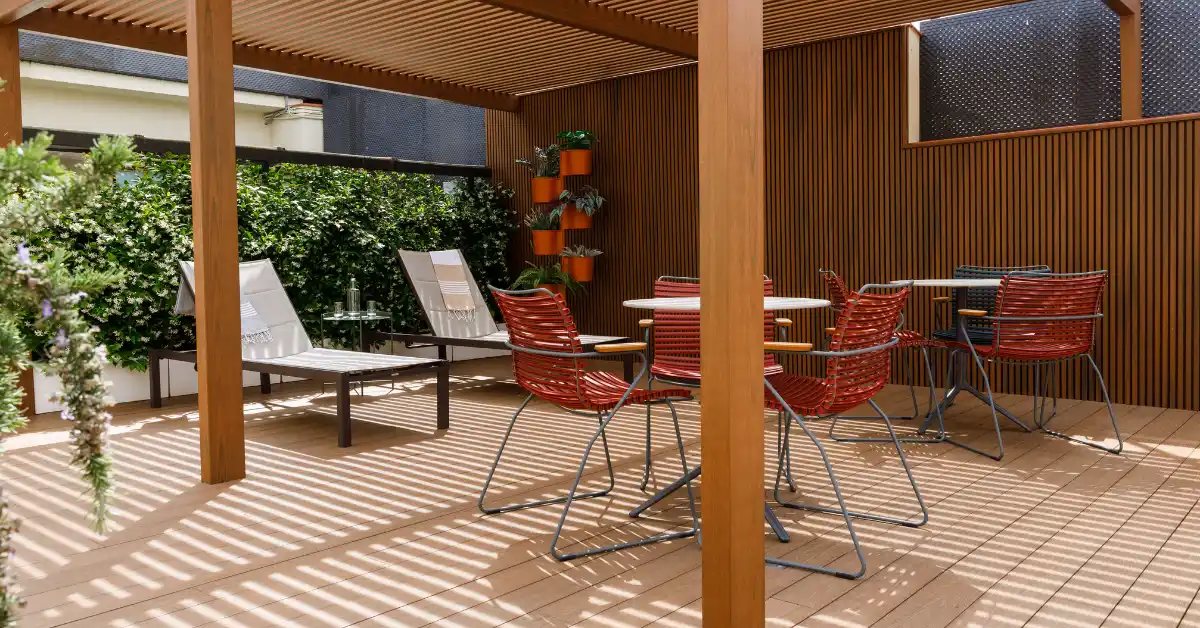
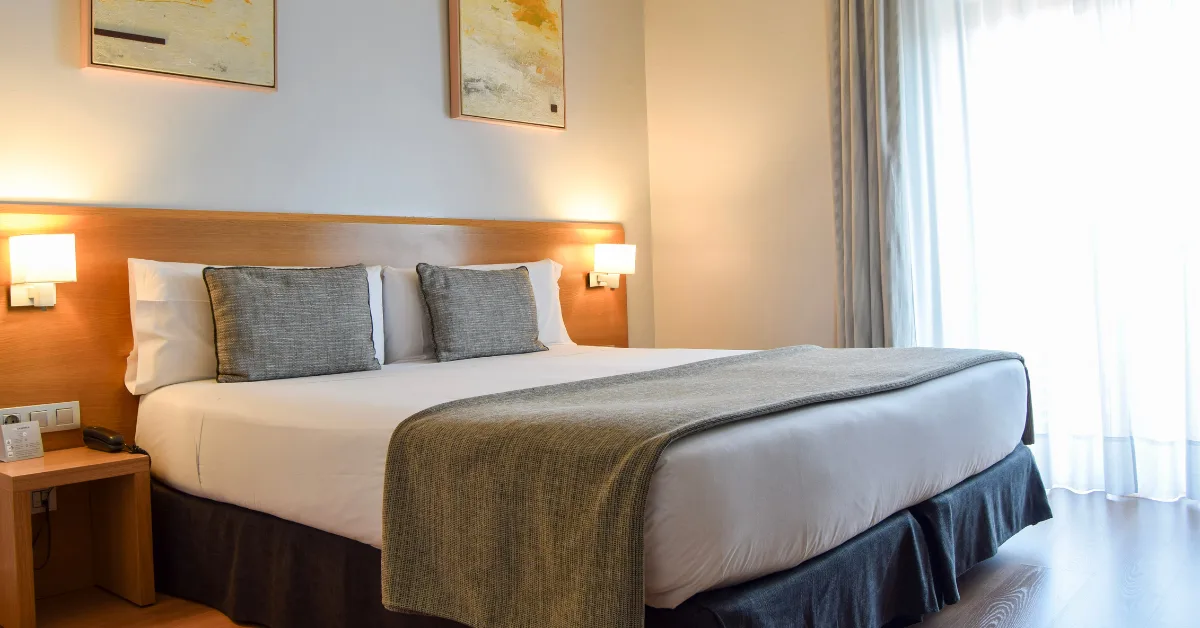
From Hotel Arc La Rambla (La Rambla 19-21, next to Drassanes metro) starting the day is very simple: metro line 3 takes you with no changes to both Barcelona-Sants, where the high-speed trains depart, and Passeig de Gràcia, where the regional trains to Girona also stop. You’re on the platform within minutes.
And since Girona fits comfortably into a day, you’ll have the evening free to enjoy central Barcelona on your return: Las Ramblas, the Gothic Quarter and the harbour are steps from the hotel.
💡 Book on our website with the code ARCBLOG and enjoy a special perk as a blog reader.

Girona day trip — frequently asked questions
How do you get to Girona from Barcelona?
The quickest way is the high-speed train (AVE or AVANT) from Barcelona-Sants, which takes under 40 minutes. There are also regional trains from Sants, Passeig de Gràcia or El Clot-Aragó, taking between one hour and an hour and a half depending on the service. Girona station is right in the centre, about 10-15 minutes’ walk from the old town.
How long do you need to see Girona?
One well-used day is enough for the essentials: the Onyar houses, the cathedral, El Call, the Arab baths and the walk along the walls. Two days let you take the museums slowly and find less-visited corners, but as a day trip from Barcelona it works perfectly in a single day.
What to see in Girona in one day?
The essentials are the colourful houses along the River Onyar seen from the Pont de Pedra, Santa Maria Cathedral and its staircase, El Call or Jewish quarter, the Arab baths, the Romanesque monastery of Sant Pere de Galligants and the walk along the medieval walls, which offers the best views of the city.
Can you visit Girona and Figueres on the same day?
Technically yes, since both are on the same railway line and the journey between them is short, especially by high-speed train. However, it means rushing both. The recommended approach is to give each a day: Figueres if your main interest is the Dalí Museum, and Girona if you’re after atmosphere and medieval heritage.
What’s the best time of year to visit Girona?
Spring and autumn are the best seasons, with comfortable walking temperatures and fewer visitors. May brings Temps de Flors, when courtyards and monuments fill with floral displays: it’s spectacular, but also one of the busiest times of the year, so start early and check the exact dates.


