


Passeig de Gràcia is Barcelona’s most elegant avenue and the “golden mile” of modernisme: a 1.5 km boulevard in the Eixample linking Plaça de Catalunya with the Gràcia district. Its must-sees are Gaudí’s Casa Batlló and La Pedrera, the Casa Amatller and Casa Lleó Morera (which form the Block of Discord), the Pere Falqués lamp-post benches and the luxury shops. Walking it is free; allow 1-2 hours to see it from outside, or 3-4 hours if you go inside Casa Batlló and La Pedrera (book online).
You may also be interested in…

What is Passeig de Gràcia?
Passeig de Gràcia is one of the most important, elegant and emblematic avenues in Barcelona. Set in the heart of the Eixample, it connects Plaça de Catalunya with the Gràcia district and is considered the heart of Catalan modernisme and the city’s “golden mile”. Walking here isn’t just strolling down a shopping street: it’s visiting an open-air museum with some of the most important works by Antoni Gaudí and other great modernista architects such as Puig i Cadafalch and Domènech i Montaner.
Main places to visit on Passeig de Gràcia
| Place | Recommended time | Must-see |
|---|---|---|
| Casa Batlló | 60 min | ⭐⭐⭐⭐⭐ |
| La Pedrera (Casa Milà) | 60 min | ⭐⭐⭐⭐⭐ |
| Casa Amatller | 30 min | ⭐⭐⭐⭐ |
| Casa Lleó Morera | 20 min | ⭐⭐⭐⭐ |
| Pere Falqués lamp-post benches | 10 min | ⭐⭐⭐ |
| Plaça de Catalunya | 30 min | ⭐⭐⭐⭐ |
A little history of Passeig de Gràcia
Passeig de Gràcia began to develop in the 19th century, when Barcelona’s Eixample was designed by Ildefons Cerdà as an orderly extension of the city. Very soon, the Catalan bourgeoisie chose this avenue to build their most luxurious residences, turning it into the epicentre of the social and cultural life of the era. During the height of modernisme, in the late 19th and early 20th centuries, architects like Gaudí transformed the avenue into a permanent showcase of architectural creativity, producing unique buildings that are now World Heritage Sites.
1. Discover Casa Batlló
Casa Batlló is one of Antoni Gaudí’s most famous works and one of the most visited buildings in Barcelona. Its wavy façade, decorated with colourful mosaics and balconies with organic shapes, represents the boundless imagination of Catalan modernisme. Inside, the visit reveals an innovative design based on natural light, ventilation and forms inspired by marine nature. The rooftop, with its sculptural chimneys, is one of the most photographed spots in the city.
Address: Passeig de Gràcia, 43, 08007 Barcelona
2. Visit La Pedrera (Casa Milà)
La Pedrera is another of Gaudí’s great icons. Its undulating stone façade and wrought-iron balconies seem to be in constant motion. It was a revolutionary work in its time thanks to its structure without traditional load-bearing walls. One of its biggest draws is the rooftop, where the chimneys become sculptures that look like stone warriors watching over the city. You can also visit a period apartment recreating bourgeois life in the early 20th century.
Address: Passeig de Gràcia, 92, 08008 Barcelona
3. Admire Casa Amatller
Casa Amatller, designed by Josep Puig i Cadafalch, combines Gothic elements with Catalan modernisme. Its stepped, Flemish-inspired façade and ornamental detailing make it one of the most interesting on the avenue. It’s especially intriguing for its relationship with Casa Batlló, since both are part of the famous “Block of Discord”, where several architects competed to create the most impressive building.
Address: Passeig de Gràcia, 41, 08007 Barcelona
4. Take in Casa Lleó Morera
The work of Lluís Domènech i Montaner, this building stands out for its floral decoration, mosaics and detailed sculptures. It’s one of the most refined examples of Catalan modernisme and, together with Casa Amatller and Casa Batlló, completes the Block of Discord. Although it’s not as well known as Gaudí’s works, its interior and façade show an exceptional level of artistic detail.
Address: Passeig de Gràcia, 35, 08007 Barcelona
5. Notice the Pere Falqués lamp-post benches
One of the most photographed symbols of the avenue are its 32 lamp-post benches, designed by the municipal architect Pere Falqués i Urpí in 1906. They combine a wrought-iron lamp-post with the characteristic modernista coup de fouet and a bench clad in trencadís (ceramic mosaic). They’re often wrongly attributed to Gaudí, but they’re Falqués’s work. Look down at the pavement too: the hexagonal tiles with marine motifs were designed by Gaudí, originally for the interior of Casa Batlló.
6. Pass through Plaça de Catalunya


Plaça de Catalunya is the meeting point between Barcelona’s old town and the Eixample, and the natural start of Passeig de Gràcia. It’s one of the largest and busiest squares in the city, with fountains, sculptures and direct access to the main shopping streets.
Address: Plaça de Catalunya, 08002 Barcelona
7. Explore the shops of the “Golden Mile”
Passeig de Gràcia is also the epicentre of luxury in Barcelona. Here you’ll find international fashion brands, exclusive jewellers and high-end boutiques set in restored modernista buildings. Walking through this area is a unique visual experience, because the architecture is as important as the shop windows.
Tips for visiting Passeig de Gràcia
- Visit early in the morning to avoid the crowds.
- Book tickets online for Casa Batlló and La Pedrera and skip the queues.
- Take time to notice the details: façades, lamp-posts, paving tiles and mosaics.
- Combine your visit with the Eixample, the Gràcia district or the Gothic Quarter.
- Walk the whole route to enjoy the entire avenue.
Hotel Arc La Rambla, your ideal starting point for discovering Barcelona
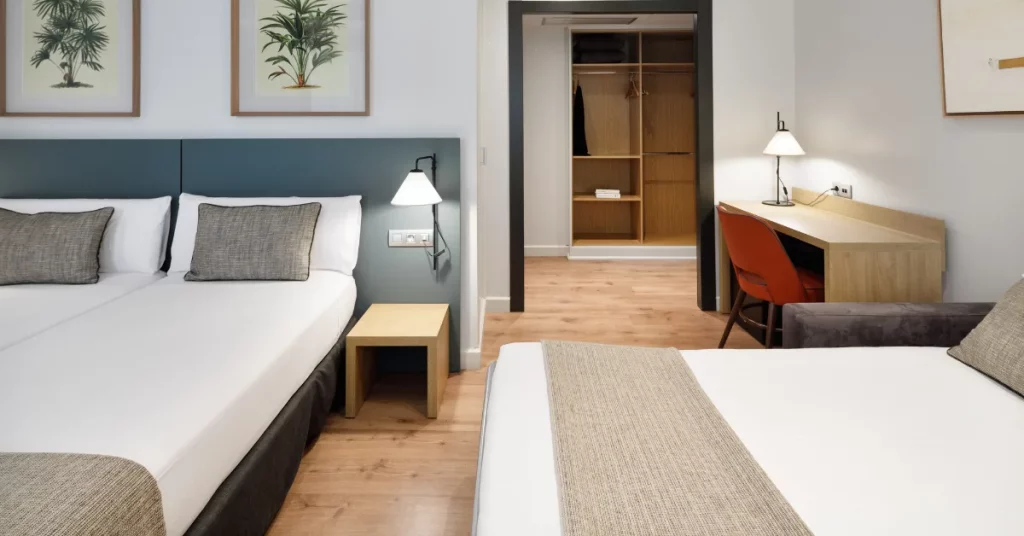
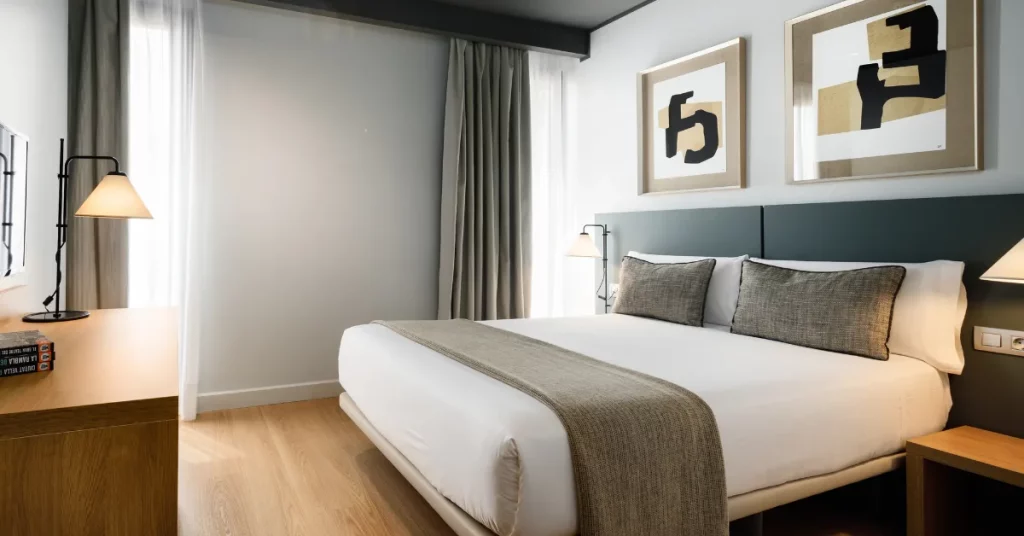
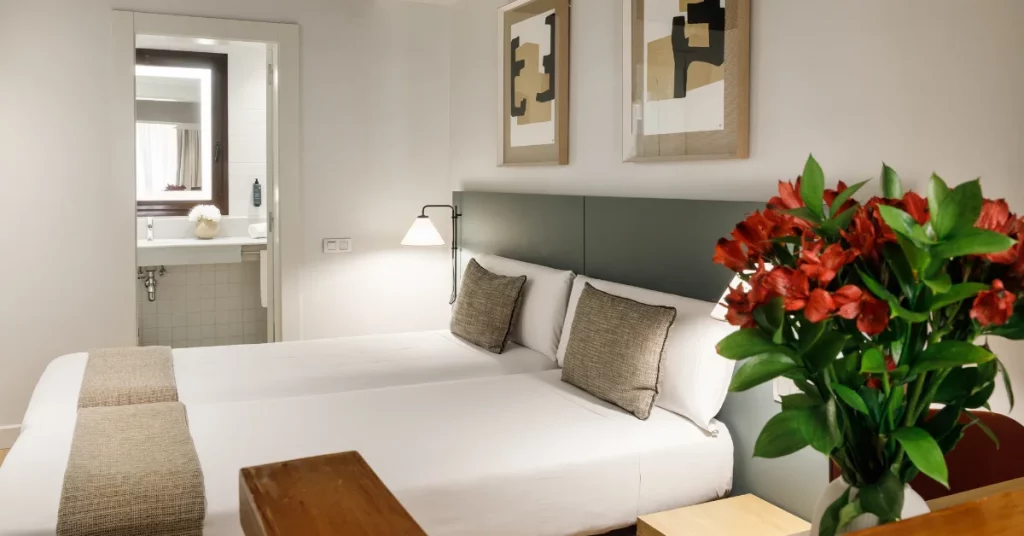
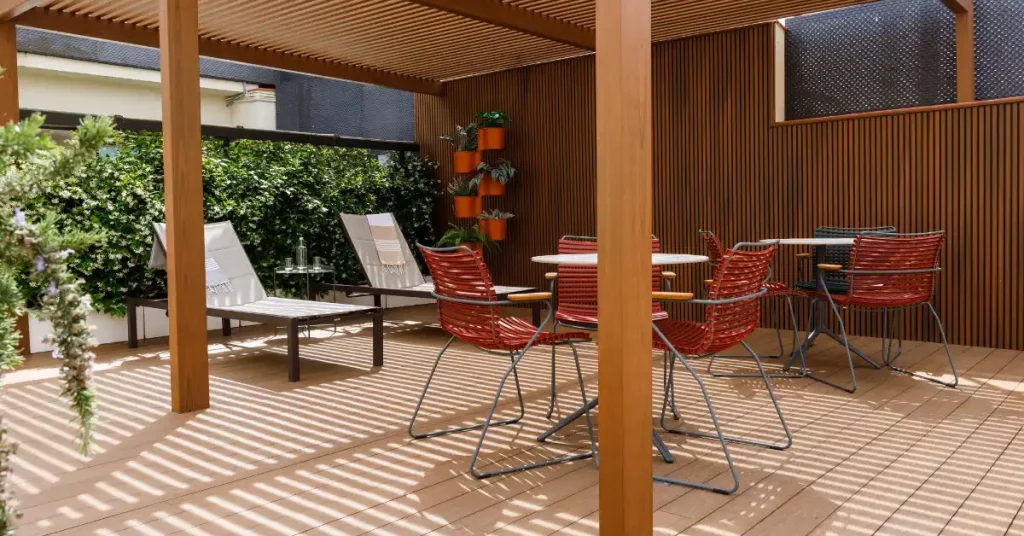
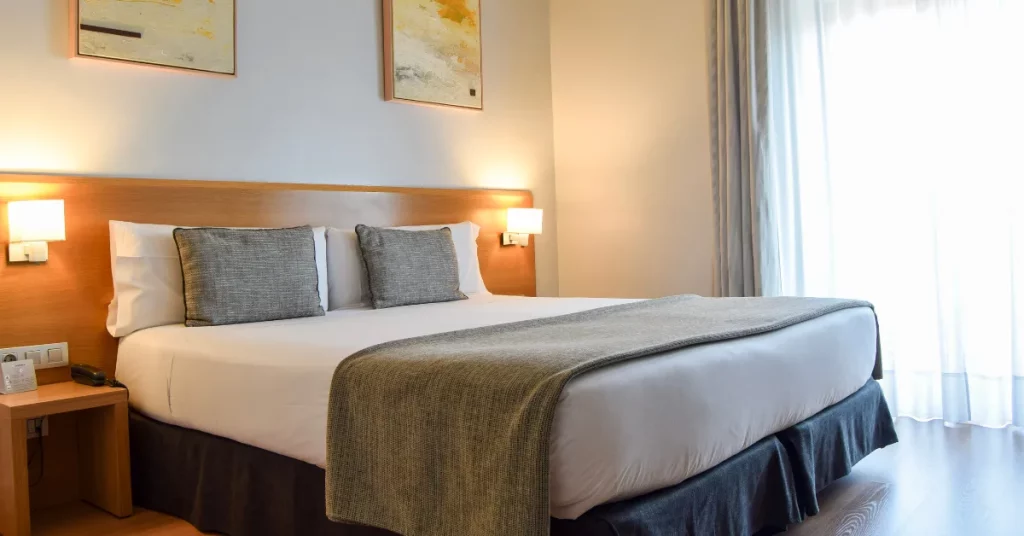
After a day exploring the architecture of Passeig de Gràcia, there’s nothing like returning to a comfortable, well-connected base. Hotel Arc La Rambla (La Rambla 19-21, next to Drassanes metro, L3) is the perfect home base: you’re steps from the Gothic Quarter and Port Vell, and reaching Passeig de Gràcia is easy. You can walk straight up in a pleasant 15-20 minute stroll, or take the green metro line (L3) at Drassanes and reach the Passeig de Gràcia stop in under 10 minutes, coming out right in front of the modernista houses.
💡 Book on our website with the code ARCBLOG and enjoy a special perk as a blog reader.
Passeig de Gràcia — frequently asked questions
How do you get to Passeig de Gràcia from Hotel Arc La Rambla?
On foot, walking straight up Las Ramblas and crossing Plaça de Catalunya, in about 15-20 minutes. By metro, from the Drassanes stop (L3, green) getting off at Passeig de Gràcia in just 4 stops and under 10 minutes, coming out in front of the modernista houses.
How long is Passeig de Gràcia?
It is about 1.5 kilometres long. It starts at Plaça de Catalunya and runs in a straight line through the Eixample to the junction with Avinguda Diagonal, where it connects with the Gràcia district.
How much time do you need to walk it?
To walk the avenue and admire the façades from outside, 1 to 2 hours is enough. If you plan to go inside Casa Batlló or La Pedrera, allow 3 to 4 hours, as each interior visit takes at least an hour.
What is the Block of Discord?
It is the stretch of Passeig de Gràcia, between Carrer d’Aragó and Carrer del Consell de Cent, where three modernista gems of very different styles stand together: Casa Lleó Morera (Domènech i Montaner), Casa Amatller (Puig i Cadafalch) and Casa Batlló (Gaudí). The contrast between them gave the “block” its name.
Is it an expensive area to eat or shop?
Yes, as Barcelona’s “golden mile”, the high-end shops and many restaurants reflect that status. Even so, the avenue is a public space you can enjoy without spending anything, taking in its architecture and the Pere Falqués lamp-posts.
Is it worth visiting?
Absolutely. Passeig de Gràcia is not just a shopping street: it’s an open-air museum of modernista architecture unique in the world, with several World Heritage buildings. It’s a must on any trip to Barcelona.


