


Tarragona is the perfect day trip for anyone wanting Roman history and the sea in the same outing. It was Tarraco, capital of the Roman province of Hispania Citerior, and its archaeological ensemble has been a UNESCO World Heritage Site since 2000. Its iconic image is the Roman amphitheatre overlooking the Mediterranean, but it also preserves a circus, walls, forum, praetorium and a spectacular aqueduct on the outskirts. It’s a regional train ride of just over an hour from Barcelona, and the station is right by the centre. There’s a combined ticket for all the monuments that’s far better value. One day covers the essentials.
Other excursions…

Why make this trip?

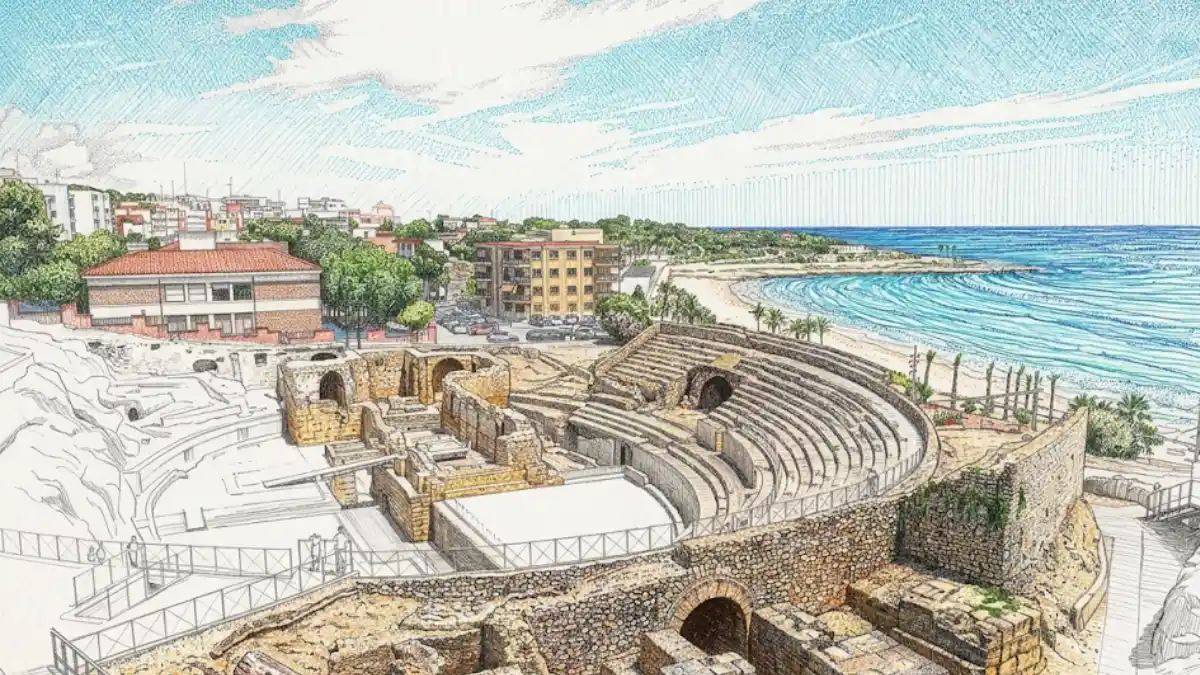
There’s one photo that sums up Tarragona better than any explanation: its Roman amphitheatre cut into the hillside, with the Mediterranean behind it. Few cities in the world can offer that, and it’s only the beginning.
The Romans founded Tarraco here in 218 BC, and the city went on to become the capital of Hispania Citerior, one of the Empire’s most important cities on the peninsula. That golden age left behind a density of archaeological sites that’s hard to match: in a few hours you can walk through an amphitheatre, a circus, a forum, a praetorium and nearly four kilometres of walls, all woven into a living city. The ensemble is a UNESCO World Heritage Site.
And unlike more museum-focused day trips, Tarragona adds beaches, seafood and a lively medieval old town. It’s the most complete escape if you’re travelling in summer or want to combine culture with a swim.
How to get to Tarragona from Barcelona
| Option | Departs from | Arrives at | Duration |
|---|---|---|---|
| Regional train (lines R14, R15, R16, R17) | Sants, Passeig de Gràcia or El Clot-Aragó | Tarragona (central, by the sea) | About 1 h 30 |
| High speed (AVE / AVANT) | Barcelona-Sants | Camp de Tarragona (~10 km from the city) | ~35 min + bus or taxi transfer |
| Car | — | — | About 1 h 15 via the AP-7 |
| Organised excursion | — | — | Full day, often with Poblet or Cambrils |
A useful note: these same regional lines also serve Salou and the PortAventura theme park, so if you’re travelling with family you can consider combining or choosing between the two plans.
How to plan the day: recommended itinerary
The historic city is compact and sits high up, so this route works downhill and finishes by the sea:
| When | Plan |
|---|---|
| On arrival | Climb to the Part Alta and buy the combined monument ticket |
| Mid-morning | City walls (Passeig Arqueològic), Praetorium and Roman circus |
| Midday | Santa Maria Cathedral and a wander through the medieval old town |
| Lunch | Terraces in the Part Alta or seafood in the Serrallo quarter |
| Afternoon | Roman amphitheatre by the sea and the Balcó del Mediterrani |
| Late afternoon | A stroll along the Rambla Nova, El Miracle beach, or head home |
What to see in Tarragona
The Roman amphitheatre
The crown jewel and one of Catalonia’s most recognisable images. Built in the early 2nd century AD, it uses the natural slope of the hillside to look out directly over the Mediterranean. This is where gladiatorial combat and wild-animal shows took place.
What makes it unique is its layering of eras: at the centre of the arena stand the remains of a 6th-century Visigothic basilica and of a 12th-century Romanesque-Gothic church, built to commemorate the martyrdom of Bishop Fructuosus and his deacons on that very spot in 259 AD. A thousand years of history stacked in a single enclosure.
The Roman circus and the Praetorium
One of the best-preserved Roman circuses in the Western world, with a fascinating quirk: much of its vaulting and underground galleries ended up built into the medieval city above, so you explore them from within, beneath the houses. The adjoining Torre del Pretori lets you climb to the roof for one of the finest panoramas in the city.
The walls and the Passeig Arqueològic
A landscaped walkway running between the Roman wall —among the oldest outside Italy— and a later outer wall. Quiet, shaded, with monumental towers and gateways. Perfect for starting your visit and getting your bearings.
Santa Maria Cathedral
Built over the former Roman religious precinct, it’s a striking blend of Romanesque and Gothic presiding over the Part Alta. Don’t miss the cloister, one of the loveliest in Catalonia, or the atmosphere of the squares around it.
The Balcó del Mediterrani
The viewpoint at the end of the Rambla Nova, above the sea. Local tradition is to “tocar ferro”, touching the iron railing for good luck. Views over the port, the beach and the amphitheatre.
The Les Ferreres aqueduct (Devil’s Bridge)
On the outskirts, one of the best-preserved Roman aqueducts in Spain, its double tier of arches rising from a pine wood. You can walk along the top. It requires a car or city bus, so only consider it if you have time to spare.
El Serrallo and the beaches
El Serrallo is the fishermen’s quarter beside the fishing port, and where locals go to eat fish and seafood. And if the heat gets to you, El Miracle beach lies at the foot of the amphitheatre: few places let you go from a Roman monument to a swim in five minutes.
Tips to make the trip run smoothly
- Buy the combined ticket right at the start: it pays off from the third monument onwards.
- Comfortable shoes: the Part Alta sits high up and there are slopes and steps from the station.
- Hat, water and sunscreen: the amphitheatre, circus and walls are open-air with little shade.
- Check the day’s opening times: they shift a fair bit between high and low season, and several monuments close at midday in winter.
- Save El Serrallo for lunch if you like fish: it’s the best area and the most local.
- Pack swimwear in summer: El Miracle beach is right below the amphitheatre.
- Check your return train: services thin out later in the afternoon.
Hotel Arc La Rambla, with a direct metro to the Tarragona trains
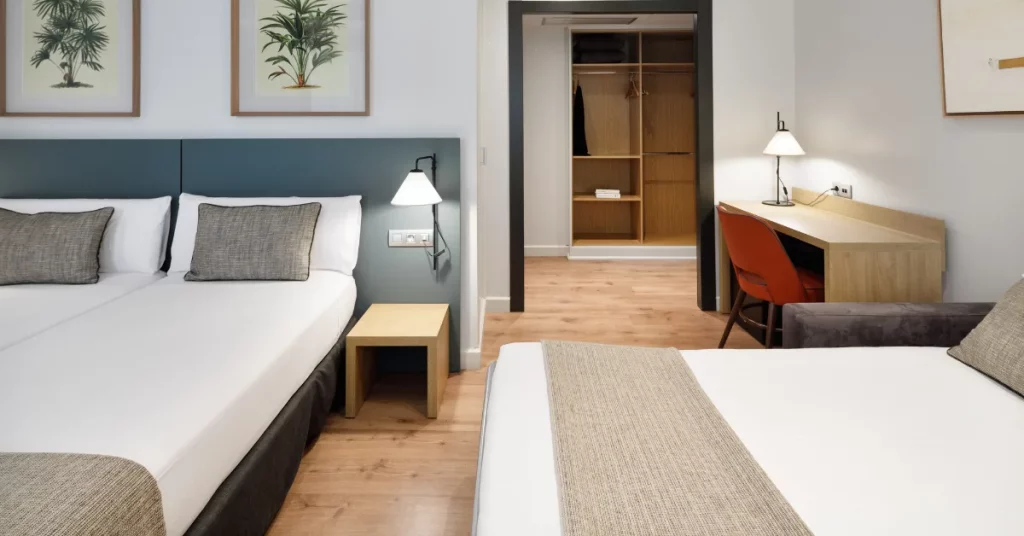
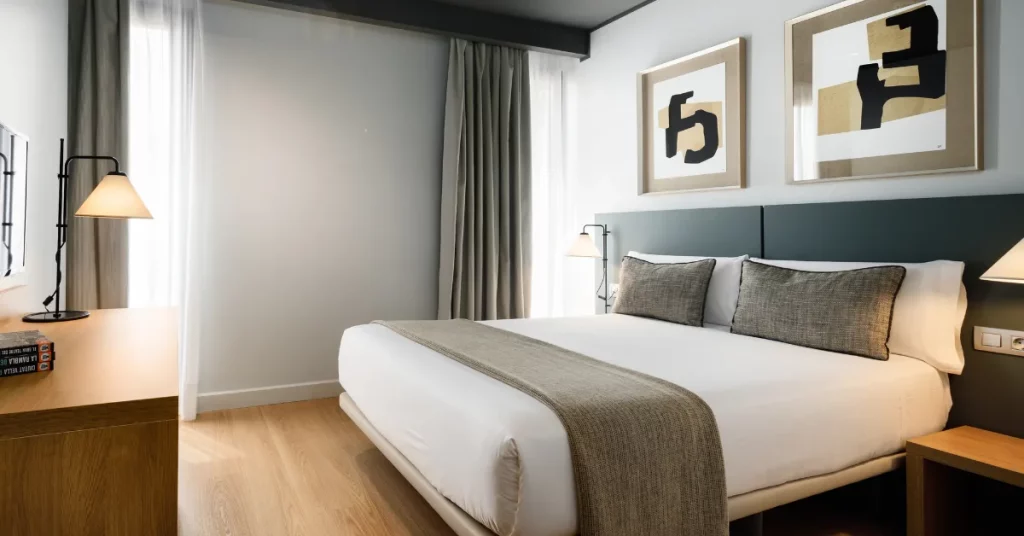
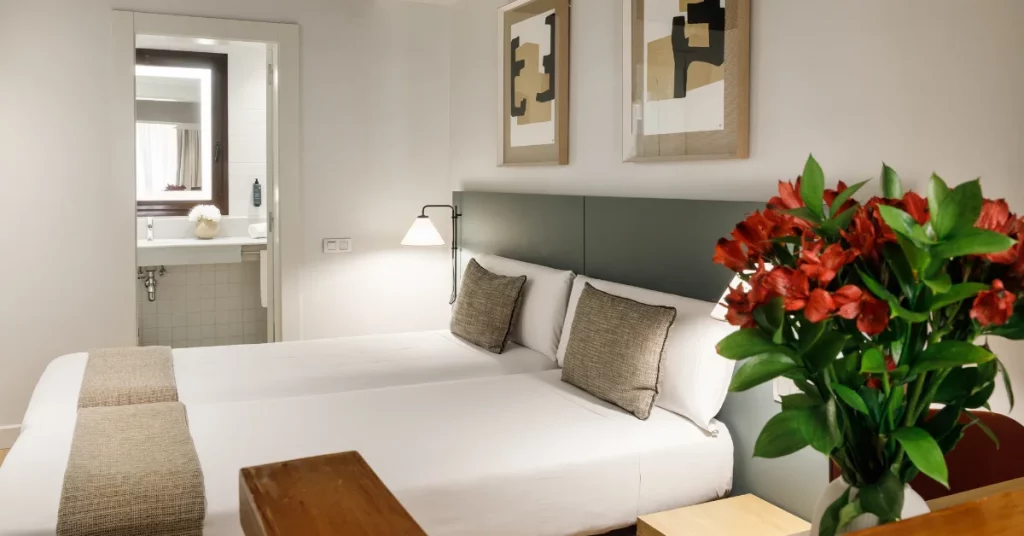
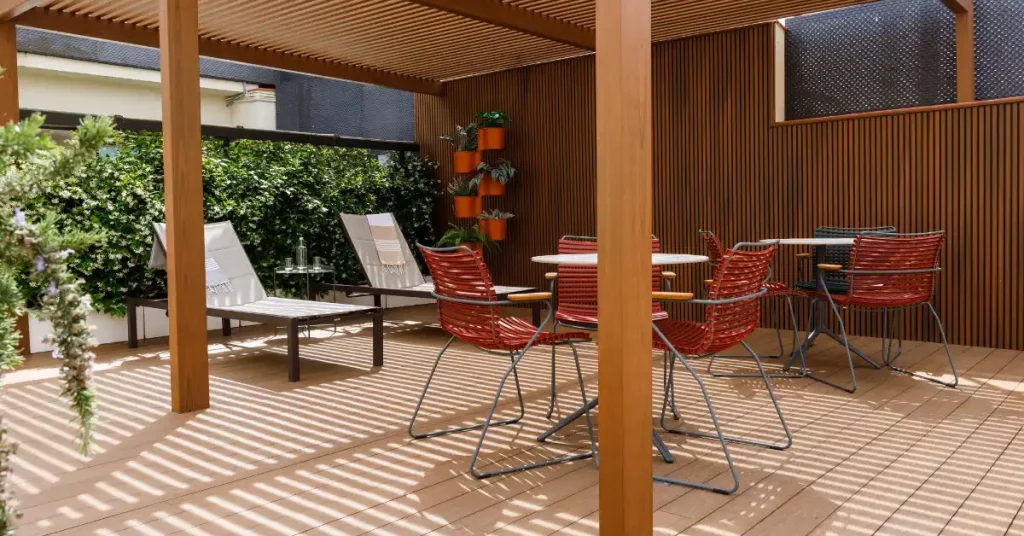
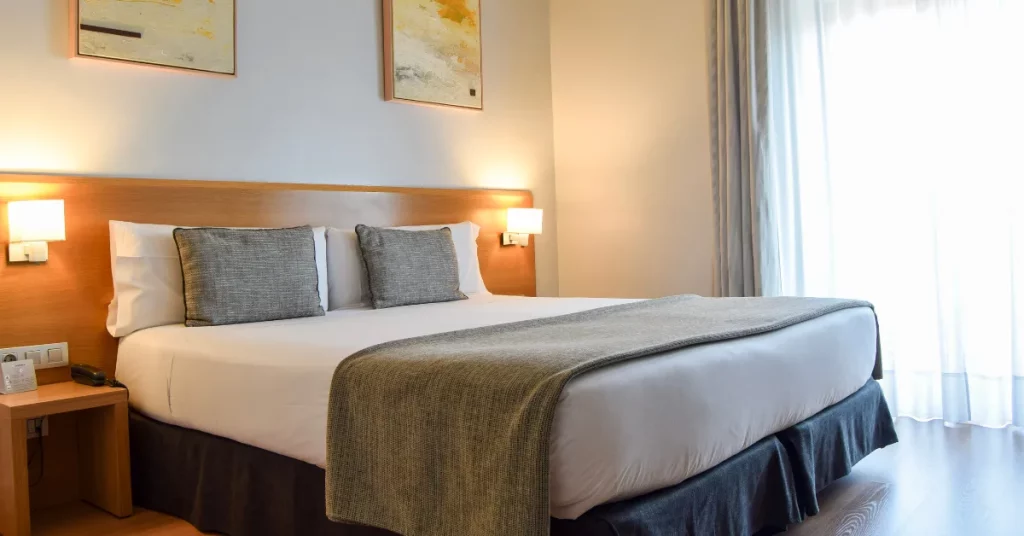
From Hotel Arc La Rambla (La Rambla 19-21, next to Drassanes metro) reaching the train is immediate: metro line 3 takes you with no changes to both Passeig de Gràcia and Barcelona-Sants, the two stations where the regional trains to Tarragona depart. No taxis or line changes first thing in the morning.
And on your return, Las Ramblas, the Gothic Quarter and the harbour are steps away to round off the day at a relaxed pace.
💡 Book on our website with the code ARCBLOG and enjoy a special perk as a blog reader.
Tarragona day trip — frequently asked questions
How do you get to Tarragona from Barcelona?
The most practical option for a day trip is the regional train (lines R14, R15, R16 and R17) from Sants, Passeig de Gràcia or El Clot-Aragó, a journey of about an hour and a half ending at Tarragona station, by the sea and close to the historic centre. The high-speed train is faster, but arrives at Camp de Tarragona station, some 10 kilometres from the city, which means an additional bus or taxi transfer.
What to see in Tarragona in one day?
The essentials are the Roman ensemble: the amphitheatre by the sea, the circus with its underground galleries, the Torre del Pretori, the walls along the Passeig Arqueològic and the forum. Add to that Santa Maria Cathedral, the old town or Part Alta, the Balcó del Mediterrani viewpoint and, with time and a car, the Les Ferreres aqueduct on the outskirts.
Is there a combined ticket for the Roman monuments?
Yes. Tarragona’s main Roman monuments are managed together and there’s a combined ticket giving access to all of them. If you plan to visit more than two, it works out clearly cheaper than buying entries separately. It’s worth buying it at the first monument and checking the day’s opening times there, as they vary by season.
Why is Tarragona a World Heritage Site?
The archaeological ensemble of Tarraco was declared a UNESCO World Heritage Site in 2000 for its exceptional Roman legacy. Founded in 218 BC, Tarraco became the capital of the Roman province of Hispania Citerior, and it preserves an unusually high density of sites: amphitheatre, circus, forum, praetorium, walls and aqueduct, all integrated into a city that’s still inhabited today.
What’s the best time of year to visit Tarragona?
Spring and autumn are the best seasons, since many of the monuments are open-air with little shade. Spring also brings Tarraco Viva, a historical interpretation festival with reenactments of Roman life and performances in the amphitheatre and circus themselves. The dates change each year, so it’s worth checking them.


