


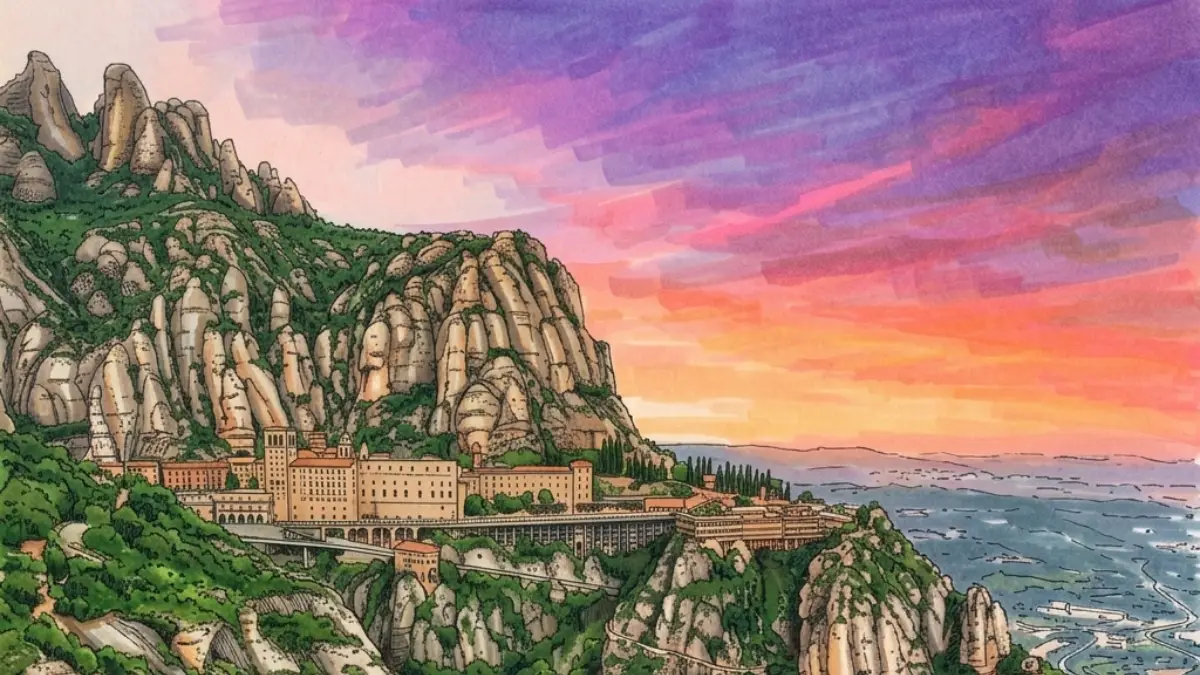
Montserrat is the most popular day trip from Barcelona and it’s perfectly doable independently, with no car and no organised tour. The plan comes down to three steps: take the R5 FGC train at Plaça d’Espanya (about 60 minutes), go up the mountain by rack railway (15 min, from Monistrol de Montserrat) or cable car (5 min, from Montserrat-Aeri), and spend half a day to a full day up there. Entry to the basilica is free; the museum and the funiculars are paid separately. Take one of the first trains of the morning and buy a combined ticket: it’s cheaper and saves you queuing.
Other excursions…

Why make this trip?
If you can only leave Barcelona for one day, make it this one. In under an hour by train you go from the centre of a great Mediterranean city to a mountain of rock sculpted by erosion, all rounded, impossible shapes, and to a Benedictine monastery clinging to the cliff at over 700 metres. The contrast is startling, and that’s precisely the appeal.
Up there you’ll find Catalonia’s great spiritual sanctuary —home to La Moreneta, its patron saint, and the Escolania, one of the oldest boys’ choirs in Europe— but also a notable art museum and a natural park with spectacular hiking. It’s a trip that works equally well for those after art, those after mountains and those after quiet reflection.
And it works because it’s logistically simple: direct public transport, regular services and clear signposting. Here’s how.
How to get to Montserrat from Barcelona, step by step
First thing to understand: there’s no direct train to the monastery. You always combine the commuter train with a final ascent, either by rack railway or cable car. The starting point is always the same:
Step 1: the R5 train from Plaça d’Espanya
From Plaça d’Espanya station (the FGC one, Ferrocarrils de la Generalitat, not the Renfe one) runs line R5 towards Manresa. There are departures for Montserrat roughly every hour from early morning, and the journey takes around an hour.
Step 2: choose your ascent
This is where you decide which station to get off at, because each leads to a different way up:
| Ascent | Get off at | Duration | What it’s like |
|---|---|---|---|
| Cremallera (rack railway) | Monistrol de Montserrat | ~15 minutes | Comfortable and scenic; drops you in the monastery square itself. The most balanced option |
| Aeri (cable car) | Montserrat-Aeri | ~5 minutes | Faster and more spectacular, very steep. Not for those afraid of heights |
💡 Ticket tip: there are combined tickets covering the Barcelona metro, the train, the ascent and, depending on the option, the funiculars at the top or the museum. They work out considerably better value than buying each leg separately, and save you queuing twice. Compare them on the FGC website before you set off.
Other options
- By car: about 50 km via the A-2 / AP-7. Parking at the top is limited and fills up early in high season; many people leave the car below and take the rack railway up.
- Organised excursion: there are daily departures from Barcelona with transport and often a guide included. The zero-hassle option, though it ties you to a fixed schedule.
How to plan the day: recommended itinerary
Here’s a realistic plan for a full day travelling independently from central Barcelona. Adjust it to your pace, but use it as a reference:
| When | Plan |
|---|---|
| Early morning | Metro to Plaça d’Espanya and the R5 train. The earlier you leave, the fewer people you’ll find up top |
| Mid-morning | Arrival and ascent by rack railway or cable car. First stroll around the monastery squares and the views |
| Midday | Basilica and La Moreneta’s chamber. If the timing works, an Escolania performance |
| Lunch | Food outlets on site or a picnic with a view (better brought from town in high season) |
| Afternoon | Sant Joan funicular and a short hike, or the Montserrat Museum if you prefer art to mountains |
| Late afternoon | Descent and return to Barcelona. Check the last rack railway or cable car in advance |
What to see once you’re up there
The basilica and La Moreneta
The heart of the complex. The basilica, where Gothic meets Renaissance, opens daily from 7:00 to 20:00 and entry is free. High above the altar, in a chamber reached by a side staircase, sits La Moreneta: the Romanesque carving of the Virgin of Montserrat, patron saint of Catalonia, so nicknamed for the dark colour of her face and hands. Tradition has it you touch the orb she holds in her right hand. There’s usually a queue, and booking is advisable in high season.
The Escolania
One of the oldest boys’ choirs in Europe, documented since the 14th century: more than seven hundred years of voices echoing among these stones. Hearing them sing the Virolai in the basilica is, for many, the most moving moment of the day. They normally sing at midday on weekdays, with additional performances on some weekends; they rest on Saturdays.
⚠️ If you want to plan your trip around the Escolania, check the “when we sing” section of their official website without fail: the calendar changes constantly for school holidays, tours and religious celebrations. Don’t assume any timetable.
The Montserrat Museum
A major surprise for those not expecting it: it holds Ancient Near East archaeology, old master painting and works by great names of modern and Catalan art. It opens daily, usually 10:00 to 17:45, with paid entry. Ideal for the afternoon if the weather turns.
The two funiculars
- Sant Joan funicular (going up): drops you close to 1,000 metres, with a bird’s-eye view over the monastery and, on clear days, the Pyrenees. It’s the starting point for routes to the hermitages and to the summit of Sant Jeroni (1,236 m), the massif’s highest point.
- Santa Cova funicular (going down): descends towards the path leading to the cave where, according to tradition, the image of La Moreneta was found. The trail is lined by the Monumental Rosary, a set of Modernista sculptures involving Antoni Gaudí.
Hiking
Montserrat is a natural park, and its trails are one of its great draws: from short walks around the monastery to the considerably tougher climb up Sant Jeroni. This is genuine mountain terrain: proper footwear, water and common sense. Stay on the marked paths and keep away from the edges.
Hours and tickets at a glance
| Item | Detail |
|---|---|
| Basilica | 7:00 to 20:00 · Free entry |
| La Moreneta’s chamber | Its own opening times; usually a queue, and booking advisable in high season |
| Montserrat Museum | Daily, usually 10:00 to 17:45 · Paid entry |
| Escolania | Normally at midday on weekdays; rests on Saturdays. Check the official calendar |
| Rack railway and cable car | Seasonal timetables (longer in summer). Check the last descent |
Tips to make the trip run smoothly
- Take one of the first trains: you’ll arrive ahead of the tour coaches and see the monastery with far fewer people around.
- Check the last descent as soon as you arrive, before starting any hike. Being stranded at the top is no fun.
- Bring more layers than you think: you’re over 700 metres up, and the mountain is cooler and windier than Barcelona, even in high summer.
- Comfortable, closed shoes: there are slopes, steps and dirt paths.
- Avoid Saturdays and public holidays if you want peace and quiet. Midweek and off-season is a different experience entirely.
- Bring water and something to eat: there are food outlets up top, but they get crowded and pricey in high season.
- It’s an active place of worship: keep quiet inside the basilica and dress respectfully.
- In summer, an early start also beats the heat: hiking at midday in August is hard going.
Hotel Arc La Rambla, with a direct metro to the Montserrat train
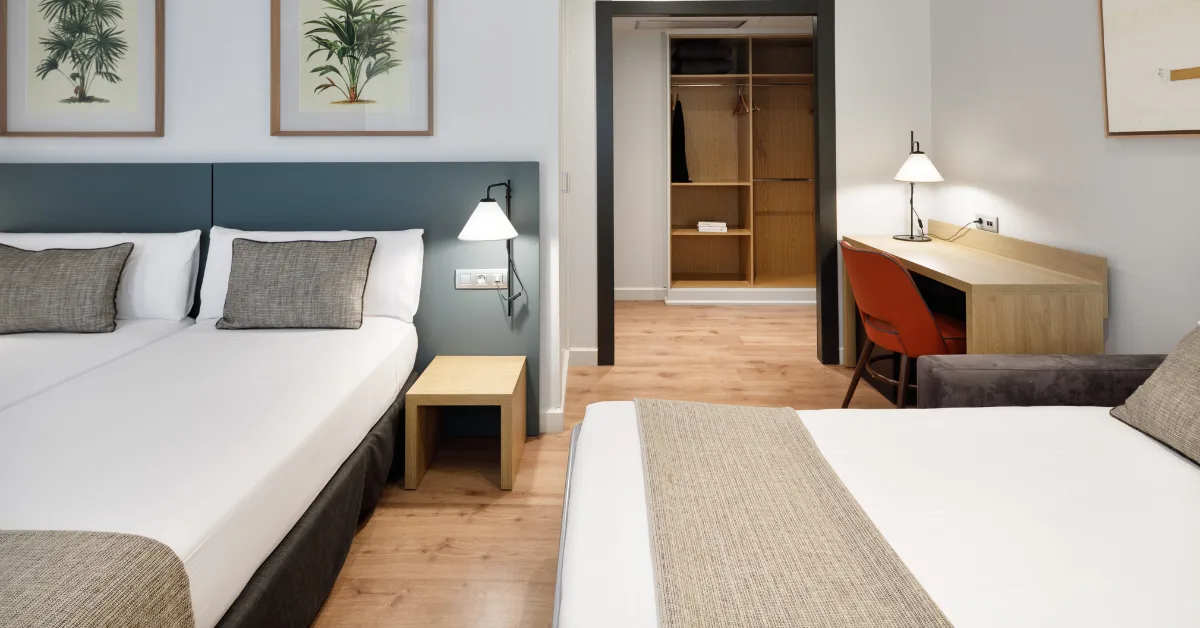
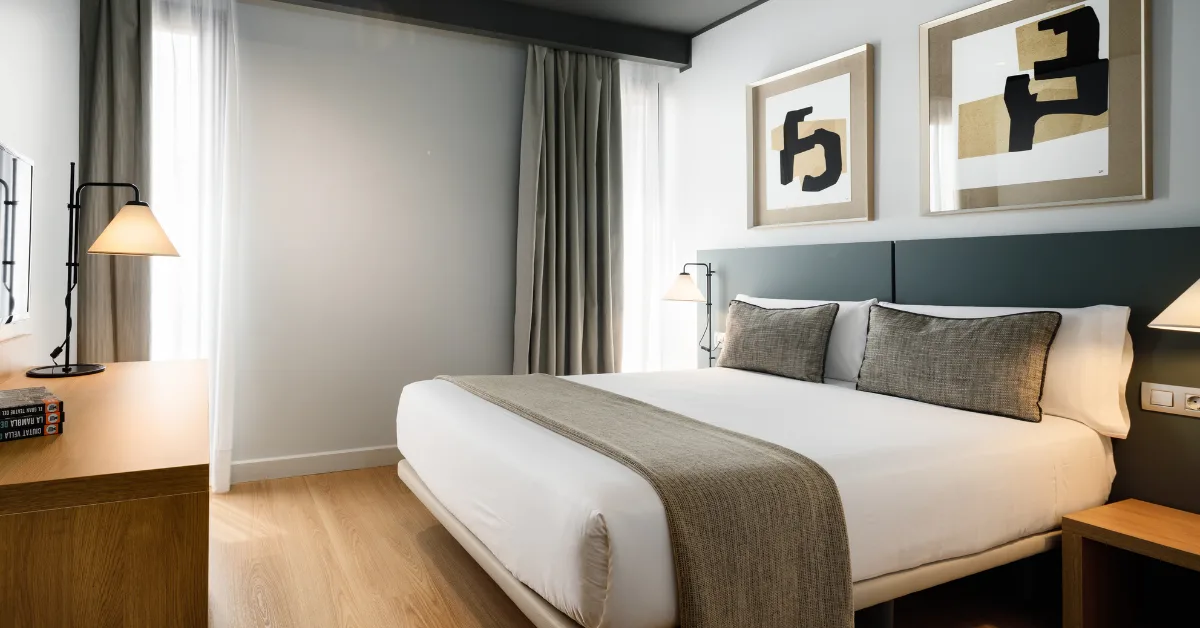
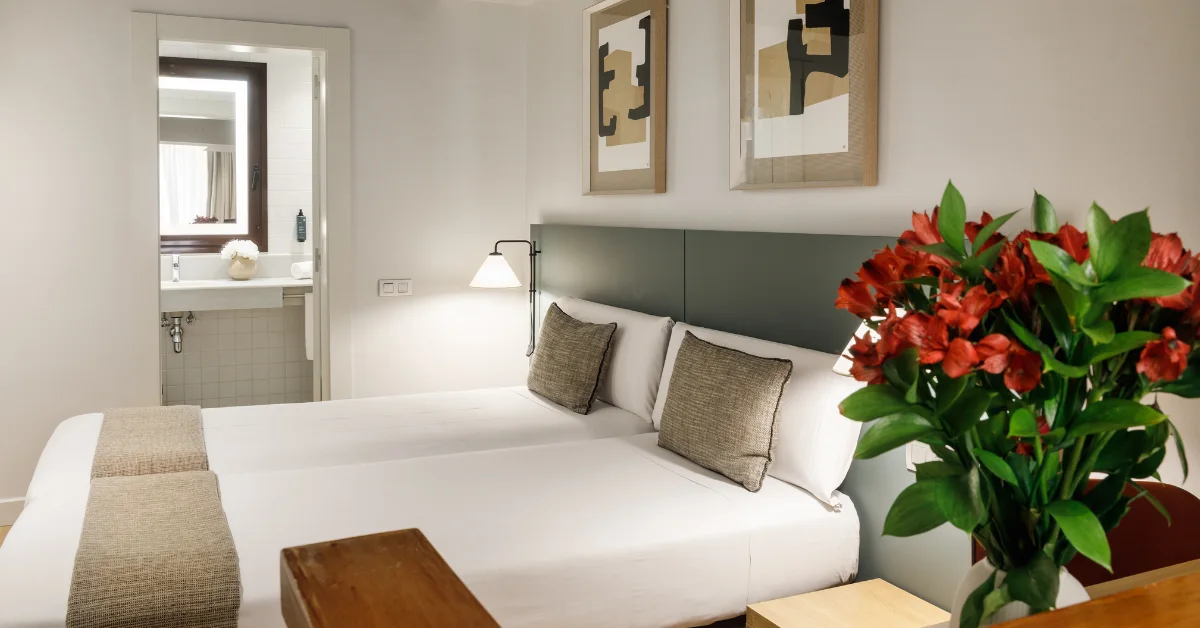
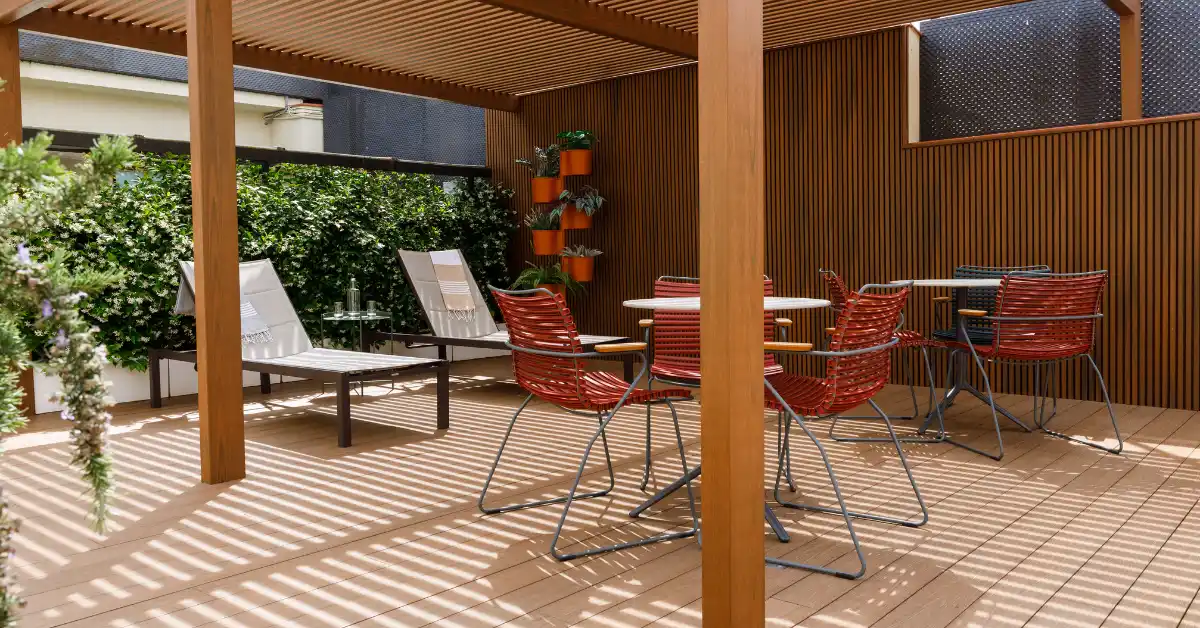
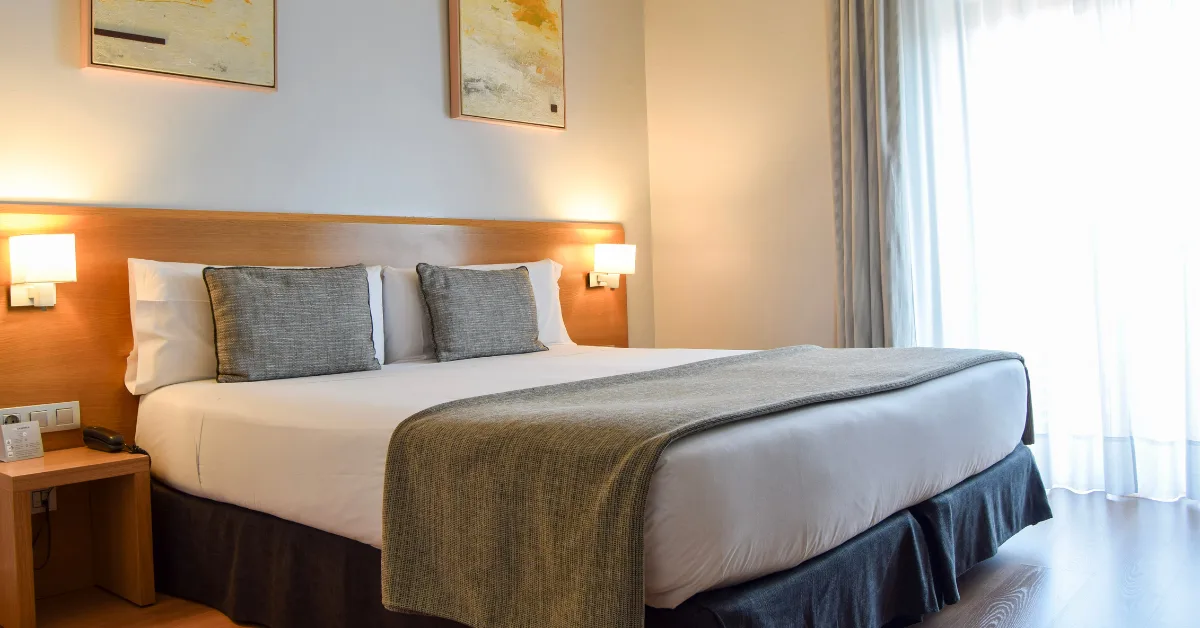
For a trip that rewards an early start, where you set off from matters as much as where you’re going. From Hotel Arc La Rambla (La Rambla 19-21, next to Drassanes metro), metro line 3 runs right past the hotel’s door and takes you straight to Plaça d’Espanya with no changes — exactly where the R5 train to Montserrat departs. You’re on the platform within minutes, with no taxis or line changes first thing in the morning.
And coming back in the afternoon, the return is just as direct: you step off the metro with Las Ramblas, the Gothic Quarter and the harbour a few paces away to round off the day with a relaxed dinner.
💡 Book on our website with the code ARCBLOG and enjoy a special perk as a blog reader.
Montserrat day trip — frequently asked questions
How do you get to Montserrat from Barcelona?
There’s no direct train. You take the R5 FGC train at Plaça d’Espanya (Barcelona-Manresa line), a journey of roughly an hour, and then go up the mountain one of two ways: getting off at Monistrol de Montserrat for the rack railway (about 15 minutes) or at Montserrat-Aeri for the cable car (about 5 minutes). Don’t get off at Olesa de Montserrat, whose cable car doesn’t reach the monastery.
How long does the Montserrat day trip from Barcelona take?
Allowing around two hours of travel there and back, half a day is enough to walk through the basilica, go up to La Moreneta’s chamber and stroll around the monastery squares. To make the most of the visit, including the museum, the funiculars or some hiking, a full day is ideal.
Can you visit Montserrat independently or do you need an organised tour?
You can easily go independently: public transport is direct, frequent and well signposted, and there are combined tickets covering the metro, the train and the ascent by rack railway or cable car. An organised excursion handles all the logistics and usually includes a guide, but ties you to a fixed schedule and costs more.
How much does it cost to enter Montserrat monastery?
Entry to the basilica is free and it’s open from 7:00 to 20:00. Other services are paid separately, such as the Montserrat Museum, the Sant Joan and Santa Cova funiculars, and certain limited-capacity access. Transport from Barcelona has its own ticket, with cheaper combined options available.
What’s the best time to set off for Montserrat?
Ideally take one of the first trains of the morning. That way you arrive ahead of the organised tour coaches, enjoy the monastery with far fewer people and leave yourself enough margin to take a funicular or do a hike in the afternoon before the last descent.


