


Plaça Sant Jaume has been the political heart of Barcelona for over 2,000 years, in the middle of the Gothic Quarter, on the site of the ancient Roman forum of Barcino. It’s flanked by two institutions: the City Hall (Casa de la Ciutat) and the Palau de la Generalitat (a 15th-century Gothic palace, seat of the Catalan Government). Its current look dates from the 1823 redevelopment. Visiting it is free and 30-45 minutes is enough; it’s one of the best starting points for exploring the old town. The nearest metro stops are Jaume I (L4) and Liceu (L3).
You may also be interested in…

What is Plaça Sant Jaume?
Set in the heart of the Gothic Quarter, Plaça Sant Jaume is one of the most emblematic places in Barcelona and an essential stop for anyone wanting to understand the city’s history. Over the centuries it has witnessed political events, popular celebrations and some of the most important moments in Catalan history. Today it remains Barcelona’s institutional centre and one of the most visited spaces in the old town, with a location that makes it easy to discover the main attractions nearby.
Plaça Sant Jaume at a glance
| Feature | Information |
|---|---|
| Location | Gothic Quarter (Ciutat Vella) |
| Main draw | Political centre of Barcelona and former Roman forum |
| Key buildings | City Hall and Palau de la Generalitat |
| Recommended time | 30-45 minutes |
| Access | Free · Metro Jaume I (L4) or Liceu (L3) |
| Ideal for | History, architecture and photography |
Why is Plaça Sant Jaume so important?


The importance of Plaça Sant Jaume goes back to Roman times: this space sits where the forum of Barcino stood, the ancient Roman city that gave rise to Barcelona, at the crossroads of its two main roads, the cardus and the decumanus. The forum was dominated by a temple dedicated to Emperor Augustus, whose columns survive nearby (now part of the MUHBA). For centuries this area has been the city’s administrative and political centre, and many of the decisions that shaped the history of Barcelona and Catalonia were taken in the buildings around the square. Today it remains a regular gathering point for official events, celebrations and cultural gatherings.
Barcelona City Hall (Casa de la Ciutat)

One of the most prominent buildings on the square is Barcelona City Hall, also known as the Casa de la Ciutat, on the sea side. Its main, neoclassical façade —known as ‘the clock building’— is flanked by statues of James I and the councillor Joan Fiveller. Although the exterior is the most visible part, the interior houses historic halls such as the Saló de Cent. Throughout the year it holds open days and can usually be visited on Sunday mornings, allowing you to discover some of its most emblematic rooms.
The Palau de la Generalitat
Facing the City Hall, on the mountain side, stands the Palau de la Generalitat, seat of the Government of Catalonia and one of the most important historic buildings in Barcelona. It’s an eminently Gothic building, built from the 15th century onwards, with the famous statue of Saint George (Sant Jordi) on its balcony. Its two side façades are Gothic, while the main one, added later, follows the Renaissance style of the Palazzo Farnese in Rome. As well as its architectural value, it’s one of the most recognised institutional symbols of Catalonia. It can be visited on free guided tours on specific dates (best booked in advance).
A journey into Barcelona’s Roman past
Many visitors don’t realise that Plaça Sant Jaume sits on one of the most important spaces of ancient Barcino. This is where the forum stood, the political, economic and social centre of the Roman city. Although little is visible in the square itself, the remains nearby —such as the columns of the Temple of Augustus, just steps away on Carrer del Paradís— help convey the historical importance of this spot. Visiting the square is also a chance to get close to the origins of Barcelona.
A strategic point for exploring the Gothic Quarter


Thanks to its location, Plaça Sant Jaume is one of the best starting points for exploring the Gothic Quarter. A few minutes’ walk away are some of the most famous spots in the old town, such as Barcelona Cathedral, the Pont del Bisbe, Plaça Reial and Plaça del Rei. Many visitors use their stop at the square to keep exploring the narrow medieval streets that characterise this historic area.
Celebrations and popular traditions


Plaça Sant Jaume is not only a political centre: it also plays a key role in Barcelona’s cultural life. During the festivals of La Mercè, the Diada de Catalunya, Santa Eulàlia and other celebrations, the square becomes the setting for numerous public events, such as castellers (human towers), concerts, the Christmas nativity scene and celebrations of sporting titles. Anyone visiting Barcelona during a festival will find here one of the most authentic atmospheres in the city.
What to see near Plaça Sant Jaume
| Place | Approx. distance |
|---|---|
| Pont del Bisbe | 2 min walk |
| Barcelona Cathedral | 4 min walk |
| Plaça Reial | 4 min walk |
| Plaça del Rei | 5 min walk |
| Las Ramblas | 5 min walk |
| La Boqueria market | 7 min walk |
Tips for visiting Plaça Sant Jaume
- Combine your visit with a walk through the Gothic Quarter.
- Take the chance to discover Barcelona Cathedral and the Pont del Bisbe.
- Visit early in the morning to avoid the biggest crowds.
- Check whether there are events, open days or celebrations during your stay.
- Bring your camera, especially if you’re into urban and historic photography.
Hotel Arc La Rambla, discover the historic heart of Barcelona
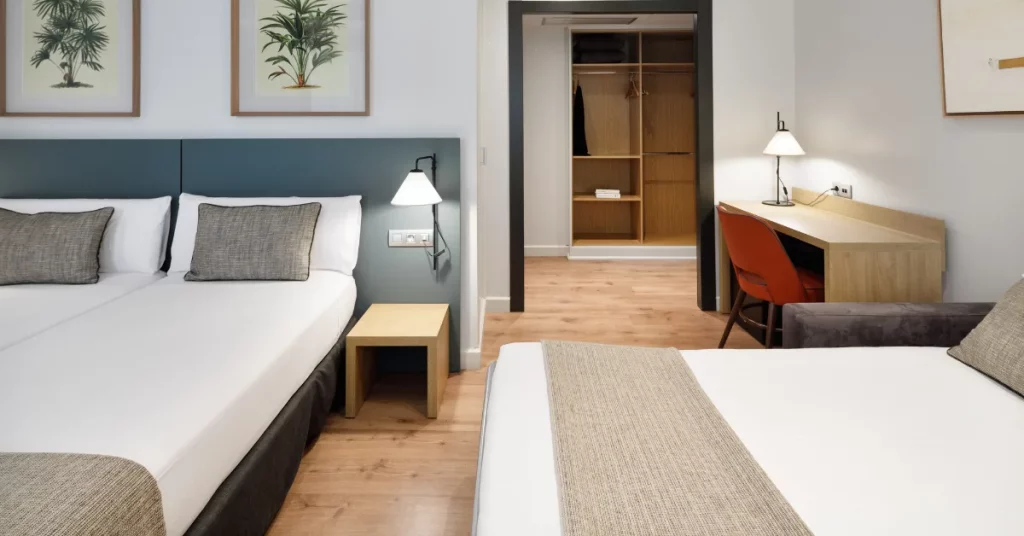
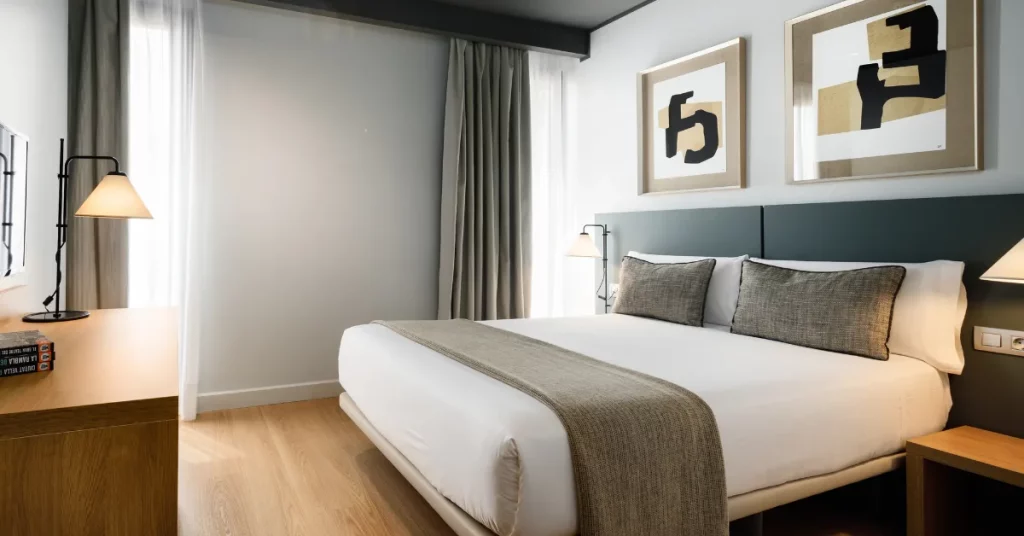
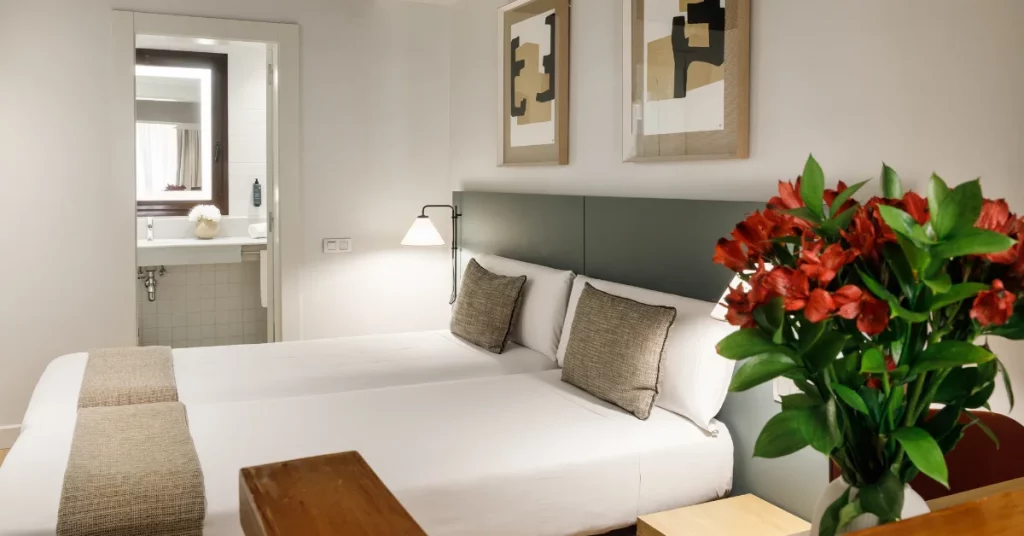
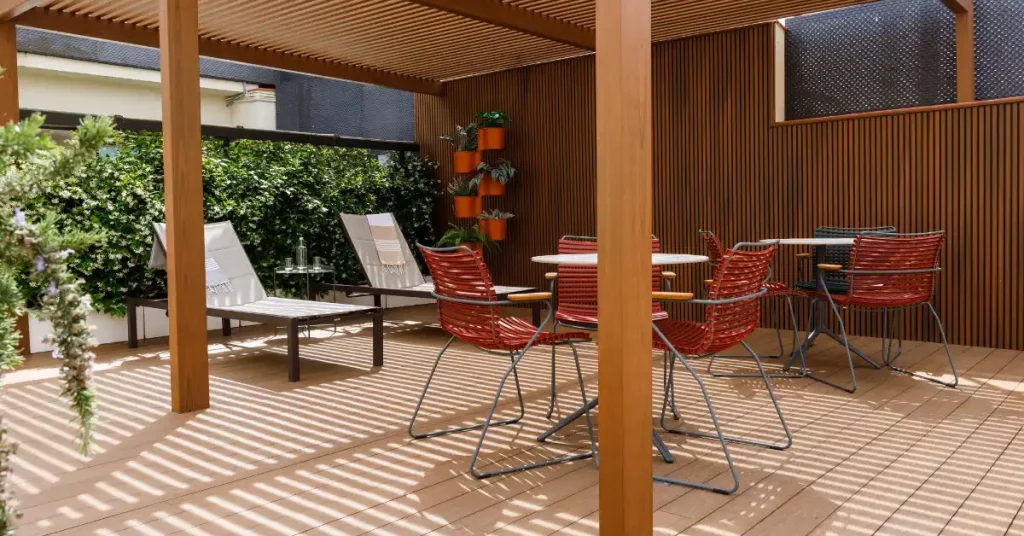
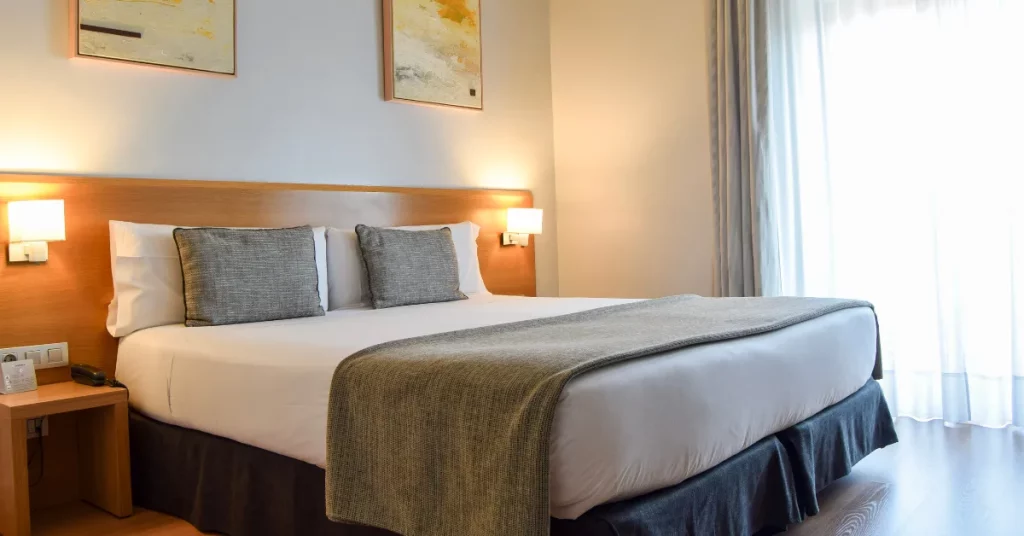
One of the advantages of staying at Hotel Arc La Rambla (La Rambla 19-21, next to Drassanes metro, L3) is its closeness to the city’s most emblematic spots. From the hotel you can walk to Plaça Sant Jaume in just a few minutes while enjoying a pleasant stroll through the old town. Its location beside Las Ramblas gives easy access to the Gothic Quarter, the Cathedral, Plaça Reial and many other points of interest, with no long journeys. After exploring the medieval streets, you can come back comfortably and keep discovering the city the next day.
💡 Book on our website with the code ARCBLOG and enjoy a special perk as a blog reader.
Plaça Sant Jaume — frequently asked questions
Where is Plaça Sant Jaume?
It’s in the heart of the Gothic Quarter, right in the historic centre of Barcelona. The nearest metro stops are Jaume I (L4) and Liceu (L3).
What important buildings are in Plaça Sant Jaume?
The two most prominent buildings are Barcelona City Hall (Casa de la Ciutat), with its neoclassical façade, and the Palau de la Generalitat, a 15th-century Gothic palace that is the seat of the Government of Catalonia.
Why is it called Plaça Sant Jaume?
It takes its name from the old church of Sant Jaume that once stood here. The square as we know it today was created by the 1823 redevelopment, when the church and several houses were demolished to open up this large space.
How long do you need to visit it?
Most visitors spend between 30 and 45 minutes exploring the square and its main features.
Can you visit the City Hall and the Palau de la Generalitat inside?
Yes, in both cases for free but with limited access. The City Hall usually opens on Sunday mornings, and the Palau de la Generalitat offers free guided tours on specific dates that are best booked in advance. Both also hold open days on special occasions.
What can you visit near the square?
Very close by are Barcelona Cathedral, Plaça Reial, Plaça del Rei, Las Ramblas and other emblematic corners of the Gothic Quarter.


