


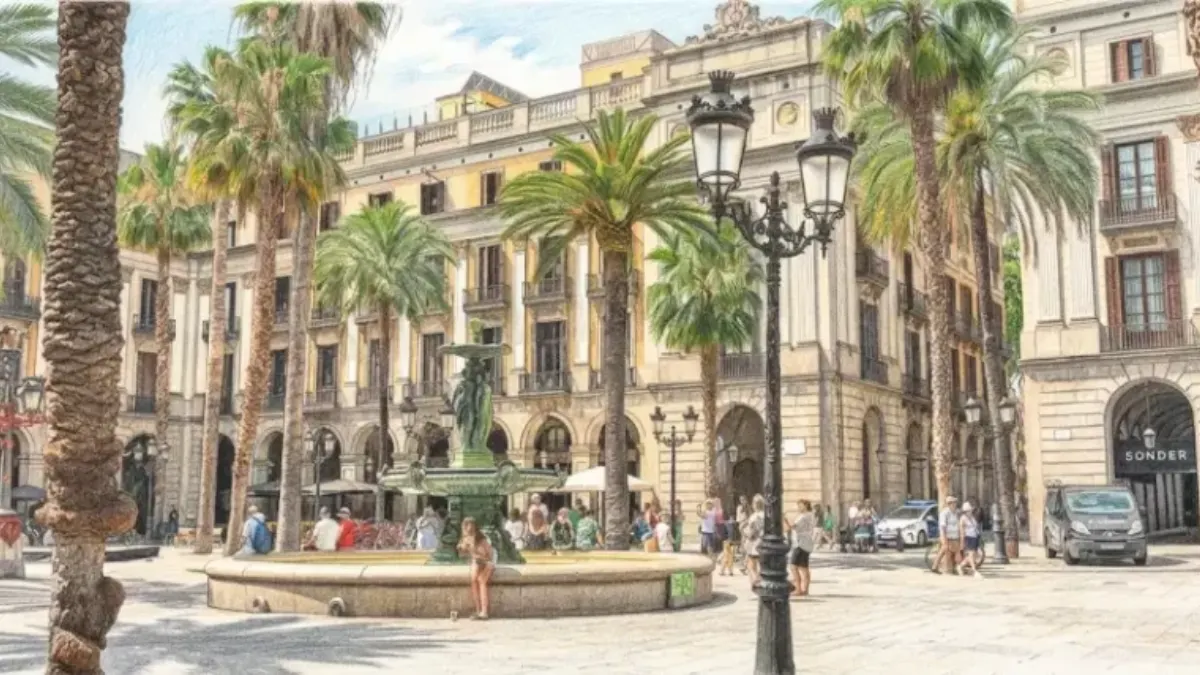
Plaça Reial is one of Barcelona’s most charming squares, right beside Las Ramblas in the Gothic Quarter. Neoclassical in style and surrounded by arcades and palm trees, it was designed by Francesc Daniel Molina in the mid-19th century. Its must-sees are the lamp-posts by Antoni Gaudí (1879), his first public commission, and the Fountain of the Three Graces. Visiting it is free and 30-45 minutes is enough (or 1-2 hours if you sit at a terrace). The nearest metro stop is Liceu (L3).
You may also be interested in…

What is Plaça Reial?
Set just steps from Las Ramblas, in the heart of Ciutat Vella, Plaça Reial is one of the most charming, historic and magical places in the old town of Barcelona. Surrounded by elegant arcades, majestic palm trees and sober neoclassical buildings, it’s not just a magnet for travellers: it’s also a meeting point and an urban oasis for locals seeking the city’s most authentic atmosphere. Its mood transforms completely from the vibrant light of morning to the mysticism of the night.
Quick facts about Plaça Reial
| Information | Detail |
|---|---|
| Location | Next to Las Ramblas (Gothic Quarter) |
| Architectural style | Neoclassical and uniform |
| Built | 1848-1859 (architect Francesc Daniel Molina) |
| Ideal for | Strolling, photos, dining and terraces |
| Recommended time | 45-60 minutes |
| Nearest metro | Liceu (L3) |
A little history: the origin of a stately square
To understand the grandeur of Plaça Reial you have to travel back to the mid-19th century. Before becoming the public space we know today, this site was occupied by the old Capuchin convent of Santa Madrona, which disappeared after the ecclesiastical confiscation of 1835. The authorities used the large urban void to build a monumental square that would dignify the centre and honour the Spanish monarchy — hence the name “Plaça Reial” (Royal Square). The project was entrusted to architect Francesc Daniel Molina, who conceived an enclosed, arcaded square inspired by the great royal squares of Europe.
What can you see at Plaça Reial?
1. The lamp-posts designed by Gaudí

One of the most valuable features of the square are its two monumental iron lamp-posts, designed by a very young Antoni Gaudí and installed in 1879. It was one of the first public commissions of his career, shortly after he graduated. The six-armed lamp-posts are crowned by a winged helmet and serpents, symbols of the god Mercury (commerce). Although many tourists walk past without realising who designed them, they’re a key piece for understanding the artistic evolution of the master of modernisme.
2. The Fountain of the Three Graces

In the centre of the square stands the Fountain of the Three Graces (Font de les Tres Gràcies), one of the most photographed monuments in the old town. Molina’s original plan called for a large equestrian statue of the king, but in the end this cast-iron fountain of French manufacture was installed, designed by Antoine Durenne, featuring the three Graces of Greek mythology.
3. The arcades and historic buildings

The neoclassical buildings that enclose the square stand out for their pilastered façades, wrought-iron balconies and a uniform cornice that gives the space an exceptional sense of order. Their most famous element are the wide arched arcades (porches), inspired directly by the royal squares of cities such as Paris (the Palais Royal) and Madrid’s Plaza Mayor.
4. The atmosphere of its terraces

The real heart of Plaça Reial lies in its social life. It’s one of the best settings in the centre to sit, relax and watch daily life go by. Thanks to the climate, the terraces of the cafés and restaurants around the perimeter fill up almost all year round with a mix of tourists, street artists, students and locals.
5. Its proximity to Las Ramblas
The square is connected directly to Las Ramblas through picturesque pedestrian passages such as Passatge de Madoz and Passatge del Bacardí (one of the first covered, glass-roofed passages in the city). This makes it easy to combine your visit with other major sights nearby.
When is the best time to visit?
Any time of year is good thanks to Barcelona’s climate. Spring and summer evenings are ideal for the terrace atmosphere, while autumn and winter middays offer a lovely temperature for strolling under the arcades. Early in the morning the square is quieter and the light is perfect for photographing the lamp-posts and the fountain without the crowds.
Hotel Arc La Rambla, your perfect base steps from Plaça Reial
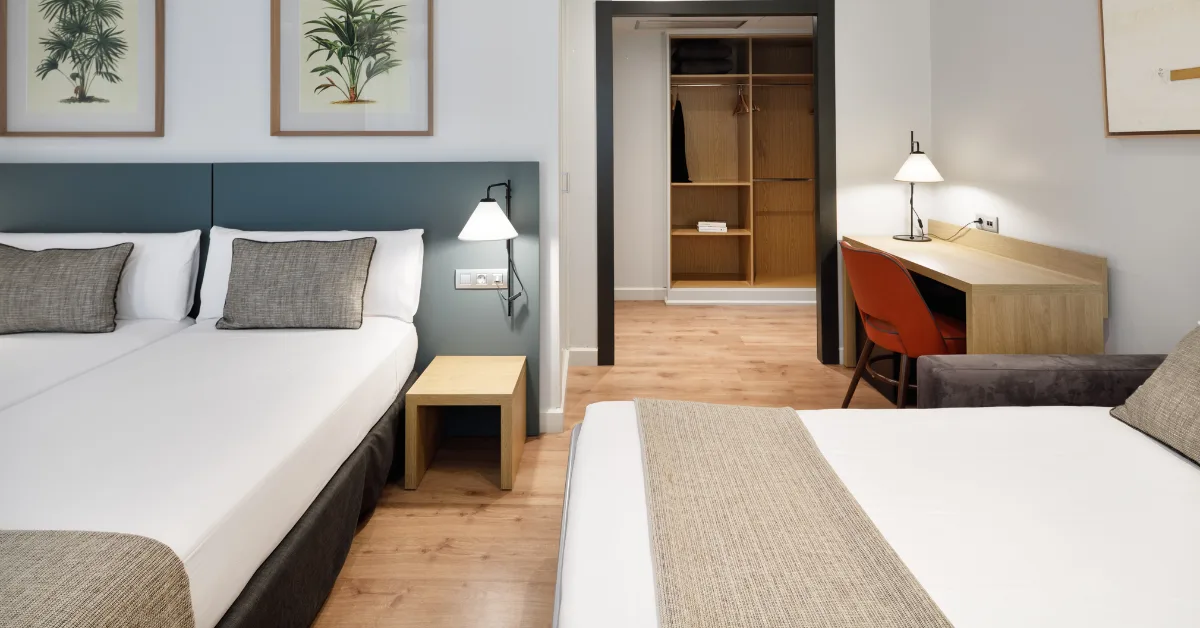
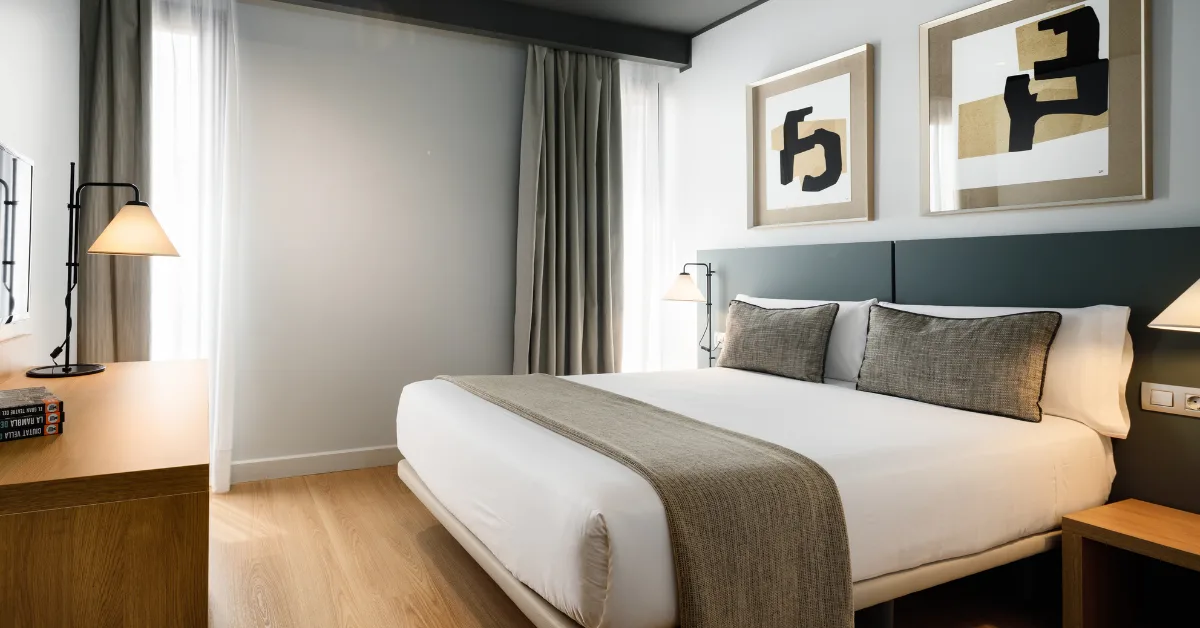
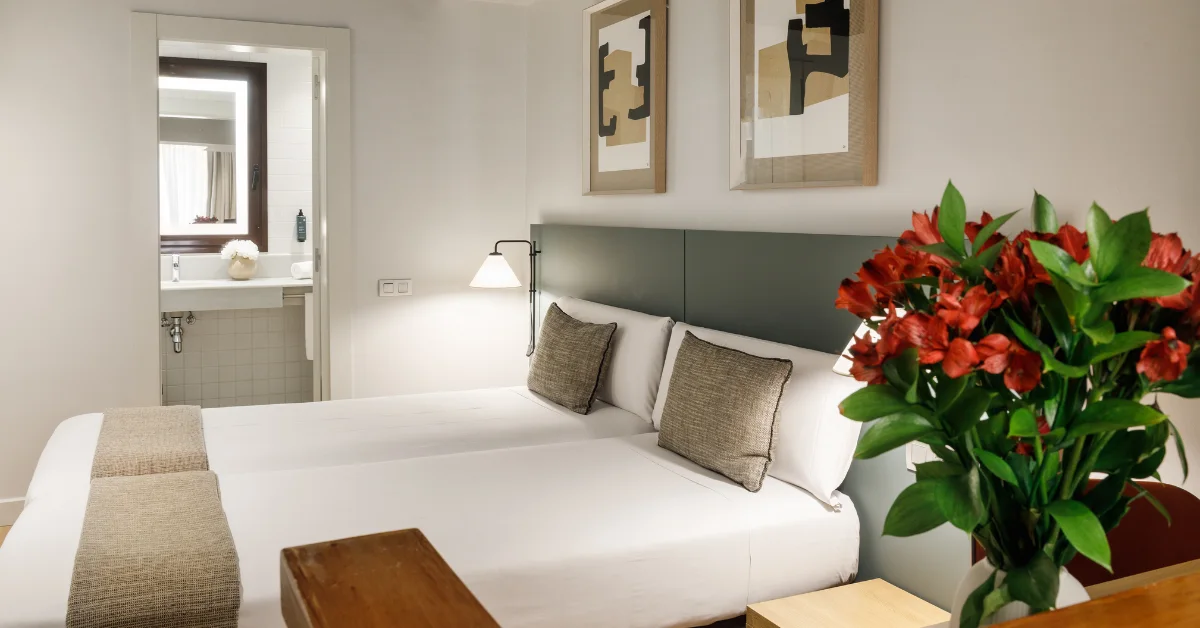
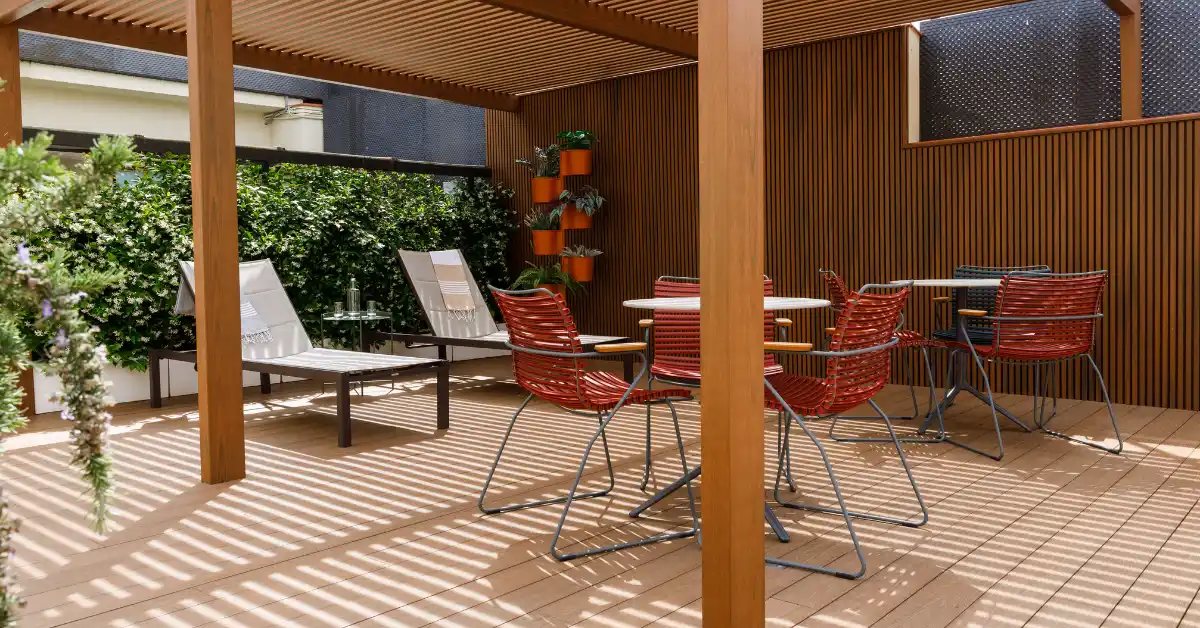
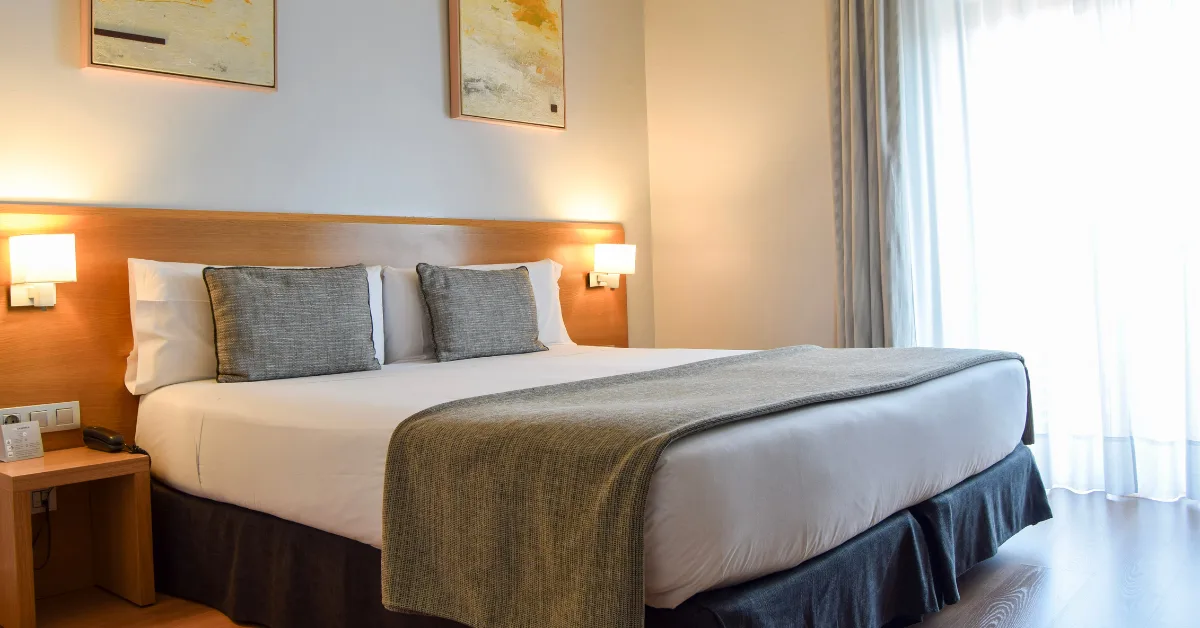
One of the great advantages of staying at Hotel Arc La Rambla (La Rambla 19-21, next to Drassanes metro, L3) is its closeness to the city’s most emblematic monuments, Plaça Reial among them. Being right on Las Ramblas, you can skip public transport entirely: a short walk of under five minutes brings you beneath its neoclassical arcades. You’re also at the doorstep of La Boqueria market, the Gothic Quarter, the Columbus Monument and Port Vell.
💡 Book on our website with the code ARCBLOG and enjoy a special perk as a blog reader.
Plaça Reial — frequently asked questions
Where exactly is Plaça Reial?
It’s right beside the lower stretch of Las Ramblas (the Rambla dels Caputxins), within the Gothic Quarter, in the historic centre of Barcelona. The nearest metro stop is Liceu (L3).
Who designed the square’s lamp-posts?
The monumental iron lamp-posts were designed by a young Antoni Gaudí and installed in 1879, in one of his first public commissions. They combine the winged helmet and serpents of the god Mercury, a symbol of commerce.
How long do you need to visit it?
To explore it calmly, take in the fountain and lamp-posts and take photos, 30-45 minutes is enough. If you sit at one of its terraces, it’s best to allow one to two hours.
Is it safe to visit Plaça Reial?
Yes, it’s a busy, lively space at any time of day. As in any tourist area in the centre of large cities, it’s wise to keep an eye on your belongings and watch out for pickpockets.
What is the best time of year to go?
Any time is great thanks to Barcelona’s mild climate. Spring and summer evenings are ideal for the terrace atmosphere, while autumn and winter middays are perfect for strolling in the sun.
Why is it called Plaça Reial?
Because it was built in the mid-19th century, on the site of a former convent, with the aim of dignifying the centre and honouring the Spanish monarchy. Hence the name, “Royal Square”.
<script type="application/ld+json">
{
  "@context": "https://schema.org",
  "@type": "FAQPage",
  "inLanguage": "en",
  "mainEntity": [
    {
      "@type": "Question",
      "name": "Where exactly is Plaça Reial?",
      "acceptedAnswer": {
        "@type": "Answer",
        "text": "It is right beside the lower stretch of Las Ramblas (the Rambla dels Caputxins), within the Gothic Quarter, in the historic centre of Barcelona. The nearest metro stop is Liceu (L3)."
      }
    },
    {
      "@type": "Question",
      "name": "Who designed the lamp-posts in Plaça Reial?",
      "acceptedAnswer": {
        "@type": "Answer",
        "text": "The monumental iron lamp-posts were designed by a young Antoni Gaudi and installed in 1879, in one of his first public commissions. They combine the winged helmet and serpents of the god Mercury, a symbol of commerce."
      }
    },
    {
      "@type": "Question",
      "name": "How long do you need to visit Plaça Reial?",
      "acceptedAnswer": {
        "@type": "Answer",
        "text": "To explore it calmly, take in the fountain and lamp-posts and take photos, 30-45 minutes is enough. If you sit at one of its terraces, it is best to allow one to two hours."
      }
    },
    {
      "@type": "Question",
      "name": "Is it safe to visit Plaça Reial?",
      "acceptedAnswer": {
        "@type": "Answer",
        "text": "Yes, it is a busy, lively space at any time of day. As in any tourist area in the centre of large cities, it is wise to keep an eye on your belongings and watch out for pickpockets."
      }
    },
    {
      "@type": "Question",
      "name": "What is the best time of year to go?",
      "acceptedAnswer": {
        "@type": "Answer",
        "text": "Any time is great thanks to Barcelona's mild climate. Spring and summer evenings are ideal for the terrace atmosphere, while autumn and winter middays are perfect for strolling in the sun."
      }
    },
    {
      "@type": "Question",
      "name": "Why is it called Plaça Reial?",
      "acceptedAnswer": {
        "@type": "Answer",
        "text": "Because it was built in the mid-19th century, on the site of a former convent, with the aim of dignifying the centre and honouring the Spanish monarchy. Hence the name, Royal Square."
      }
    }
  ]
}
</script>


