


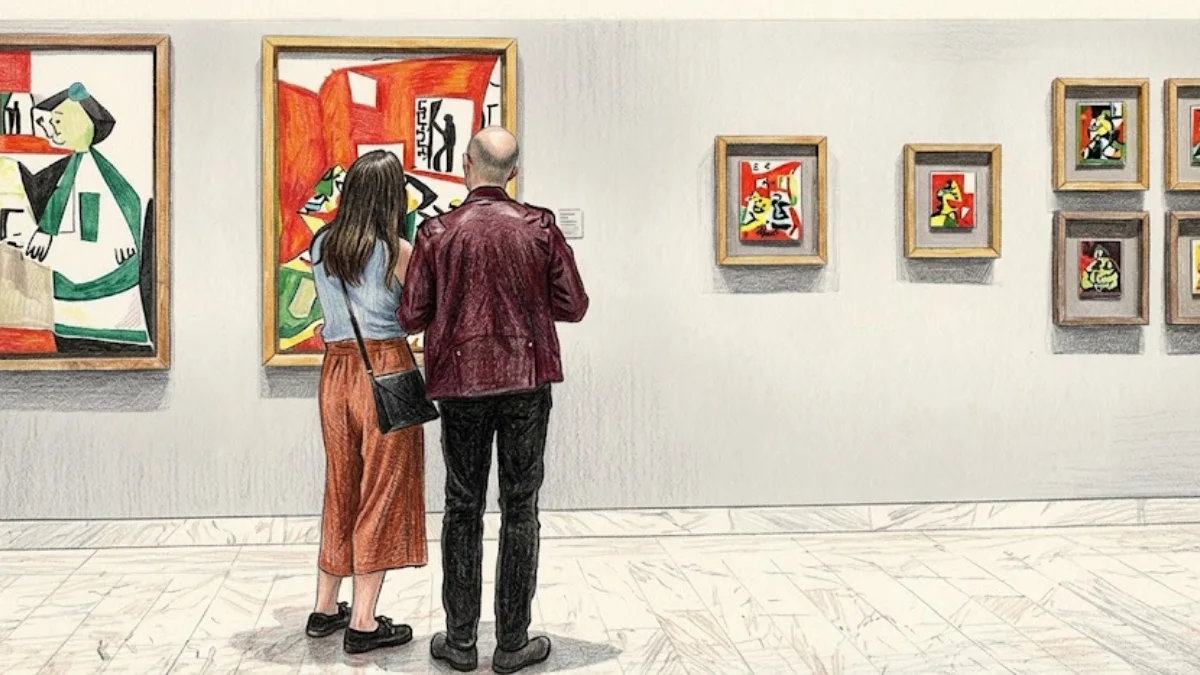
The Picasso Museum in Barcelona (Museu Picasso) holds the world’s most complete collection of Pablo Picasso’s formative years —more than 4,000 works— inside five medieval palaces on Carrer de Montcada, in El Born. Its jewel is the complete Las Meninas series. General admission costs around €15 (collection + temporary exhibition €19; reduced €7.50; under-18s free), and there are free-entry windows (first Sunday of the month and Thursday evenings). Closed on Mondays. The nearest metro is Jaume I (L4); it’s a 15-minute walk from Hotel Arc La Rambla.
Other museums in Barcelona…
- Fundació Joan Miró
- MNAC Barcelona
- MACBA Barcelona
- MEAM Barcelona
- Museo Marítimo Barcelona
- CosmoCaixa Barcelona
- CaixaForum Barcelona
- Fundació Antoni Tàpies Barcelona
- MUHBA Barcelona

What is the Picasso Museum?
Some museums justify a trip on their own. The Picasso Museum in Barcelona is one of them. Housed in five interconnected medieval palaces from the 13th to 15th centuries in the heart of El Born, it holds the world’s most complete collection of Pablo Picasso’s formative years: more than 4,000 works that tell the story of how a prodigiously talented child born in Málaga became, on the streets of Barcelona, the most influential artist of the 20th century. A story of talent, rebellion and transformation that begins here, on Carrer de Montcada.
History of the Picasso Museum
The museum was born from friendship. Jaume Sabartés, Picasso’s closest friend and personal secretary, conceived the idea of a museum dedicated to the painter in Barcelona —the city where Picasso had spent his most formative years. Sabartés donated his own collection to Barcelona City Council and persuaded the artist to contribute his works.
The museum opened on 9 March 1963, initially in the Palau Aguilar. In 1970, Picasso himself made a major donation of works, cementing the museum’s status as a world reference. Over the following decades, four more medieval palaces were incorporated —the Palau del Baró de Castellet, Palau Meca, Casa Mauri and Palau Finestres— to form the five interconnected Gothic buildings that make up the museum today. It welcomes more than one million visitors a year, making it one of the most visited museums in Spain and one of the most important in the world dedicated to a single artist.
The collection: what to see at the Picasso Museum
Unlike other major Picasso museums around the world, Barcelona’s doesn’t focus on the mature, celebrated artist —the one of distorted women, Cubism and Guernica. Its collection specialises in something far rarer and more fascinating: the years of learning, the period when Picasso discovered that the rules of art existed to be broken.
The academic works from his youth
The first rooms are devoted to drawings and paintings Picasso made as a child and teenager, when he lived in Barcelona and studied at La Llotja, the school of fine arts where his father taught. What strikes you is not that they are good for his age —it’s that they are extraordinary, full stop. Highlights from this period include “First Communion” (1896) and “Science and Charity” (1897). The technical mastery they display makes his later break with convention feel even more radical.
The Blue Period and the Rose Period
The museum strongly represents Picasso’s best-known early periods: the melancholy blue-toned figures of the Blue Period (1901-1904), marked by poverty and the death of his friend Carles Casagemas, and the warmer-coloured acrobats and harlequins of the Rose Period (1904-1906).
Las Meninas: the museum’s most important series
The jewel of the collection is the series based on Velázquez’s Las Meninas, painted in 1957. Picasso shut himself away in his studio in the south of France and reinterpreted Spain’s most famous painting in a long series of variations, deconstructing, fragmenting and reconstructing it again and again. It’s the most complete series in the world on this body of work, and one of the most powerful experiences any art museum in Spain has to offer.
Ceramics and late works
The final rooms showcase Picasso’s work as a ceramicist, with pieces made at Vallauris (France) from the 1940s onwards, and a selection of works from the last years of his life that brings the collection’s chronological journey to a close.
What are the Picasso Museum opening hours in 2026?
| Days | Hours |
|---|---|
| Tuesday to Sunday | 10:00 – 19:00 (longer evening hours in summer) |
| Thursday | Open late (until around 21:30) |
| Monday | Closed |
How much do Picasso Museum tickets cost in 2026?
| Ticket type | Price (2026) |
|---|---|
| Permanent collection (adult) | from €15 |
| Permanent collection + temporary exhibition | €19 |
| Reduced (18–25, 65+, unemployed residents) | €7.50 |
| Under 18 | Free |
| First Sunday of every month | Free (online booking required) |
| Thursday evenings & open-door days | Free (online booking required) |
💡 Tip: the museum offers free entry on the first Sunday of every month (all day) and on Thursday evenings, plus a few “open-door” days a year. These slots are free but must be booked in advance online, and they get very busy —the Las Meninas rooms in particular.
How to get to the Picasso Museum
The museum is at Carrer de Montcada, 15-23 (main entrance at no. 17), in El Born —one of the most vibrant and best-preserved neighbourhoods in Barcelona.
| Transport | Line / Detail | Stop |
|---|---|---|
| Metro | Line 4 (yellow) | Jaume I (2 min walk) |
| Metro | Line 1 (red) | Arc de Triomf |
| Bus | Lines 39, 45, 51, 120, V15, V17, H14 | Various stops nearby |
From Hotel Arc La Rambla, the most enjoyable route is on foot: walk down La Rambla, then head into El Born through the Gothic Quarter and La Ribera. Around 15 minutes through some of the most beautiful streets in the historic centre.
Practical tips for your visit
- Book online in advance. The Picasso Museum is one of the most visited in Spain and queues can be long, especially in high season. Booking guarantees a time slot and skips the ticket queue.
- Use the free windows wisely. First Sunday of the month and Thursday evenings are free, but very crowded; an early weekday slot (10:00 opening) is the calmest.
- Allow at least 2 hours for the permanent collection at a comfortable pace, plus another hour for a temporary exhibition.
- The five medieval palaces are part of the experience. Look at the courtyards, staircases and carved wooden ceilings —the building is almost as fascinating as the art.
- Start from the beginning. The collection is arranged chronologically: beginning with the early works and ending at Las Meninas gives the visit far more narrative coherence.
- The neighbourhood deserves time. Before or after, explore El Born: the Basilica of Santa Maria del Mar, the Born market and the medieval streets are not to be missed.
The museum and Picasso’s relationship with Barcelona
Picasso wasn’t born in Barcelona —he was born in Málaga in 1881— but it was in Barcelona that he formed as an artist and as a person. At 14 he moved to the city with his family, enrolled at the La Llotja school of fine arts, and soon began frequenting Els Quatre Gats, the modernista café where the Catalan artistic avant-garde gathered and where he held his first exhibition in 1900.
It was in Barcelona that Picasso found his first artistic community, his first friends, his first exhibitions and his first break with academicism. The city marked him for life. The museum is, in that sense, much more than a collection of paintings —it’s the story of an origin.
Hotel Arc La Rambla, 15 minutes from the Picasso Museum
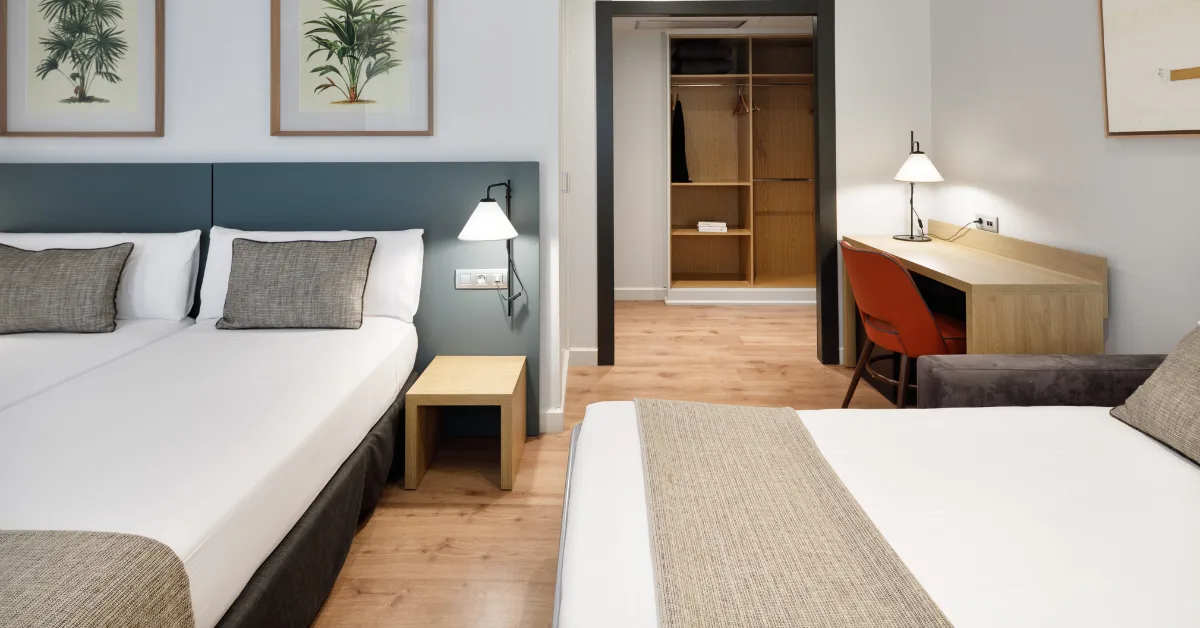
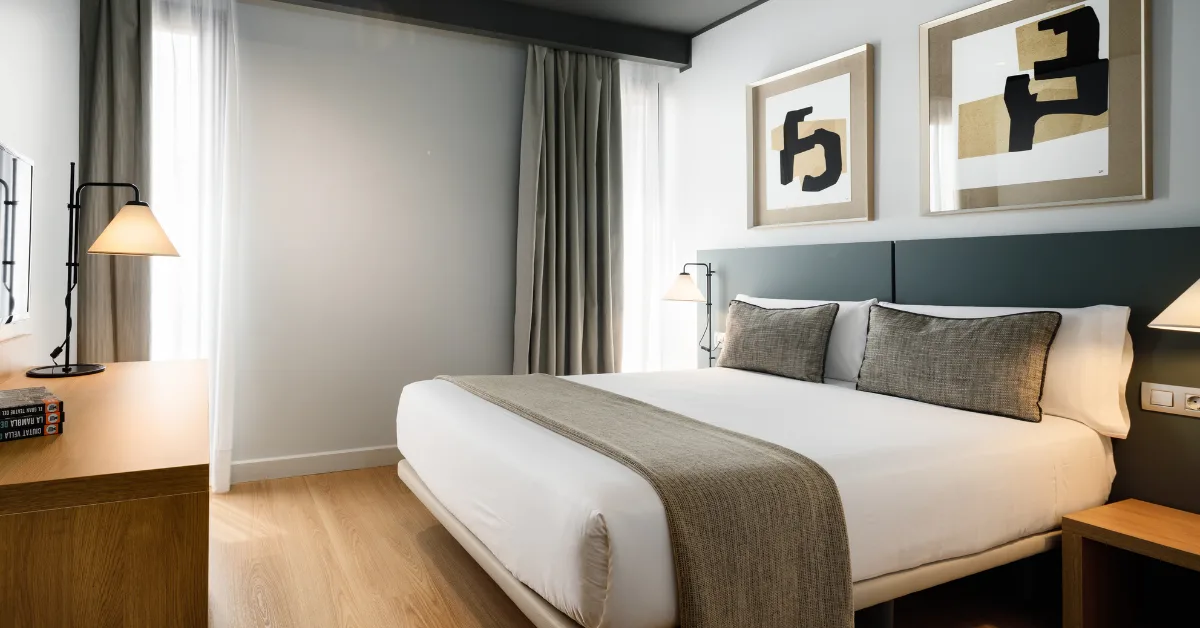
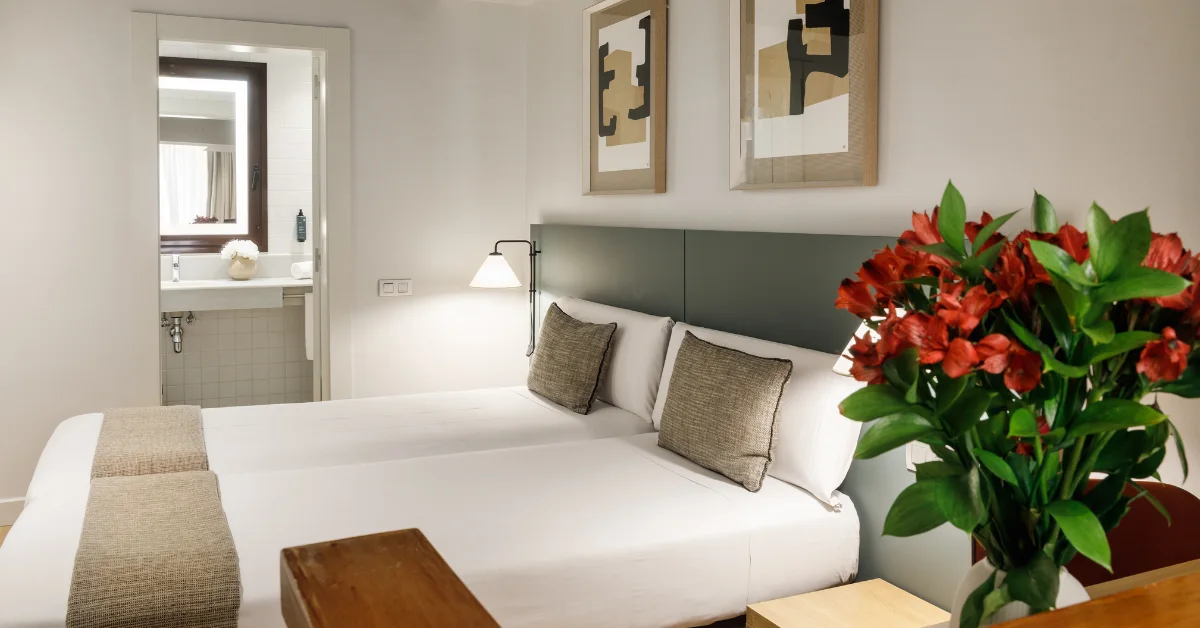
From Hotel Arc La Rambla (La Rambla 19-21, next to Drassanes metro, L3), the Picasso Museum is just 15 minutes on foot through the Gothic Quarter and El Born —one of the most beautiful walks in the historic centre. A perfect base for combining the museum in a single day with the Basilica of Santa Maria del Mar, the Born market and the medieval streets of La Ribera.
💡 Book on our website with the code ARCBLOG and enjoy a special perk as a blog reader.
Picasso Museum — frequently asked questions
How much do Picasso Museum tickets cost?
General admission to the permanent collection costs from around €15, and the combined ticket with the temporary exhibition €19. The reduced rate (18-25, over-65s, unemployed residents) is €7.50, and under-18s enter free. There are also free-entry windows (see below).
When is the Picasso Museum free?
On the first Sunday of every month (all day), on Thursday evenings, and on a few “open-door” days a year. All free slots must be booked online in advance and get very busy. It’s also free with the Barcelona Card and the Articket.
What are the Picasso Museum opening hours?
It opens Tuesday to Sunday from 10:00, with later closing on Thursdays and longer evening hours in summer. It’s closed on Mondays, 1 January, 1 May, 24 June and 25 December.
What is special about the Barcelona Picasso Museum?
It holds the world’s most complete collection of Picasso’s formative years and the complete Las Meninas series. It’s also the only major Picasso museum created during the artist’s lifetime, and it sits inside five interconnected medieval palaces.
How do you get to the Picasso Museum?
The nearest metro is Jaume I (Line 4), a 2-minute walk. You can also use Arc de Triomf (Line 1) or several bus lines. From Hotel Arc La Rambla it’s a 15-minute walk through the Gothic Quarter and El Born.


