


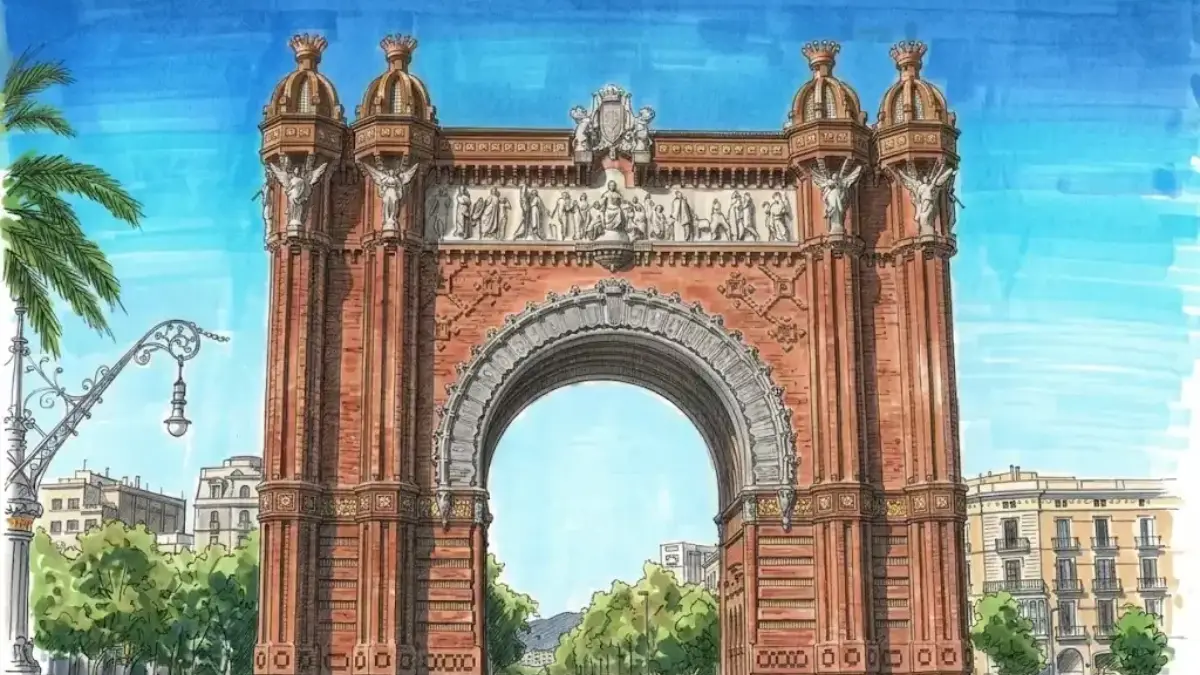
The Arc de Triomf in Barcelona is one of the city’s most iconic landmarks and a symbol of its transformation into modernity. Located on the border between the Eixample district and the old town, this impressive red-brick arch was built as the main entrance to the 1888 Universal Exposition, an event that marked a turning point in Barcelona’s history.
Unlike other triumphal arches in Europe, designed to commemorate military victories, Barcelona’s Arc de Triomf represents progress, cultural openness, and industrial development. Its design, materials, and symbolism make it a unique piece of Catalan architectural heritage.
Today, the Arc de Triomf is not only a historic monument but also a meeting point, a cultural space, and one of the most pleasant areas for a walk in Barcelona.
You might also be interested in…
- Torre Agbar
- Columbus Monument
- Bunkers del Carmel
- Monasterio de Pedralbes
- Poble Espanyol
- Colonia Güell

Updated: June 2026 · A practical guide to Barcelona’s Arc de Triomf, with its history, what to see, how to get there and tips.
Quick answer: visiting the Arc de Triomf
The Arc de Triomf is one of Barcelona’s most emblematic monuments, a red-brick arch in the neo-Mudéjar style about 30 metres tall, designed by Josep Vilaseca as the main gateway to the 1888 Universal Exhibition. Unlike other European triumphal arches, it doesn’t celebrate a military victory but the city’s progress and openness. It stands at the start of the Passeig de Lluís Companys, which leads to the Parc de la Ciutadella. Visiting it is free (you can’t go up it) and 15-30 minutes is enough. The metro stop is Arc de Triomf (L1).
What is Barcelona’s Arc de Triomf?
Barcelona’s Arc de Triomf is one of the most emblematic monuments in the city and a symbol of its transformation towards modernity. Set on the boundary between the Eixample and the old town, this imposing red-brick arch was built as the main gateway to the 1888 Universal Exhibition, an event that marked a turning point in the history of Barcelona. Unlike other European triumphal arches, designed to commemorate military victories, the Arc de Triomf represents progress, cultural openness and the city’s industrial development. Today it’s not only a historic monument but also a meeting point and one of the most pleasant areas for a stroll.
The Arc de Triomf at a glance
| Feature | Information |
|---|---|
| Location | Passeig de Lluís Companys (between the Eixample and Ciutat Vella) |
| Architect | Josep Vilaseca i Casanovas |
| Inaugurated | 20 May 1888 |
| Style | Neo-Mudéjar (exposed brick) |
| Height | About 30 metres |
| Access | Free (exterior) · Metro Arc de Triomf (L1) |
History of the Arc de Triomf


The Arc de Triomf was built as the monumental gateway to the 1888 Universal Exhibition, held in the Parc de la Ciutadella and inaugurated on 20 May that year. That exhibition was Barcelona’s first major urban transformation and cemented its image as a modern city open to the world. The project was entrusted to architect Josep Vilaseca i Casanovas, who proposed an innovative design that moved away from the classical aesthetic of triumphal arches: instead of stone, he chose exposed brick, a material that brought warmth and a more Mediterranean character. The arch was the welcome gateway for visitors from all over the world, showing a Barcelona in full industrial, cultural and urban expansion.
Architecture and style of the monument
The Arc de Triomf belongs to the neo-Mudéjar style, a movement that combines elements of the Iberian Peninsula’s Islamic tradition with 19th-century influences, characterised by the use of brick, decorative geometry and ornamental detail. The monument is about 30 metres tall and is richly decorated with reliefs and sculptures by several artists. The front frieze, facing the Passeig de Sant Joan, is “Barcelona rep les nacions” (“Barcelona welcomes the nations”), by Josep Reynés; the rear frieze is “La Recompensa” (“Reward”), by Josep Llimona, depicting the awarding of prizes to the Exhibition’s participants. The sides bear allegories of industry, trade, agriculture, the sciences and the arts, along with the “Fames” and the coat of arms of Barcelona. They aren’t mere ornament: they reflect the spirit of progress of late-19th-century Barcelona.
The walk to the Parc de la Ciutadella

One of the biggest draws of the Arc de Triomf is the pedestrian promenade that connects the monument with the Parc de la Ciutadella, the Passeig de Lluís Companys, clearly inspired by boulevards such as the Champs-Élysées in Paris. It’s one of the most pleasant urban spaces in the city for an unhurried walk: palm trees, benches, street musicians, artists and cyclists create a very characteristic atmosphere, full of tourists and locals at any time of year. The promenade ends at the Parc de la Ciutadella, one of Barcelona’s green lungs, home to the Monumental Cascade (which a young Gaudí helped with), fountains, museums, gardens and areas perfect for resting or a picnic.
Historical and cultural importance
The Arc de Triomf is not just a decorative monument but a testament to Barcelona’s growth as an industrial and cultural city, closely tied to the 1888 Universal Exhibition and the opening of the city to international tourism. Since then it has become part of Barcelona’s urban identity and a symbol of welcome. Unlike other more military monuments, this arch represents peace, progress and innovation. Today the promenade also hosts concerts, festivals and the finish of the Barcelona Marathon.
What to see near the Arc de Triomf


The location of the Arc de Triomf makes it an ideal starting point for exploring some of the most interesting neighbourhoods in Barcelona. El Born is especially recommended for those looking for charming streets, local shops, modern bars and a rich cultural scene; the Gothic Quarter offers a more historic route with medieval lanes and emblematic buildings.
| Place | Approx. distance |
|---|---|
| Parc de la Ciutadella | 5 min walk |
| Barcelona Zoo | 7 min walk |
| El Born district | 10 min walk |
| Gothic Quarter | 15 min walk |
| Plaça de Catalunya | 15 min walk |
A perfect spot for photography
The Arc de Triomf is one of the most photographed places in Barcelona: its symmetry, the contrast of the red brick against the blue sky and the width of the promenade make it a perfect setting for urban photography. Many photographers recommend visiting at sunrise or sunset, when the light is softer and the shadows add depth. The constant movement of people, bikes and street artists also brings life to any composition.
Tips for visiting the Arc de Triomf
- Visit early to avoid the crowds and enjoy better light.
- Combine your visit with a walk through the Parc de la Ciutadella.
- Walk the full promenade to the park.
- Bring a camera or phone with good battery: it’s a very photogenic spot.
- Look closely at the monument’s reliefs, which often go unnoticed.
Hotel Arc La Rambla, in the heart of Barcelona
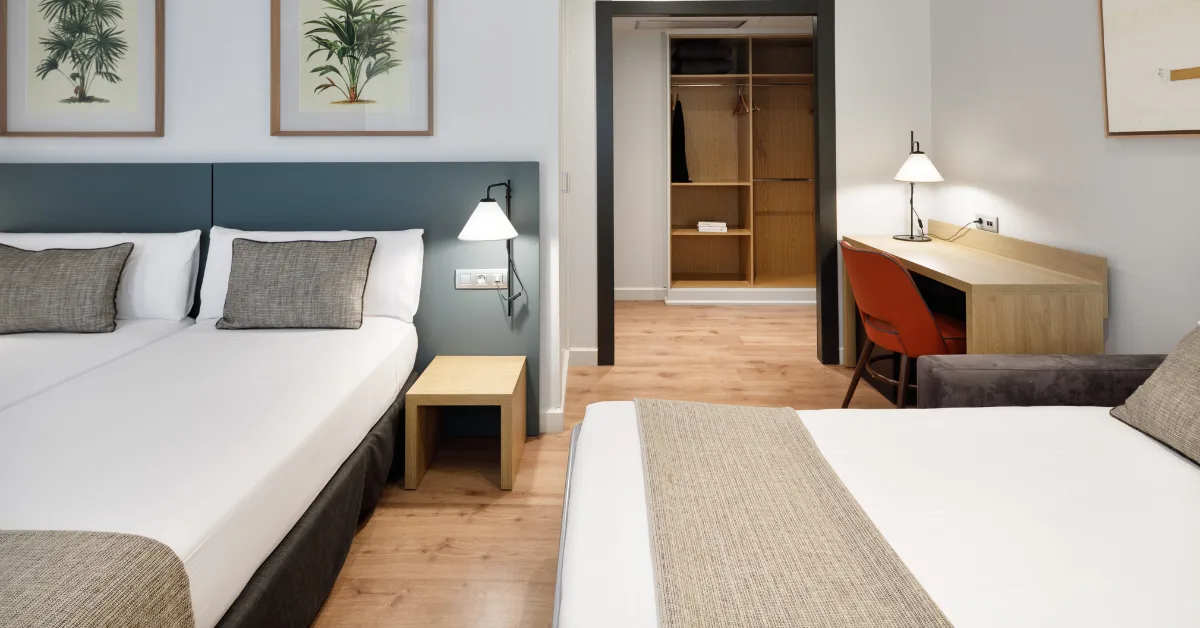
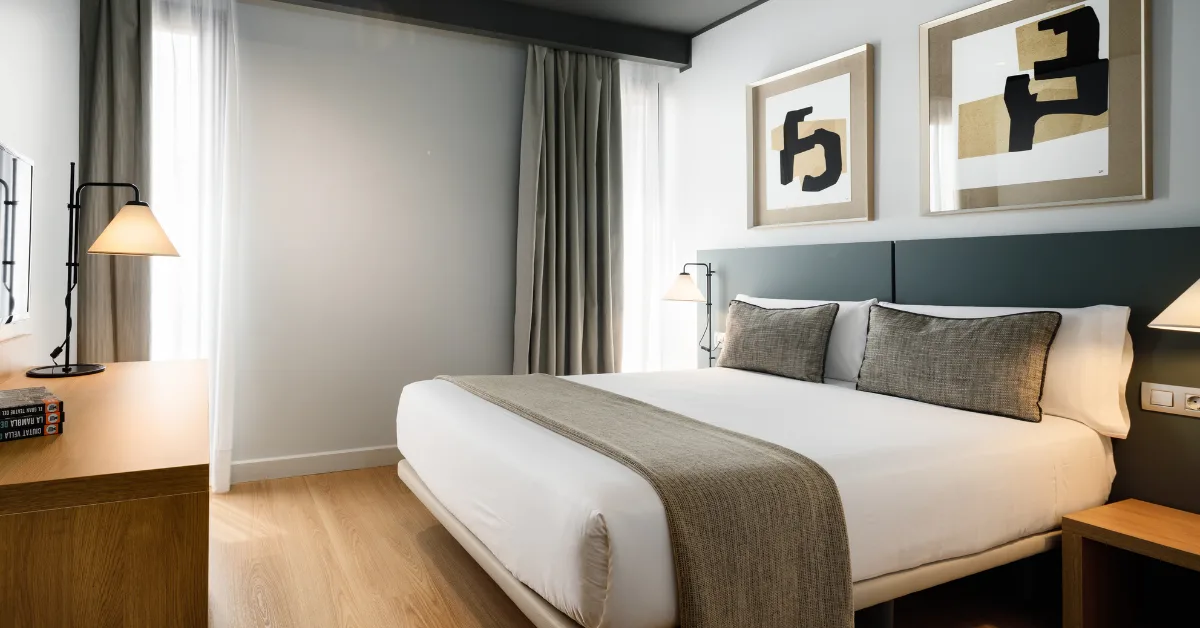
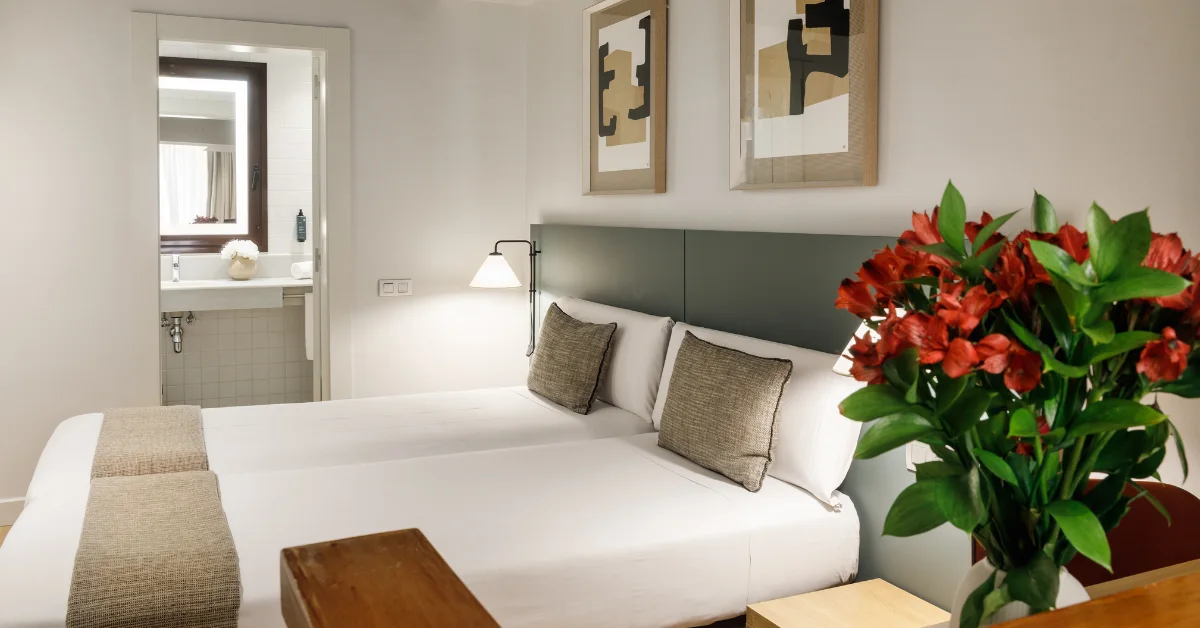
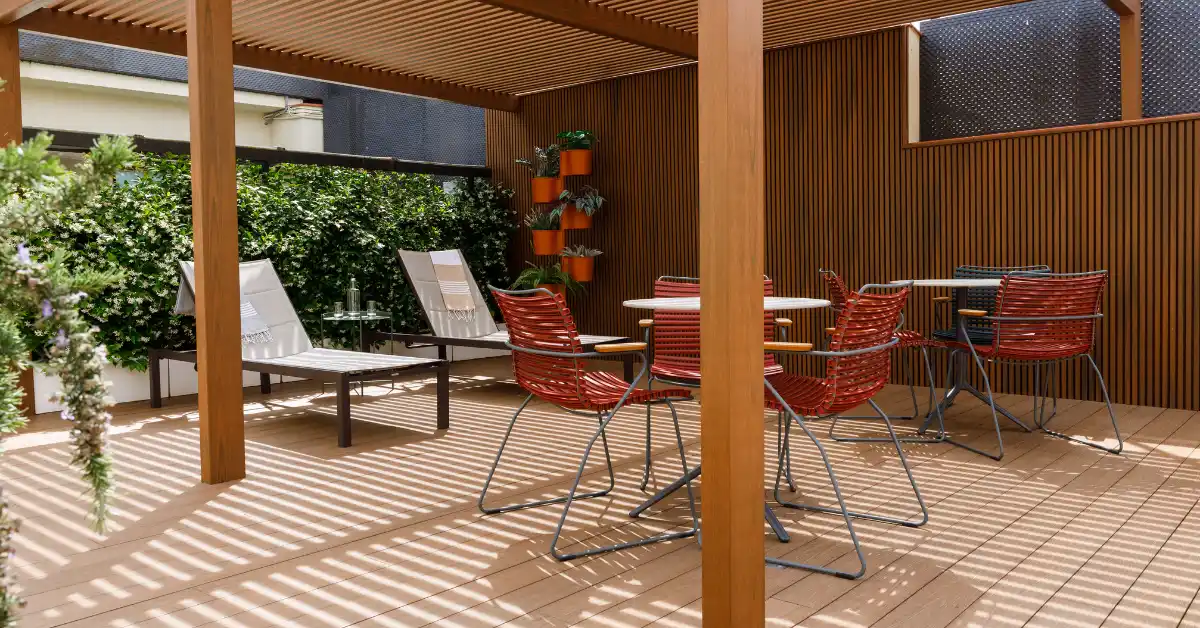
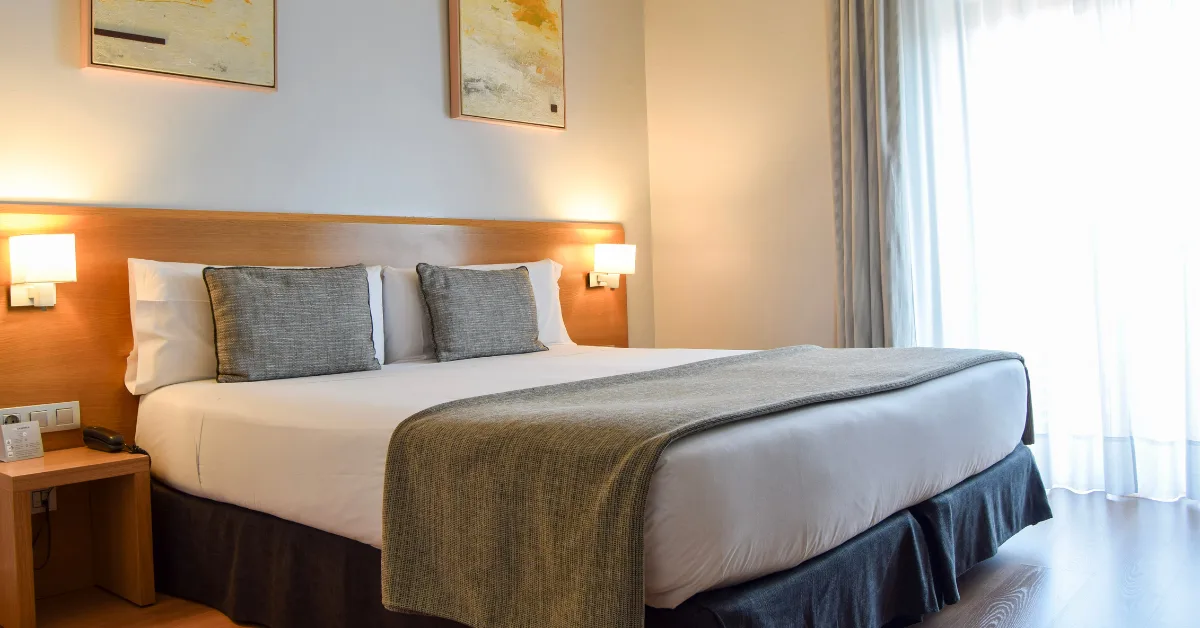
If you’re looking for a comfortable stay in the centre, Hotel Arc La Rambla (La Rambla 19-21, next to Drassanes metro, L3) is one of the best options for visiting the Arc de Triomf and the rest of Barcelona. Its location beside Las Ramblas gives easy access to the main points of interest, including the Arc de Triomf, the Gothic Quarter, the Cathedral and La Boqueria market. From the hotel you can reach the Arc de Triomf in a few minutes by metro (connecting to the L1) or on a pleasant walk through the old town. After your visit to the monument and the Parc de la Ciutadella, you can come back comfortably to rest and keep exploring the next day.
💡 Book on our website with the code ARCBLOG and enjoy a special perk as a blog reader.
Arc de Triomf — frequently asked questions
Where is the Arc de Triomf?
It’s in Barcelona, at the start of the Passeig de Lluís Companys, between the Eixample and Ciutat Vella, next to the Parc de la Ciutadella. The nearest metro stop is Arc de Triomf (L1).
Why was the Arc de Triomf built?
It was built as the main gateway to the 1888 Universal Exhibition, held in the Parc de la Ciutadella. Unlike other European arches, it doesn’t commemorate a military victory but the city’s progress and openness.
What architectural style does it have?
It belongs to the neo-Mudéjar style, characterised by the use of exposed brick and ornamental decoration. It’s about 30 metres tall and was designed by Josep Vilaseca i Casanovas.
Can you go up the Arc de Triomf?
No. The Arc de Triomf can’t be visited inside and you can’t climb it; it’s admired and photographed from the outside, which is completely free.
What’s near the Arc de Triomf?
The Parc de la Ciutadella (5 minutes away), Barcelona Zoo, the El Born district and, a bit further, the Gothic Quarter and Plaça de Catalunya.


