


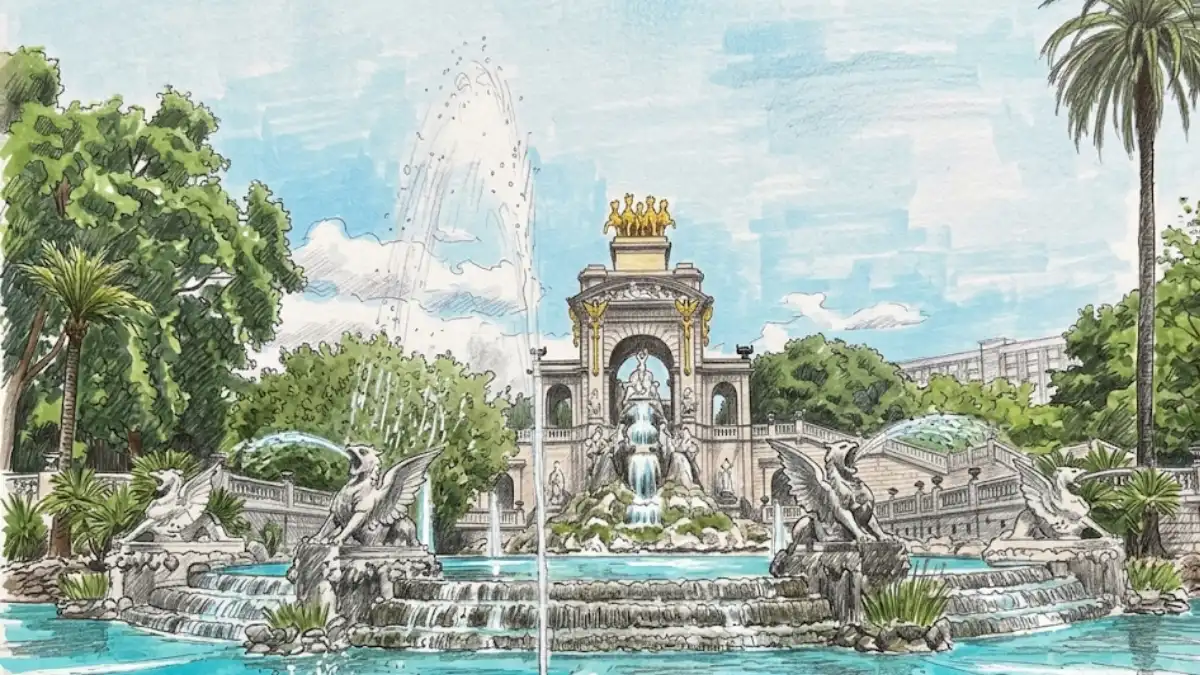
Parc de la Ciutadella is the great park in the centre of Barcelona and the city’s oldest, between the Born and the Barceloneta. It’s free and open daily (usually 10:00 to 22:30). Born from the 1888 Universal Exposition on the site of an old military fortress, it now holds the spectacular Monumental Cascade (which a young Gaudí helped design), a lake with rowing boats, Modernista jewels like the Castell dels Tres Dragons, the Catalan Parliament, a big stone mammoth, dozens of sculptures and Barcelona Zoo. Metro: Arc de Triomf (L1) or Ciutadella-Vila Olímpica (L4).
Places to Visit in Barcelona…
- Montjuïc
- Tibidabo
- Laberint d’Horta
- Jardí Botànic de Barcelona
- Zoo de Barcelona
- Aquàrium de Barcelona

What is Parc de la Ciutadella?
Parc de la Ciutadella is the green lung of Barcelona’s old town and the city’s oldest public park. Right in the centre, between the Born and the Barceloneta, it’s where locals and visitors come to stroll, exercise, row on the lake, lie on the grass or enjoy a picnic under century-old trees. But beyond being a place to relax, it’s a genuine open-air museum: it holds a monumental cascade, Modernista buildings, the seat of the Catalan Parliament and dozens of sculptures. And all of it is free.
From military fortress to city park
The park’s history explains even its name. The land it now occupies was once home to the Ciutadella, a huge star-shaped military fortress that King Philip V ordered built after the fall of Barcelona in 1714, at the end of the War of the Spanish Succession. Much of the Ribera neighbourhood was demolished to build it, so it was long a hated symbol for the city. The fortress was largely demolished in 1868 and, for the 1888 Universal Exposition, the grounds were transformed into the great urban park we know today, designed by architect Josep Fontserè.
What to see in Parc de la Ciutadella?
The Monumental Cascade
It’s the park’s great icon: a spectacular, classical-style monumental cascade, crowned by the golden quadriga of Aurora and presided over by a Birth of Venus. It was designed by Josep Fontserè, but the most fascinating part is that a young Antoni Gaudí, then an architecture student, helped build it, contributing to the hydraulic solution and to ornamental details of the grotto and the rocks. It’s the most photographed spot in the park and a place full of life at weekends.
The lake and the rowing boats
In front of the cascade stretches a romantic lake where you can hire rowing boats, one of Barcelona’s most classic and enjoyable plans. Hire costs around €7 for one or two people in 30-minute slots, and the service usually runs all year (with longer hours in spring and summer).
The Castell dels Tres Dragons and the greenhouses
The park preserves several jewels from the 1888 Exposition. The most notable is the Castell dels Tres Dragons, by the great Modernista architect Lluís Domènech i Montaner, built as a café-restaurant: an exposed-brick and iron building that anticipates Modernisme before it even had a name (it housed the Zoology Museum for years). Nearby are the Hivernacle (greenhouse) and the Umbracle (shade house), two beautiful iron-and-glass structures perfect for strolling among the plants.
The Parliament, the mammoth and the sculptures
On the former parade ground stands the Parliament of Catalonia, which occupies the building of the old military arsenal. In front of it, in a pond, is a replica of El Desconsol by Josep Llimona (the original is in the MNAC). Scattered across the park are more than 40 sculptures, among them La Dama del Paraigua (The Lady with the Umbrella), a symbol of the city. And much loved by children, the big stone mammoth, a monumental sculpture presiding over one part of the park.
Barcelona Zoo
Within the park, though with a separate paid entrance, is Barcelona Zoo, opened in 1892. It takes up a good part of the grounds and is home to more than 2,000 animals of around 300 species. It was famous worldwide for Snowflake, the only known albino gorilla, who lived there between 1966 and 2003.
What are the Parc de la Ciutadella opening hours in 2026?
| Area | Hours |
|---|---|
| Park (grounds) | Every day, approx. 10:00 – 22:30 |
| Boat hire | Apr-Sep: 10:00-20:00 · Rest of year: 10:00-18:00 (approx.) |
| Barcelona Zoo | Its own hours and paid entry |
| Parliament of Catalonia | Weekend visits (check) |
How much does it cost to enter Parc de la Ciutadella?
Entry to the park is completely free. Only some services and specific attractions inside the grounds have a cost:
| Item | Price (2026) |
|---|---|
| Park entry | Free |
| Rowing boat (30 min) | From ~€7 (1-2 people) |
| Barcelona Zoo | Paid entry (check official website) |
💡 Tip: the park is one of the best free plans in Barcelona. You can see the cascade, the lake, the Modernista buildings and the sculptures without paying anything; the Zoo, on the other hand, is worth the entry only if you feel like spending time with the animals.
How to get to Parc de la Ciutadella?
The park is right in the centre, in Ciutat Vella, with several entrances. The prettiest is the one on Passeig de Lluís Companys, by the Arc de Triomf.
| Transport | Line / Detail | Stop |
|---|---|---|
| Metro | Line 1 (red) | Arc de Triomf (entrance via Passeig Lluís Companys) |
| Metro | Line 4 (yellow) | Ciutadella-Vila Olímpica (access on the lake side) |
| Metro | Line 4 | Barceloneta or Jaume I |
| Bus / Tram | Several lines · Tram T4 | Ciutadella-Vila Olímpica |
| Bus Turístic | Red Route | Parc de la Ciutadella – Zoo |
If you enter by the Arc de Triomf, the tree-lined Passeig de Lluís Companys —with its Modernista lampposts by Pere Falqués— is the perfect prelude and leads straight to the main gate in a few minutes.
Practical tips for your visit
- Allow at least 1-2 hours for the park; half a day if you include the Zoo.
- Go on a weekday or early to enjoy it without crowds; sunny weekends get busy.
- Bring a picnic: there are wide lawns to sit on.
- Don’t miss the Gaudí details on the cascade, or the Castell dels Tres Dragons.
- It’s a flat, accessible park, ideal with children (there’s a play library and play areas) or in a wheelchair.
- Combine it with the Arc de Triomf, the Born, Santa Maria del Mar and the Picasso Museum, all next door.
What to see near Parc de la Ciutadella
| Place | Why visit |
|---|---|
| Arc de Triomf | The monumental gateway of the 1888 Exposition, next to the park |
| The Born & Santa Maria del Mar | The most charming neighbourhood, a step away |
| Picasso Museum | The great collection of Picasso’s formative years |
| El Born CCM | Cultural centre over an 18th-century archaeological site |
| Barceloneta | The seaside neighbourhood and its beaches, very close |
Hotel Arc La Rambla, a stroll from Parc de la Ciutadella
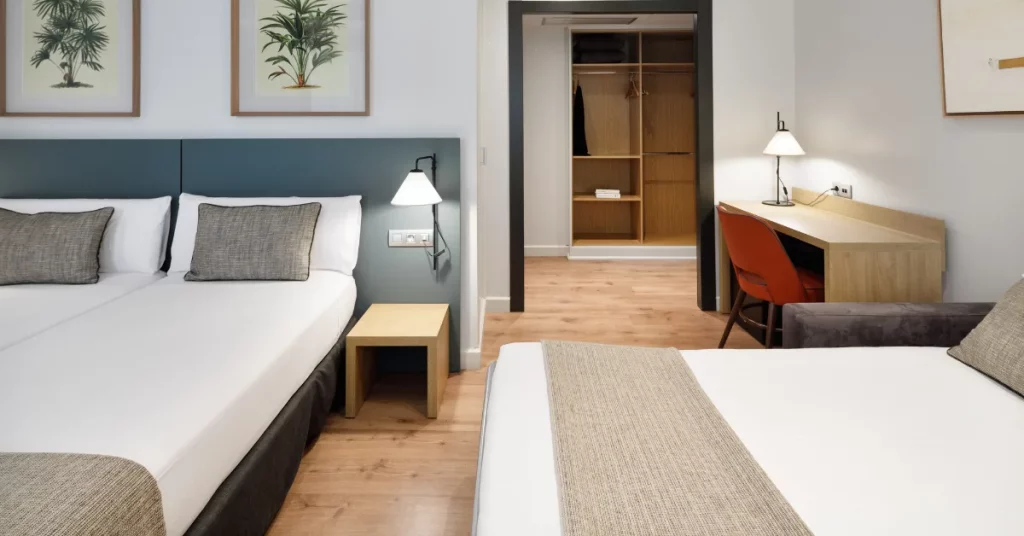
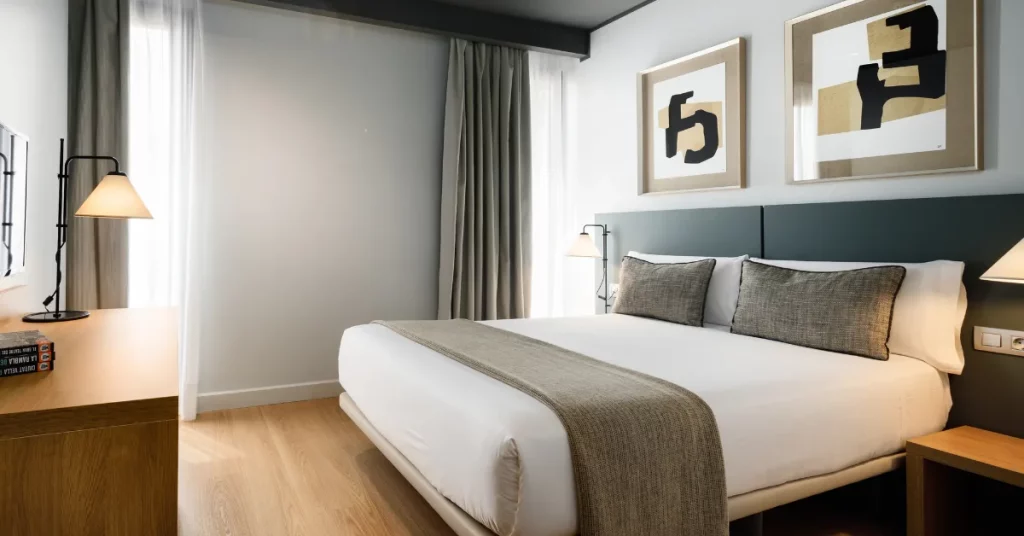
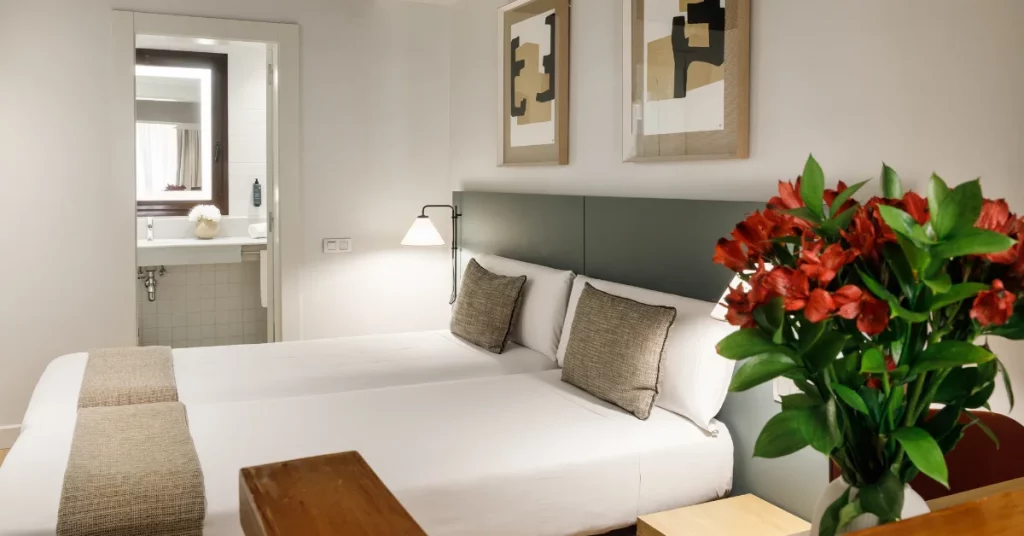
From Hotel Arc La Rambla (La Rambla 19-21, next to Drassanes metro, L3), Parc de la Ciutadella is a pleasant walk through the old town, or a short metro ride away. It’s the perfect excuse for a morning outdoors —cascade, lake and sculptures— which you can combine with the Born, Santa Maria del Mar, the Picasso Museum and the Arc de Triomf, before returning to the hotel, steps from Las Ramblas and the harbour.
💡 Book on our website with the code ARCBLOG and enjoy a special perk as a blog reader.

Parc de la Ciutadella — frequently asked questions
How much does it cost to enter Parc de la Ciutadella?
Entry to the park is completely free. Only some services and specific attractions have a cost, such as hiring a boat on the lake (from around €7 for 30 minutes) or entry to Barcelona Zoo, which has its own fare and calendar.
What are the Parc de la Ciutadella opening hours?
The park opens every day, usually from 10:00 to 22:30. Boat hire and the Zoo have their own seasonal hours. It’s worth checking the current hours on the official website, especially out of season.
What is there to see in Parc de la Ciutadella?
Its main attractions are the Monumental Cascade (with the young Gaudí’s involvement), the lake with rowing boats, the Modernista Castell dels Tres Dragons by Domènech i Montaner, the Hivernacle and the Umbracle, the Parliament of Catalonia, the big stone mammoth, dozens of sculptures such as El Desconsol and the Lady with the Umbrella, and Barcelona Zoo.
Was Gaudí involved in Parc de la Ciutadella?
Yes. While still an architecture student, a young Antoni Gaudí worked with Josep Fontserè on the construction of the Monumental Cascade, contributing to the hydraulic solution and to ornamental details of the grotto, the rocks and the railings. It’s one of his earliest marks on the city.
How do you get to Parc de la Ciutadella?
The most convenient metro stops are Arc de Triomf (Line 1), to enter via Passeig Lluís Companys, and Ciutadella-Vila Olímpica (Line 4), which gives access on the lake side. Several bus lines, the tram (T4) and the Bus Turístic (Parc de la Ciutadella – Zoo stop) also serve it.


