


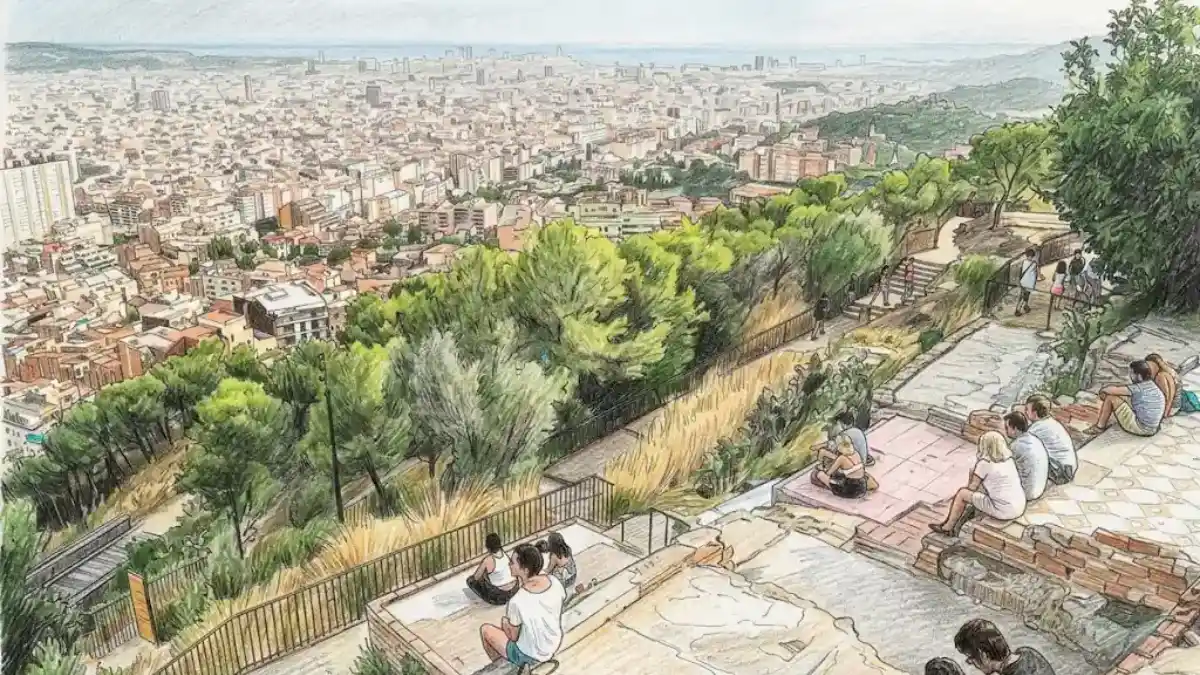
The Bunkers del Carmel (Turó de la Rovira) are the remains of a Civil War anti-aircraft battery (1937) on top of a 262-metre hill, today one of the best viewpoints in Barcelona, with 360° views. Access is free, as is the MUHBA exhibition. It opens daily: 09:00-19:30 in summer and 09:00-17:30 in winter (since 2023 it no longer opens at night). The last part of the climb is always on foot; the easiest option is the V17 or 24 bus.
You might also be interested in…

What are the Bunkers del Carmel?

If there’s one place in Barcelona where history and views blend in a way no paid viewpoint can match, it’s the Turó de la Rovira, better known as the Bunkers del Carmel. At 262 metres above sea level, on top of the Carmel neighbourhood, the remains of a Spanish Civil War anti-aircraft battery have become one of the most impressive —and most genuine— observation points in the whole city. Free entry, 360° views and a story few guidebooks tell as it deserves.
History: from anti-aircraft battery to Barcelona icon
In 1937, in the middle of the Civil War, the top of the Turó de la Rovira was chosen to install an anti-aircraft battery. The reason was strictly strategic: at 262 metres, the hill dominated the whole northern part of Barcelona and offered a privileged line of sight over the city and the sea. From here, the guns tried to defend Barcelona from the bombing raids of the Francoist and Italian air forces that, between 1937 and 1938, made the city one of the first targets of mass bombing of a civilian population in modern history.
When the war ended, the military installations fell into disuse. Over the following decades the land was occupied by families without resources who built their shacks there, creating an informal neighbourhood known as “Els Canons” (the Cannons). This settlement did not disappear until well into the 1990s, when the City Council recovered the space for public use.
Since then, the Turó de la Rovira has undergone a radical transformation: from a forgotten place to a site of historical memory and a first-rate urban viewpoint. The MUHBA (Museum of the History of Barcelona) integrated the battery’s ruins into its network of sites, with the permanent exhibition “Barcelona on the edge”, which explains the role of the guns, the city during the war and the later shantytown.
What to see at the Bunkers del Carmel
A visit to the Turó de la Rovira has two layers that complement each other perfectly: the historical and the scenic. On one hand, the circular concrete platforms where the 105 mm guns were mounted and the MUHBA panels that explain the context; on the other, the great open-air viewpoint.
The 360° panoramic views
From the top you can see almost all of Barcelona: the Mediterranean in the distance, the harbour, the Sagrada Família, Tibidabo, Montjuïc, the Eixample in its perfect grid and, on very clear days, the inland mountains of Catalonia. It’s, without exaggeration, one of the most complete urban panoramas in the whole city, and completely free.
| What you’ll see | Approx. direction |
|---|---|
| Mediterranean Sea and harbour | South |
| Sagrada Família | South-west |
| Montjuïc and the castle | South-west |
| Tibidabo and Collserola tower | North-west |
| Torre Agbar (Torre Glòries) | South-east |
| Eixample and the Cerdà grid | Centre |
What are the Bunkers del Carmel opening hours in 2026?
Since May 2023, the site has had regulated opening and closing times set by the City Council, to protect the neighbourhood’s peace and avoid the night-time noise problems that affected residents. It can no longer be accessed at night.
| Season | Hours |
|---|---|
| Summer (extended hours) | 09:00 – 19:30 |
| Winter (reduced hours) | 09:00 – 17:30 |
⚠️ Important: the site closes punctually. Plan with enough margin, especially if you want to see the sunset, since in summer closing happens just as the light is at its best. The MUHBA exhibition has its own schedule (it usually opens Wednesday to Sunday); it’s worth checking the official website before you go.
Admission price
Access to the viewpoint and the battery ruins is completely free. The MUHBA exhibition is also free to enter.
How to get to the Bunkers del Carmel?
Getting there takes a bit of planning: the hill has no public transport right to the top, so the last part of the trip is always on foot.
| Transport | Detail | Final walk |
|---|---|---|
| Metro L4 | Alfons X or Guinardó/Hospital de Sant Pau stop | ~20-30 min uphill (1.1 km) |
| Bus V17 / 24 | Gran Vista – Pl. de la Mitja Lluna stop | ~10 min walk |
| Bus 119 | Carmel stop | ~15 min walk |
| Taxi / VTC | From the centre of Barcelona | ~20 min, about €10-12 |
The address is Carrer de Marià Labèrnia, s/n, 08032 Barcelona. On Google Maps, search for “Turó de la Rovira” or “Bunkers del Carmel” for precise directions to the top.
Tip: the most comfortable way up is the V17 or 24 bus, which drop you just 10 minutes’ walk from the top. Going down by metro from Alfons X is also a good combination if you want to vary the route.
Practical tips for your visit
- The best time is sunset. The golden light over the city and sea is spectacular. In summer, arrive at least 45 minutes before closing to settle in.
- There’s no shade. In summer the top is fully exposed to the sun: bring water, sun protection and a hat if you go in the middle of the day.
- There are no bars or shops at the top. If you want a picnic or drinks, buy them beforehand in the neighbourhood.
- Go on a weekday if you can. Weekends and summer evenings can be very crowded; Monday to Thursday morning is the quietest.
- Comfortable shoes. The access from the bus stop is a short but steep walk, with some unpaved stretches.
- No night-time alcohol. Municipal rules prohibit drinking alcohol in the public space after the site closes.
Hotel Arc La Rambla, your base for exploring Barcelona
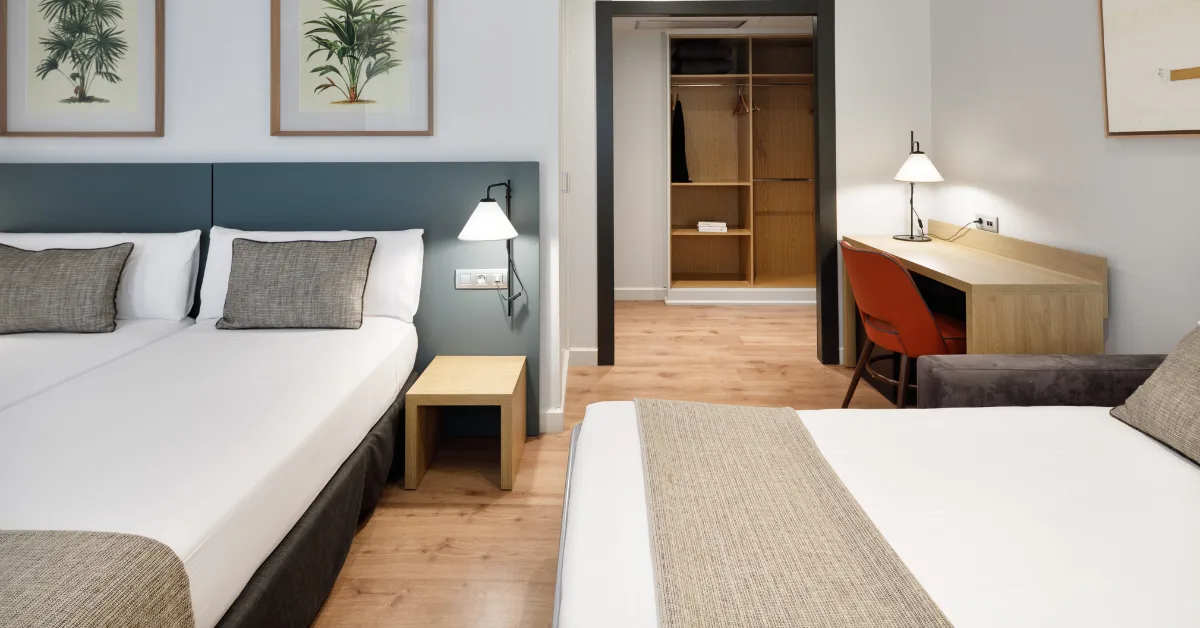
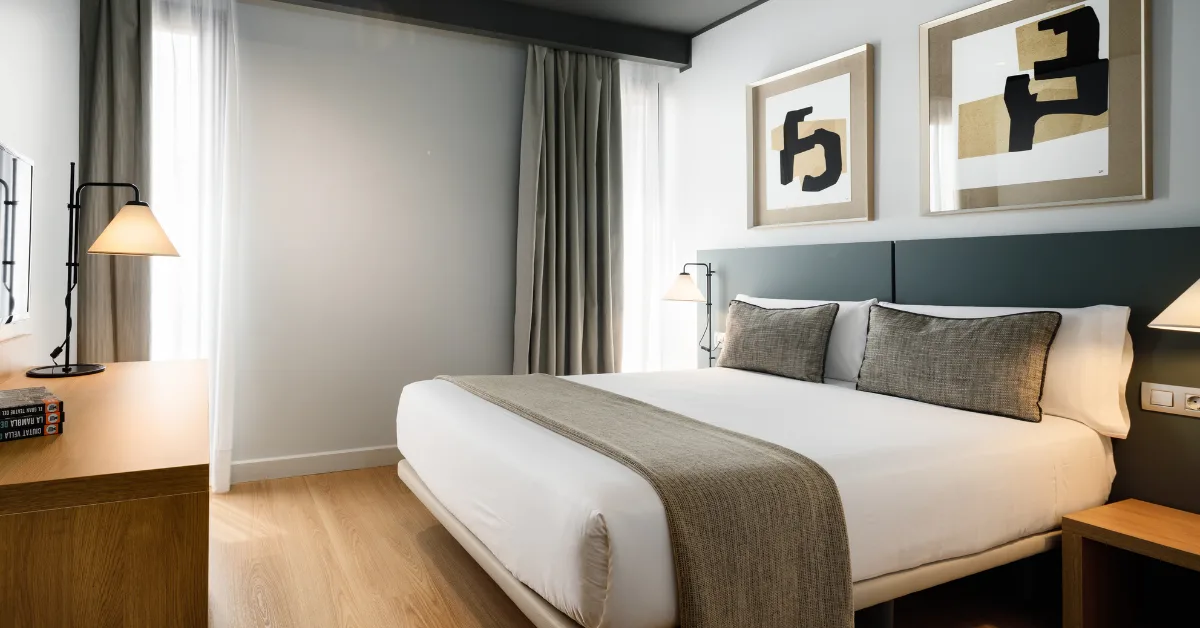
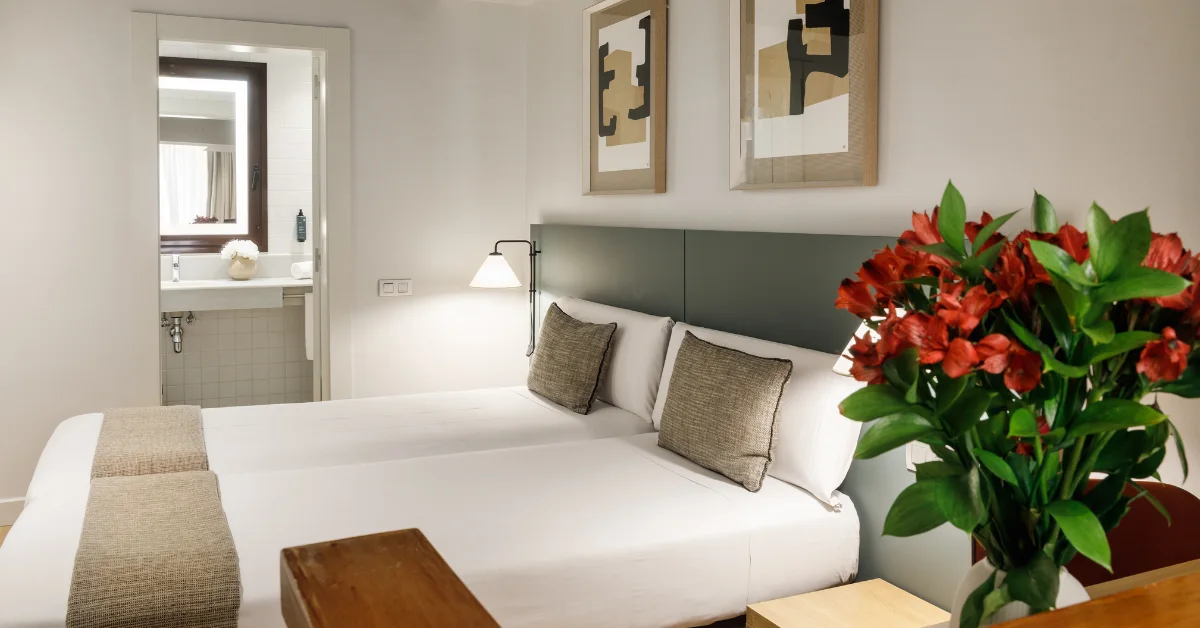
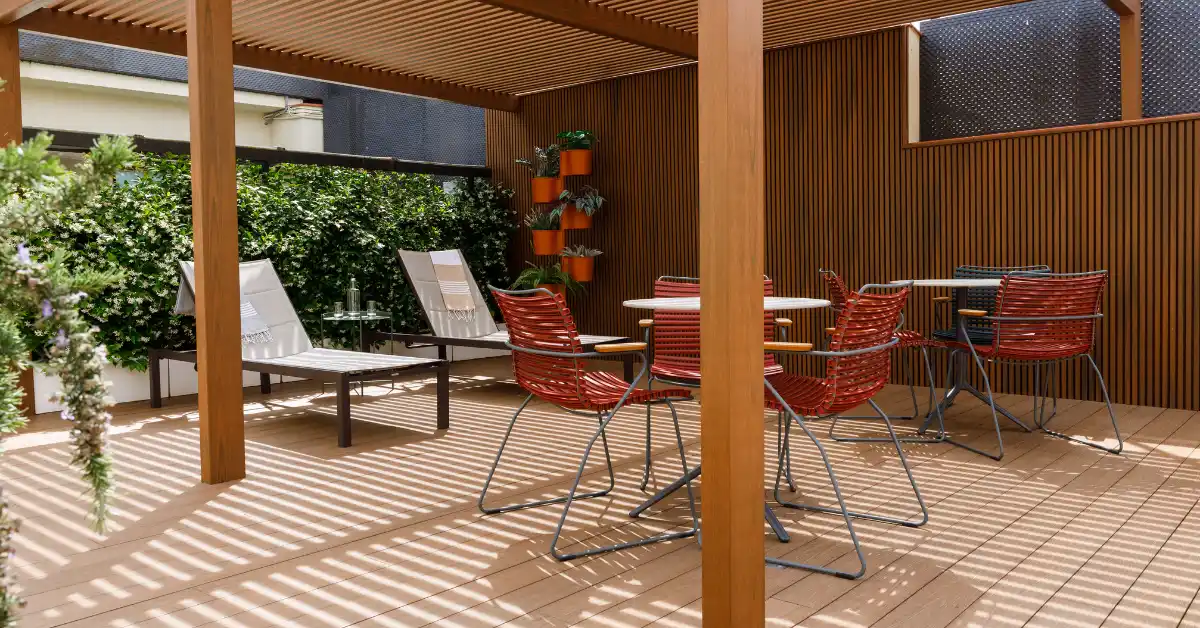
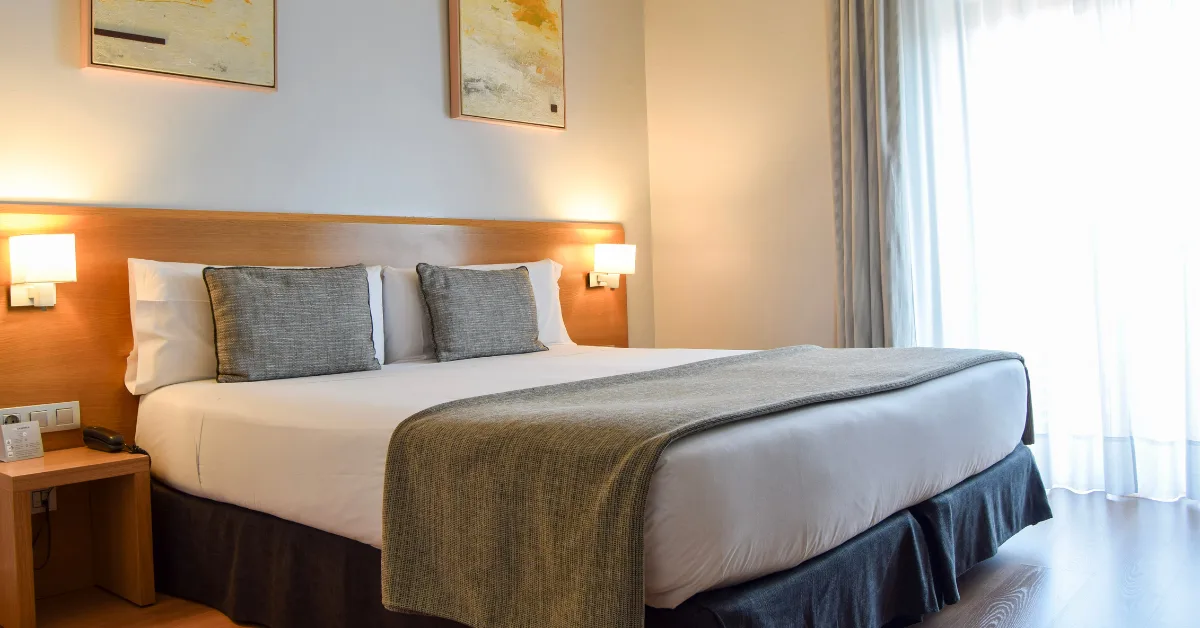
From Hotel Arc La Rambla (La Rambla 19-21) you have direct metro access at Drassanes (L3), from where you can connect towards the Carmel neighbourhood. But the Bunkers are just one of many corners worth discovering from here: the harbour, the Gothic Quarter, Palau Güell and the Columbus Monument are literally around the corner. An ideal location for anyone who wants the whole of Barcelona within reach.
💡 Book on our website with the code ARCBLOG and enjoy a special perk as a blog reader.
Bunkers del Carmel — frequently asked questions
Is entry to the Bunkers del Carmel free?
Yes, access to the viewpoint and the anti-aircraft battery ruins is completely free. The MUHBA exhibition “Barcelona on the edge”, in the same site, is also free to enter.
What are the Bunkers del Carmel opening hours?
The site opens daily: in summer from 09:00 to 19:30 and in winter from 09:00 to 17:30. Closing is strict and there is security; since May 2023 it can no longer be accessed at night.
How do you get to the Bunkers del Carmel?
The easiest way is the V17 or 24 bus, which stop at Gran Vista – Pl. de la Mitja Lluna, about 10 minutes’ walk from the top. You can also arrive by metro (L4, Alfons X or Guinardó/Hospital de Sant Pau stop) and walk up about 20-30 minutes. By taxi from the centre it’s around €10-12 and 20 minutes.
What is the history of the Bunkers del Carmel?
They’re the remains of an anti-aircraft battery built in 1937, during the Civil War, on top of the Turó de la Rovira (262 m), from where attempts were made to defend Barcelona from bombing. After the war, the space was occupied by informal housing (the “Els Canons” neighbourhood) until the 1990s. Today it’s a site of historical memory managed by the MUHBA.
What’s the best time to visit the Bunkers del Carmel?
Sunset is the most spectacular time, especially in summer. It’s recommended to arrive at least 45 minutes before closing and to visit on a weekday to avoid crowds.


