


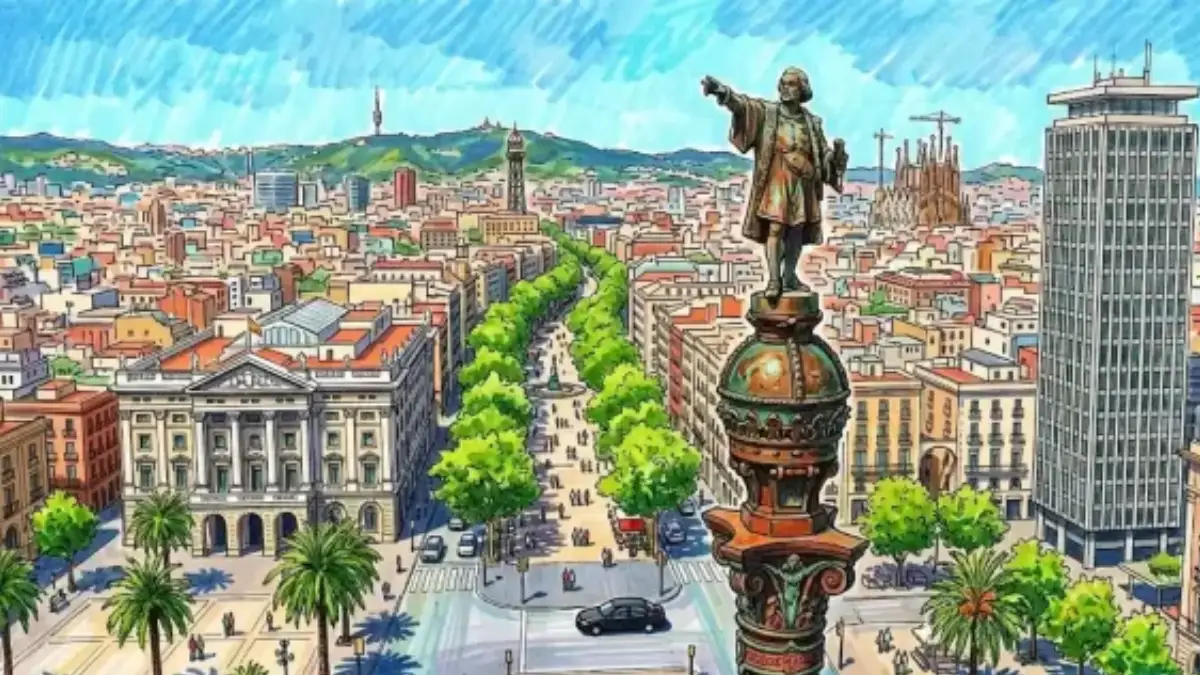
The Columbus Monument (Mirador de Colom) is a 60-metre column at the end of La Rambla, in the Plaça del Portal de la Pau, beside Port Vell. It was designed by Gaietà Buïgas and the bronze statue of Columbus (about 7 m) is by Rafael Atché. It was inaugurated in 1888 for the Universal Exhibition. The square is free to access; inside there’s a lift to a viewpoint at 60 m, although access is temporarily closed (worth checking before you go). The nearest metro stop is Drassanes (L3), 2 minutes away.
You might also be interested in…

What is the Columbus Monument?
At the end of La Rambla, where Barcelona’s most famous promenade meets the sea, a 60-metre column crowns the skyline with the unmistakable figure of Christopher Columbus. The Columbus Monument —or Mirador de Colom, in Catalan— is one of the oldest and most recognisable icons in the city. Inaugurated in 1888 for the Universal Exhibition, it was built to honour the navigator who, on his return from the Americas, chose the port of Barcelona to disembark and be received by the Catholic Monarchs. More than a century later, it remains one of the essential landmarks of any walk through the city.
History of the Columbus Monument
The monument’s story begins in 1881, when Barcelona City Council decided to erect a tribute to Christopher Columbus, taking advantage of the port redevelopment works and the upcoming Universal Exhibition. The project was entrusted to architect Gaietà Buïgas i Monravà, and the statue crowning the column is the work of sculptor Rafael Atché. Construction took seven years: when it was inaugurated in 1888, the ensemble won the gold medal of the Universal Exhibition, becoming one of the symbols of a Barcelona opening up to the world. Today, more than 130 years later, it still presides over the Plaça del Portal de la Pau, the meeting point between La Rambla and Port Vell.
Things you might not know
- The statue of Columbus is about 7 metres tall and made of bronze. In his left hand he holds a navigation chart, and with his right arm he points to the horizon.
- The finger does not point to the Americas: although many believe so, the Americas lie in the opposite direction. The statue points out to the open sea; it’s said to face the Mediterranean, perhaps towards Genoa or Mallorca.
- The column is in the Corinthian style and is decorated with sculptural groups about the discovery of the Americas and the coats of arms of eight Spanish provinces.
- At the foot of the monument are eight cast-iron lions that have become one of visitors’ favourite photo spots.
- The total height of the ensemble —base, column and statue— reaches 60 metres.
The Mirador de Colom: views from 60 metres


Inside the column there’s a lift that has historically allowed visitors up to the viewpoint located just below the statue’s feet, at 60 metres, with 360° panoramic views over Barcelona. From there you can make out the line of La Rambla as a green stripe crossing the city, El Raval, the Gothic Quarter, the harbour, Montjuïc and, on clear days, Tibidabo and the Sagrada Família.
⚠️ Important notice: at the time of updating this article, access to the viewpoint is temporarily closed. Before planning your visit, check the current status on the official Barcelona Turisme website. The square and the monument can, in any case, be admired and photographed freely from the street.
How to get to the Columbus Monument?
The monument is at the Plaça del Portal de la Pau, s/n, at the end of La Rambla, right where the Passeig de Colom and the access to Port Vell begin.
| Transport | Line / Detail | Stop |
|---|---|---|
| Metro | Line 3 (green) | Drassanes |
| Bus | Lines 14, 59, 64, 91, 120, D20, H14 | Drassanes / Portal de la Pau |
| Bus Turístic | Red Route | Colom – Museu Marítim |
From the Drassanes metro stop (L3), the monument is less than 2 minutes’ walk away. It’s one of the most accessible locations in the whole city.
Practical tips for your visit
- The best time to visit is early morning or at sunset, when the light is prettier and the square is less crowded.
- At night the monument is lit up and looks especially photogenic from the Passeig de Colom or the harbour.
- If you combine your visit with the Maritime Museum, allow at least two hours for both.
- The square itself is free to access: the monument can be admired and photographed without paying.
- The cast-iron lions at the base are a must, and the perfect photo backdrop for kids.
What to see around the Columbus Monument


Although the monument is the main draw, the Plaça del Portal de la Pau and its surroundings hold some of the most interesting corners of Barcelona. The area deserves at least an hour of relaxed strolling.
| Place | Walking distance | Why visit |
|---|---|---|
| Maritime Museum of Barcelona | 2 min | In the 13th-century Royal Shipyards, one of the most important naval museums in Europe |
| Port Vell and Maremagnum | 5 min | The revamped old harbour, with restaurants, shops and the Aquarium |
| Las Golondrinas | 5 min | The classic tourist boats that have toured the harbour since 1888 |
| Palau Güell | 8 min | Gaudí’s first major work, a UNESCO World Heritage Site |
| La Rambla | At its very start | Barcelona’s most famous promenade, with La Boqueria and the Liceu |
| Gothic Quarter | 10 min | The medieval heart, with the Cathedral and Plaça Reial |
The Columbus Monument and the 1888 Universal Exhibition
To understand the monument in context, it helps to remember that the 1888 Universal Exhibition was Barcelona’s great modernising project. The city used the event to transform its urban fabric, open the Parc de la Ciutadella to the public, inaugurate the Arc de Triomf and build infrastructure that would change its appearance forever. The Columbus Monument was one of the central pieces of that plan, and its gold medal certified that Barcelona had turned a historical tribute into a first-rate work of engineering and sculpture. Today it’s at once a historic symbol, an urban viewpoint and the natural starting point for exploring the city’s waterfront.
Hotel Arc La Rambla, 3 minutes from the Columbus Monument
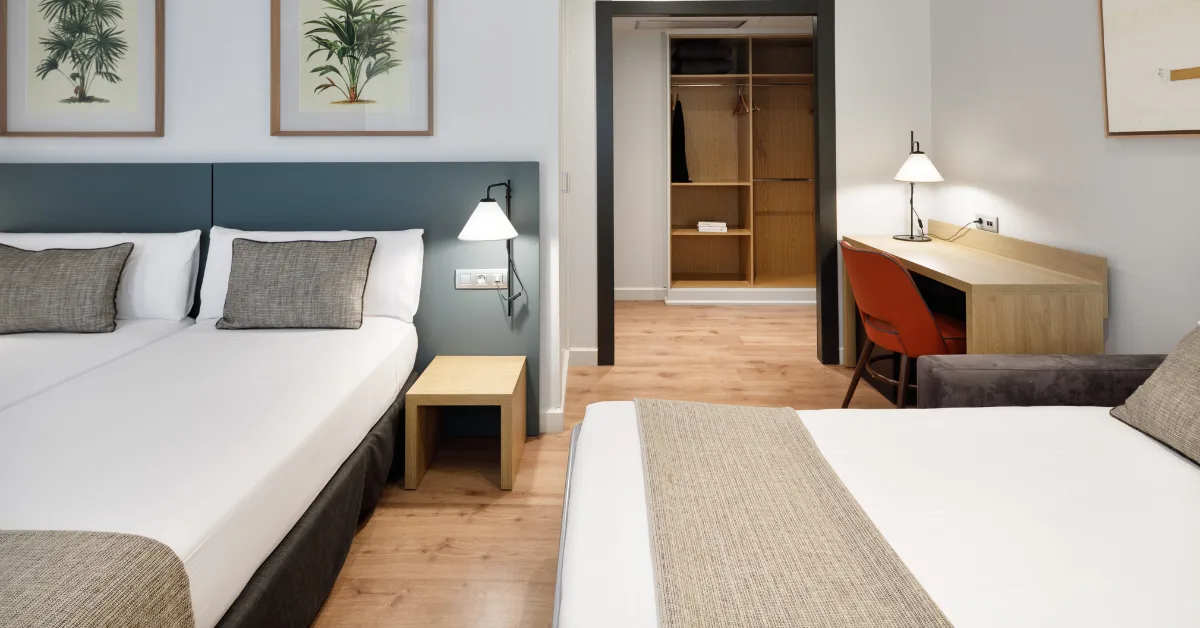
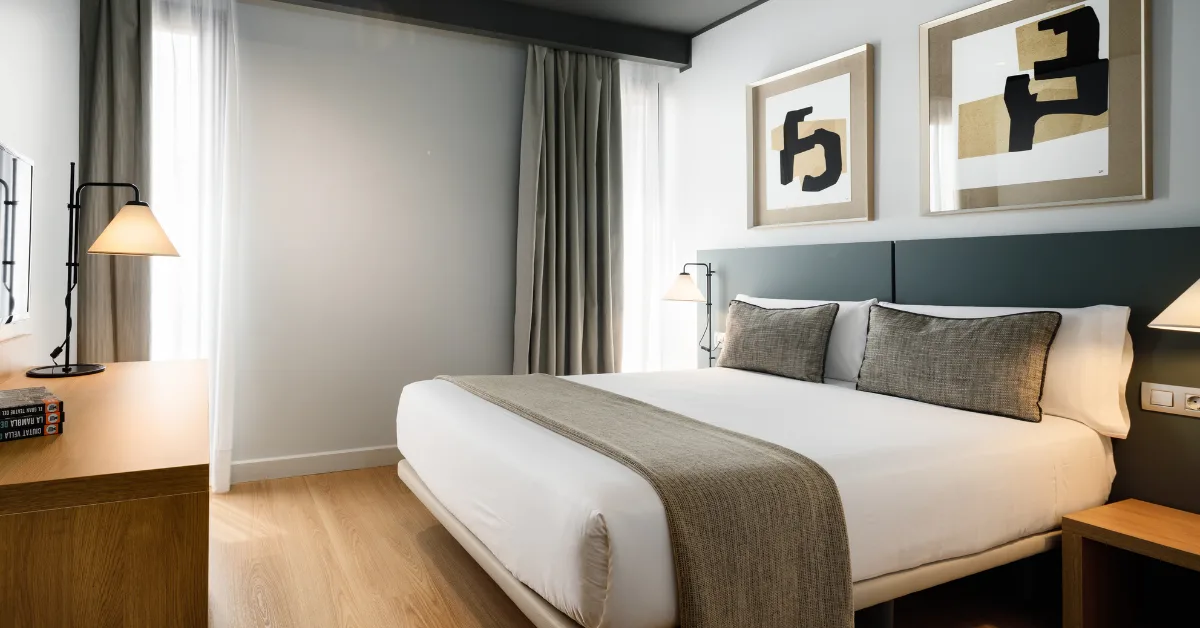
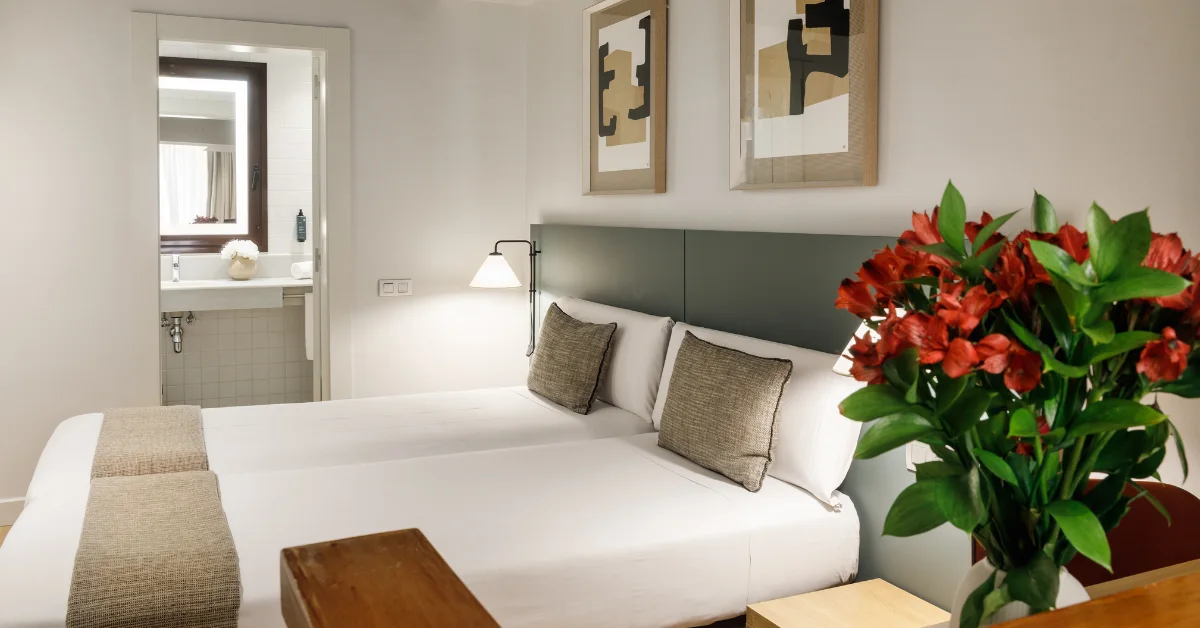
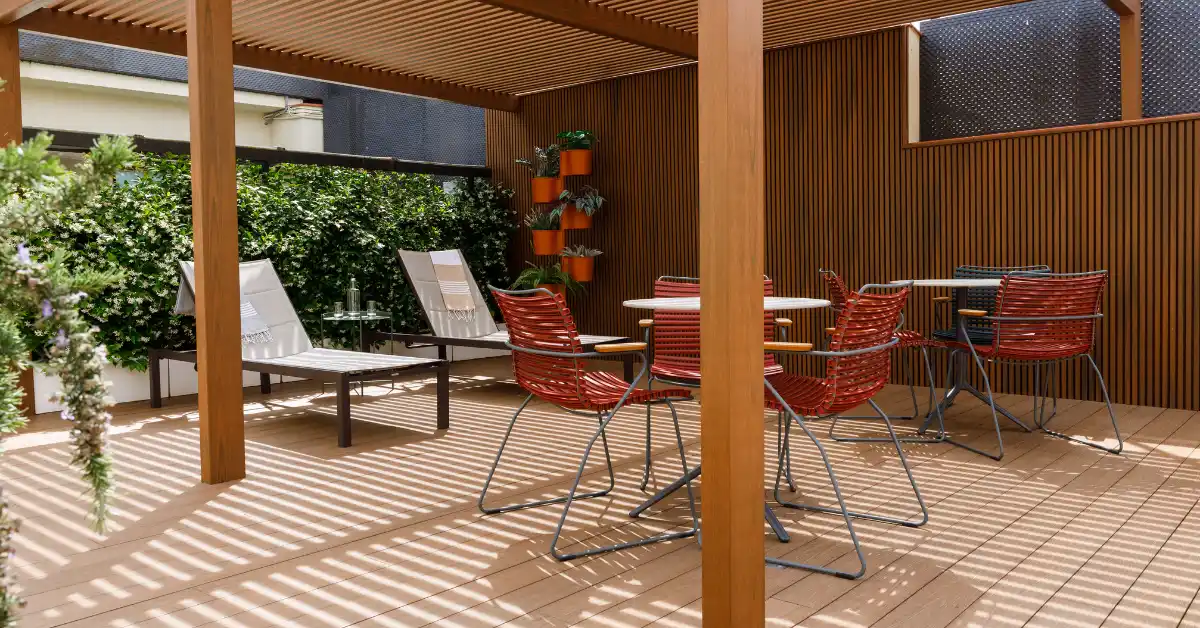
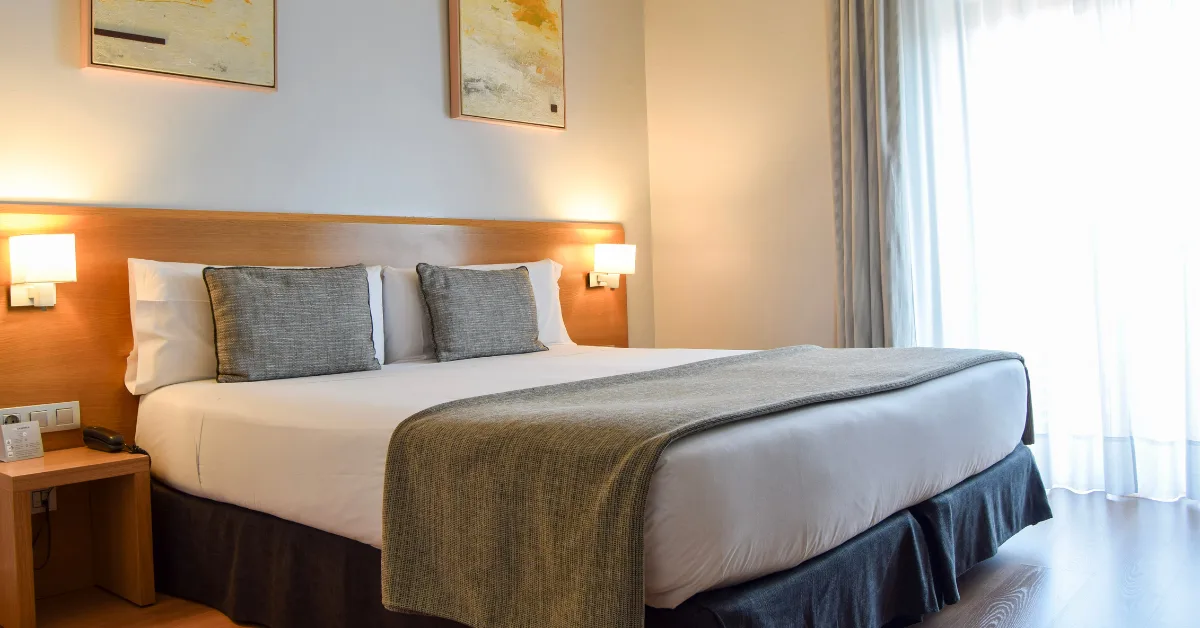
If you want the Columbus Monument literally around the corner, Hotel Arc La Rambla (La Rambla 19-21, next to Drassanes metro, L3) is your best option. Just 3 minutes’ walk from the monument, it puts you in the heart of everything: the harbour, the Gothic Quarter, La Boqueria, Palau Güell and the Drassanes metro stop are all within reach with no transport needed. An ideal base for discovering Barcelona at your own pace.
💡 Book on our website with the code ARCBLOG and enjoy a special perk as a blog reader.
Columbus Monument — frequently asked questions
Where is the Columbus Monument in Barcelona?
At the Plaça del Portal de la Pau, s/n, at the end of La Rambla, right where the Passeig de Colom and the access to Port Vell begin. The nearest metro stop is Drassanes (Line 3).
Can you go up the Columbus Monument?
The monument has an interior lift that leads to a viewpoint at 60 metres. However, access is temporarily closed. It’s worth checking the current status on the official Barcelona Turisme website before visiting.
How tall is the Columbus Monument in Barcelona?
The ensemble —base, column and statue— is 60 metres tall. The statue of Christopher Columbus that crowns it is about 7 metres and made of bronze.
Which way does the Columbus statue point?
It points towards the sea, not towards the Americas (which lie in the opposite direction). It’s one of the best-known curiosities of the monument; it’s thought to face the Mediterranean, perhaps towards Genoa or Mallorca.
When was the Columbus Monument built?
Construction began in 1881 and it was inaugurated in 1888 for the Universal Exhibition. It was designed by architect Gaietà Buïgas i Monravà and the statue is the work of sculptor Rafael Atché.
What’s near the Columbus Monument?
The Maritime Museum (2 min walk), Port Vell and Maremagnum (5 min), Las Golondrinas (5 min), Gaudí’s Palau Güell (8 min) and the Gothic Quarter (10 min).


