


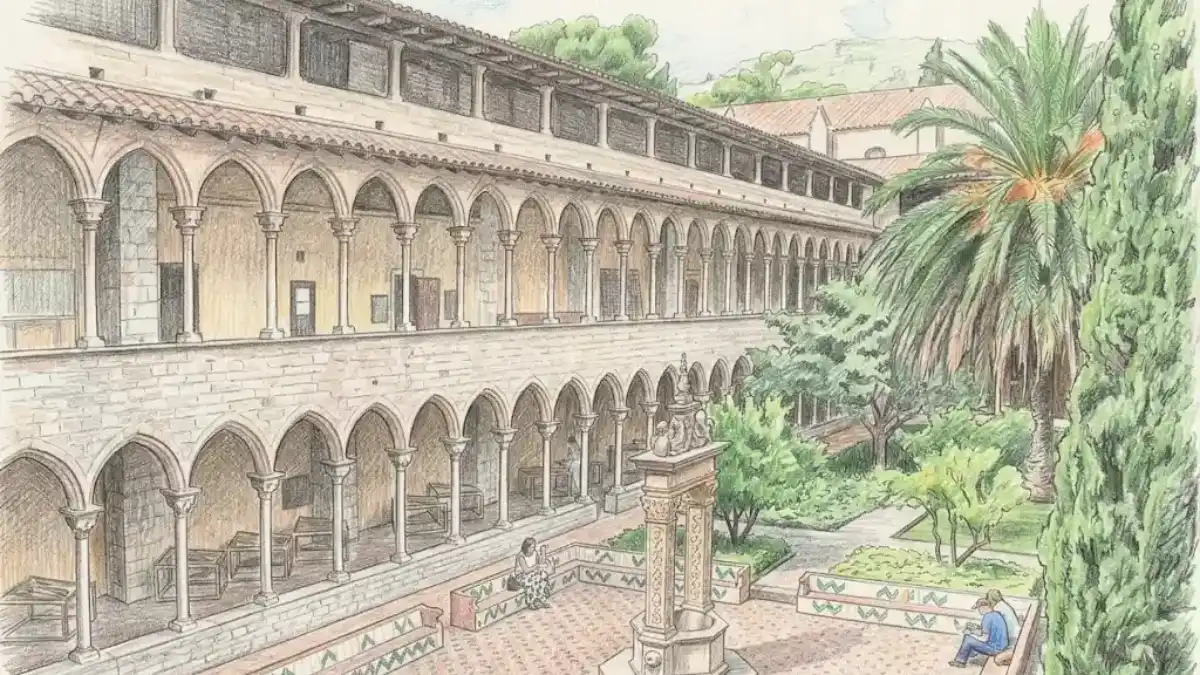
The Monastery of Pedralbes (Reial Monestir de Santa Maria de Pedralbes) is a 14th-century Catalan Gothic complex, founded by Queen Elisenda de Montcada in 1327 and home to Poor Clare nuns for almost seven centuries. Its great treasure is the three-storey cloister, one of the largest in Europe, along with the frescoes by Ferrer Bassa in the Chapel of Sant Miquel. General admission is about €5 and it’s free on Sundays from 3 pm and on the first Sunday of the month. It’s closed on Mondays. You get there by FGC train to Reina Elisenda.
You might also be interested in…

What is the Monastery of Pedralbes?
A few kilometres from Las Ramblas, at the foot of the Collserola hills, hides one of the best-preserved medieval monuments in the whole Iberian Peninsula. The Monastery of Pedralbes is a 14th-century Gothic complex that was home, almost without interruption, to nuns of the Order of Saint Clare from 1327 to 1982. Its three-storey cloister, its single-nave church and its collections of sacred art make it an essential visit for anyone who wants to discover a Barcelona away from mass tourism. And perhaps best of all: most visitors still don’t know about it.
History of the Monastery of Pedralbes
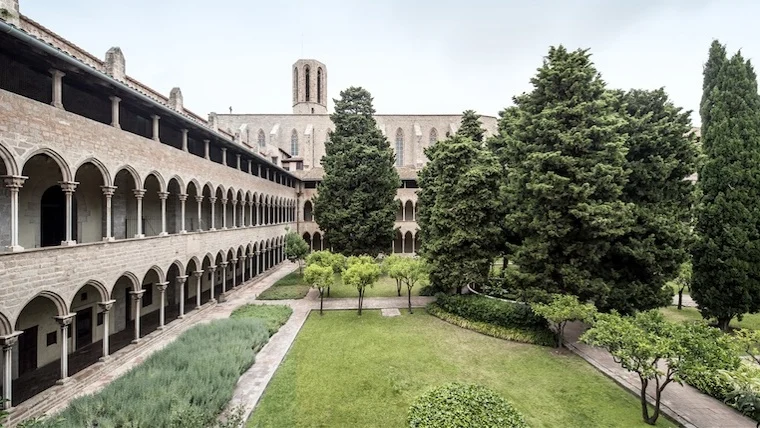
The monastery’s origin dates back to 1326-1327, when Queen Elisenda de Montcada, third wife of King James II of Aragon, decided to found a convent for the Order of Saint Clare on the then-remote grounds of Pedralbes. Construction was surprisingly fast —the main complex was built in little more than a year— which explains the building’s extraordinary stylistic uniformity: the whole complex breathes the same serene, elegant Catalan Gothic. On the king’s death, Elisenda moved to a residence next to the monastery, which she endowed with numerous privileges. The community of Poor Clares lived here until 1982, when the complex opened as a museum (today a small community resides in an adjoining building).
What to see at the Monastery of Pedralbes
The cloister: the jewel of the monastery
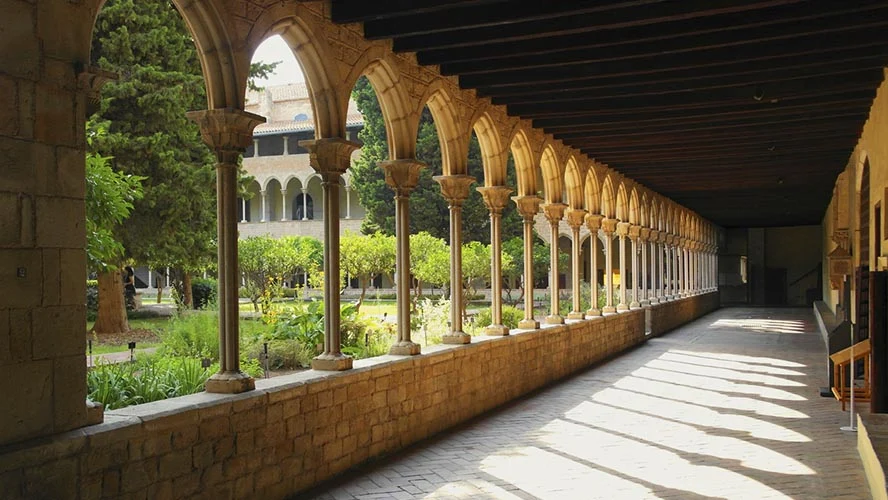
If one space defines the Monastery of Pedralbes, it’s its three-storey cloister, one of the largest and best-preserved Gothic cloisters in Europe. Its wide pointed arches rest on slender columns with decorated capitals, and surround a garden with greenery and an old well that create an atmosphere of calm hard to find anywhere else in Barcelona.
The church of Santa Maria
The church is a perfect example of Catalan Gothic: a single open nave, with no interior columns, side chapels, an octagonal bell tower and large stained-glass windows that fill the space with light. Inside, the highlight is the double tomb of Queen Elisenda de Montcada, with one side depicting her as a queen and the other as a widow in religious habit. The church has free access through an entrance separate from the museum’s.
The monastic quarters
Around the cloister are the various rooms of convent life: the refectory, the chapter house, the infirmary, the dormitory, the cells and the kitchens. The visit lets you walk through these spaces and learn what monastic life was like over the centuries, with furniture and belongings of the community.
The Chapel of Sant Miquel and the frescoes by Ferrer Bassa
In the cloister is the Chapel of Sant Miquel, decorated in 1346 with tempera frescoes by Ferrer Bassa, the most important painter of the Crown of Aragon in his time. The scenes of the life of the Virgin and the Passion of Christ that cover its walls are considered a masterpiece of Catalan Gothic painting and a benchmark of European medieval art.
What are the Monastery of Pedralbes opening hours in 2026?
| Season | Days | Hours |
|---|---|---|
| Summer (April – September) | Tuesday to Friday | 10:00 – 17:00 |
| Summer (April – September) | Saturdays | 10:00 – 19:00 |
| Summer (April – September) | Sundays | 10:00 – 20:00 |
| Winter (October – March) | Tuesday to Friday | 10:00 – 14:00 |
| Winter (October – March) | Saturdays and Sundays | 10:00 – 17:00 |
| Public holidays (all year) | — | 10:00 – 14:00 |
| Mondays | — | Closed |
How much does it cost to enter the Monastery of Pedralbes?
| Ticket type | Price (2026) |
|---|---|
| General admission | €5.20 |
| Reduced (65+, pensioners, unemployed, students under 30) | €3.70 |
| Under 16s | Free |
| First Sunday of each month | Free |
| Every Sunday from 3 pm | Free |
💡 Tip: if your visit falls on a Sunday, arrive after 3 pm and you’ll get in free. It’s one of the best cultural bargains in Barcelona.
How to get to the Monastery of Pedralbes?
The monastery is at Baixada del Monestir, 9, 08034 Barcelona, in the quiet Pedralbes neighbourhood, in the upper part of the city.
| Transport | Line / Detail | Notes |
|---|---|---|
| FGC | L6 / L12 – Reina Elisenda stop | The most convenient option, 5 min walk from the monastery |
| Metro | L3 – Maria Cristina or Palau Reial stop | ~25-30 min walk from the stop |
| Bus | Lines 22, 63, 68, 75, 78, H4, V5 | Several stops nearby |
The best option is the FGC (Ferrocarrils de la Generalitat) to the Reina Elisenda stop: from there the monastery is less than 5 minutes’ walk uphill. The FGC can be taken at Plaça Catalunya and the journey takes about 15 minutes.
Practical tips for your visit
- If you can, go on the first Sunday of the month or any Sunday after 3 pm to get in free.
- Allow at least 1.5-2 hours to see the cloister, the church, the Chapel of Sant Miquel and the quarters at a relaxed pace.
- The monastery is closed on Mondays: it’s visitors’ most common mistake.
- In winter the weekday hours are very short (10:00-14:00); from October to March, prioritise the weekend.
- The church has free access through an entrance separate from the museum’s.
- The Pedralbes neighbourhood, with its quiet streets and stately homes, is worth a stroll and contrasts with the historic centre.
Hotel Arc La Rambla, your base in the heart of Barcelona
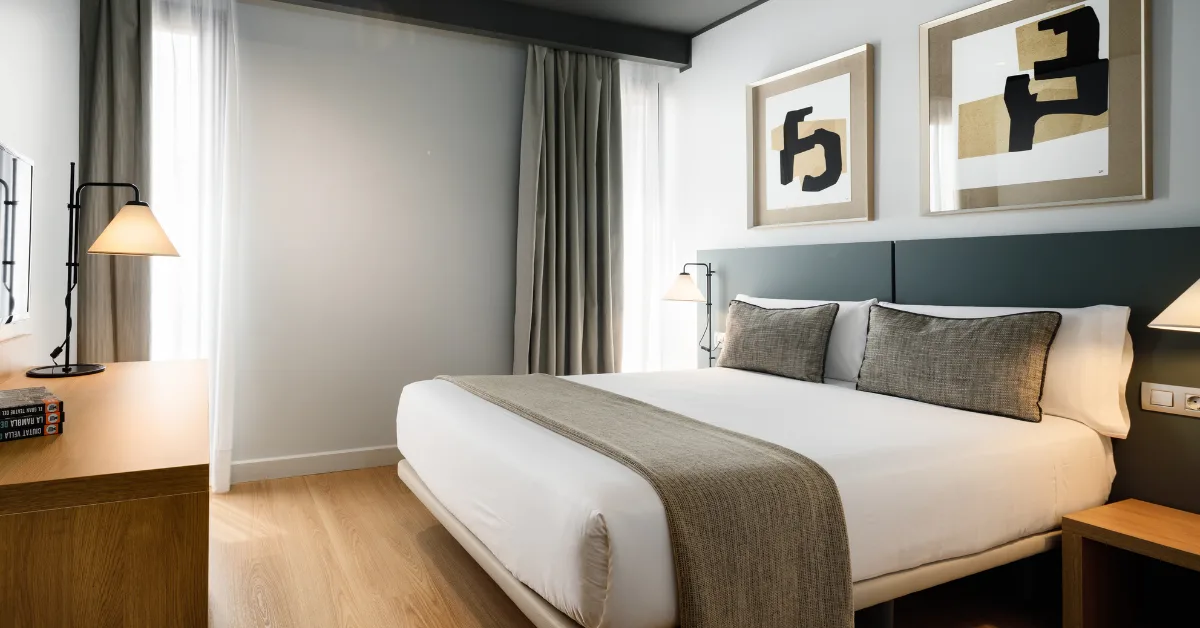
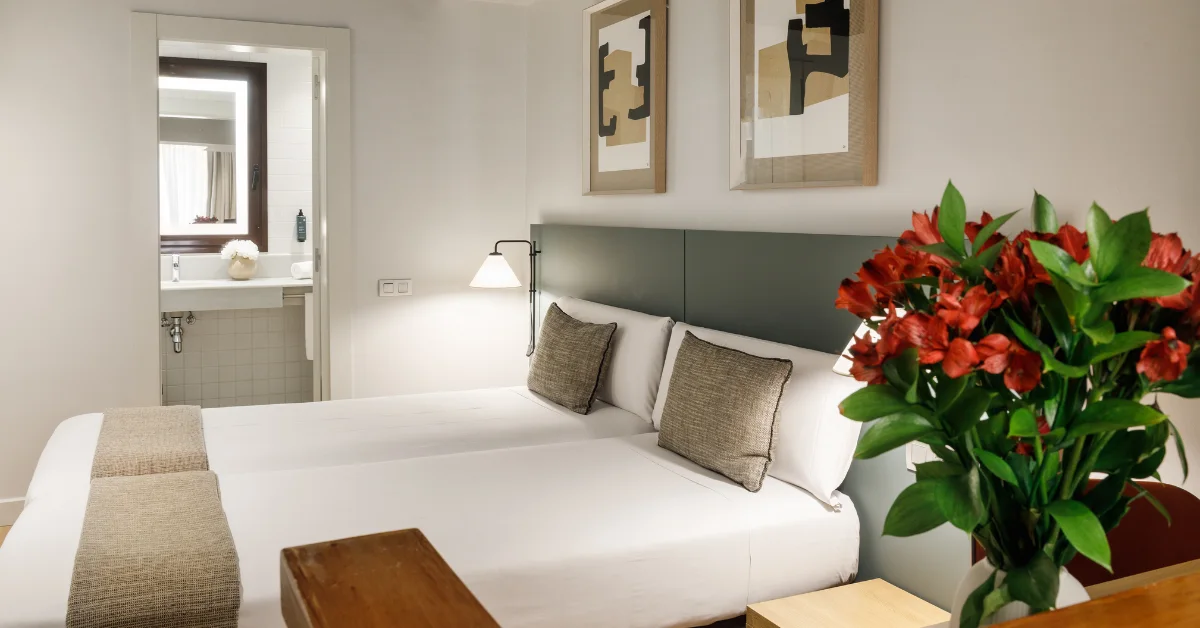
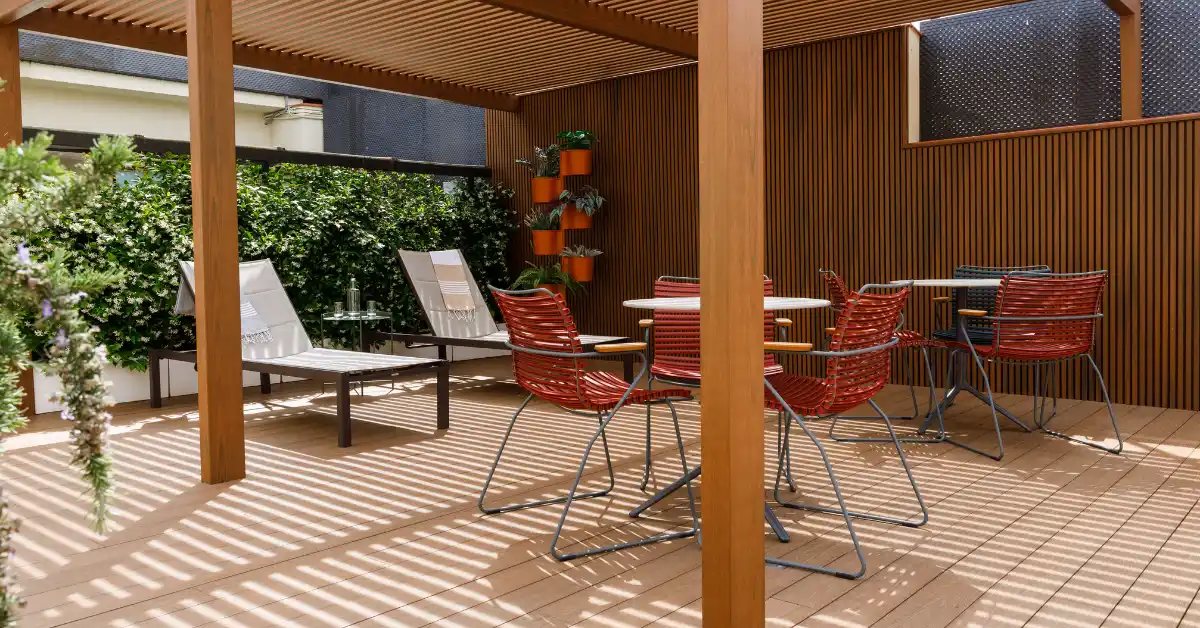
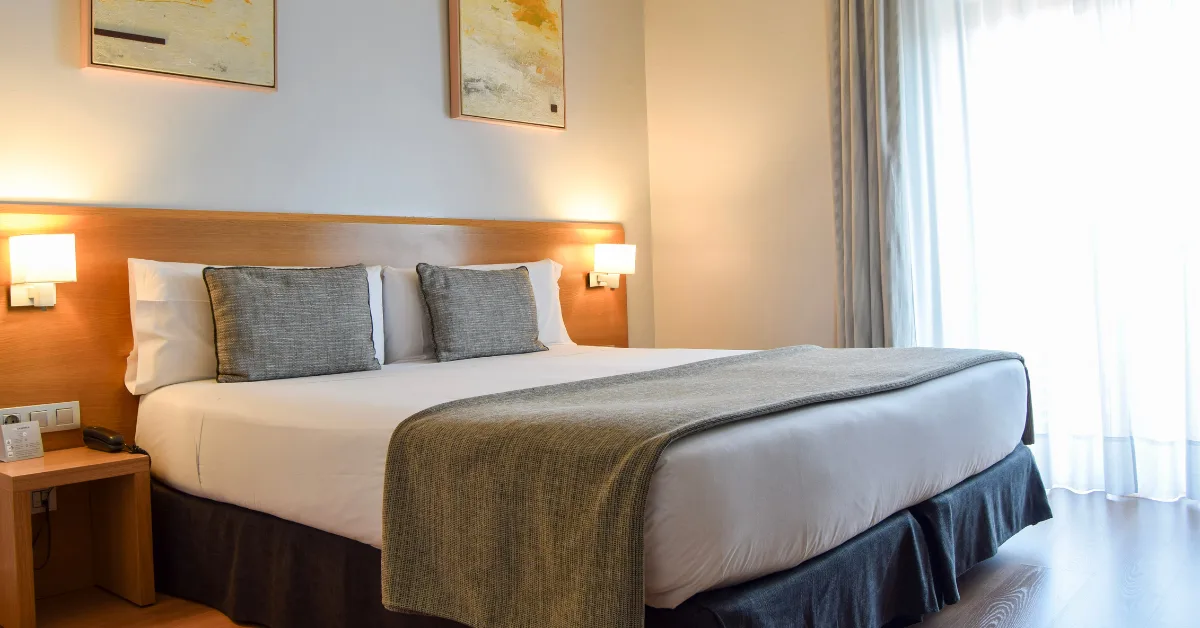
The Monastery of Pedralbes is in the upper part of the city, but from Hotel Arc La Rambla (La Rambla 19-21, next to Drassanes metro, L3) getting there is easy: the FGC from Plaça Catalunya drops you near the monastery in just 15 minutes. And when you come back, you’ll have the Gothic Quarter, the harbour and La Boqueria waiting around the corner.
💡 Book on our website with the code ARCBLOG and enjoy a special perk as a blog reader.
Monastery of Pedralbes — frequently asked questions
How much does it cost to enter the Monastery of Pedralbes?
General admission is about €5 and the reduced rate (over-65s, pensioners, unemployed and students under 30) about €3.50-3.70. Under-16s enter free. On the first Sunday of each month and every Sunday from 3 pm, entry is free for everyone. It’s worth checking the fares on the official website.
What are the Monastery of Pedralbes opening hours?
In summer (April-September): Tuesday to Friday 10:00-17:00, Saturdays 10:00-19:00 and Sundays 10:00-20:00. In winter (October-March): Tuesday to Friday 10:00-14:00, Saturdays and Sundays 10:00-17:00. Closed on Mondays and the listed public holidays.
How do you get to the Monastery of Pedralbes?
The most convenient option is the FGC to the Reina Elisenda stop (L6/L12 from Plaça Catalunya), 5 minutes’ walk away. You can also go by metro (L3, Maria Cristina or Palau Reial, ~25 min walk) or by bus (lines 22, 63, 68, 75, 78, H4, V5).
Is the Monastery of Pedralbes open on Mondays?
No. It’s closed every Monday, as well as on 1 January, Good Friday, 1 May, 24 June and 25 December.
What are the highlights of the Monastery of Pedralbes?
The three-storey Gothic cloister, one of the largest and best-preserved in Europe; the Chapel of Sant Miquel with the frescoes by Ferrer Bassa (1346); the double tomb of Queen Elisenda in the church; and the museum’s permanent collection, with metalwork, ceramics and manuscripts.


