


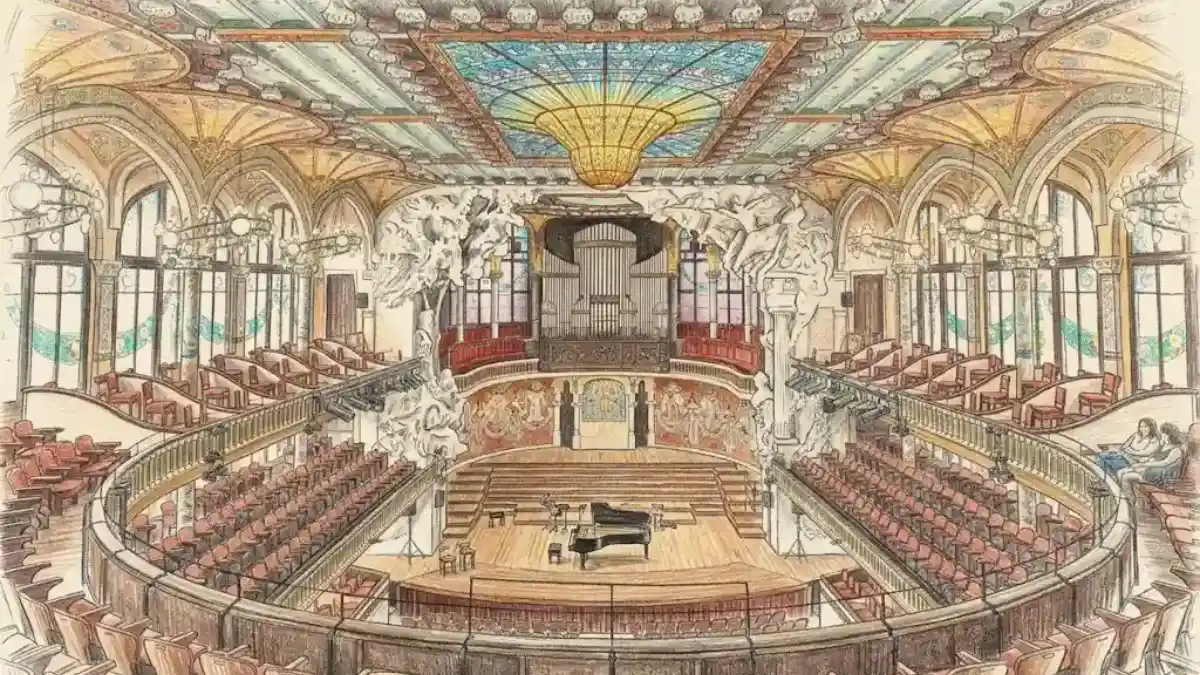
The Palau de la Música Catalana, the only modernista concert hall declared a UNESCO World Heritage Site, can be visited daily from 9:00 a.m. to 3:30 p.m. The guided tour costs €24 (general) and lasts about 50 minutes; there are reduced fares and cheaper self-guided or audio-guide options. Children under 10 enter free. The highlight is the Concert Hall, with its great stained-glass skylight. You can also experience it by attending a concert. Book online in advance.
You may also be interested in

What is the Palau de la Música Catalana?
The Palau de la Música Catalana is the most emblematic building by architect Lluís Domènech i Montaner, built between 1905 and 1908 as the home of the Orfeó Català choir. It is one of the great jewels of Catalan modernisme and the only concert hall declared a UNESCO World Heritage Site. Inside, all the applied arts —sculpture, mosaic, stained glass and ironwork— come together in what many describe as a true “music box” of light and colour. It also remains a working auditorium with an exceptional musical programme.
What will you see inside?


- The Concert Hall: the heart of the Palau and its most spectacular space. Its great inverted stained-glass skylight lets in natural light, something unique in a concert hall.
- The stage and its muses: the semicircle of female figures in mosaic and relief that seem to accompany the musicians.
- The foyer and mosaic columns: a luminous lobby with columns clad in floral trencadís.
- The façade: with its mosaics, sculptures and the group dedicated to Catalan popular song.
- The Lluís Millet Hall: with its colonnaded balcony onto the street, accessible depending on the type of visit.
What are the Palau de la Música’s opening hours?
The usual visiting hours are 9:00 a.m. to 3:30 p.m. every day. On certain dates the visits extend until 5:30 or 6:00 p.m. Bear in mind that the Palau is a working auditorium, so the availability of halls and time slots may vary depending on the concert programme. Always check the exact slot when booking.
When is the best time to visit?
For the sightseeing visit, early in the morning tends to be quietest and offers the best light on the skylight. But to experience the Palau at its essence, nothing beats attending a concert: hearing music beneath that stained-glass dome is hard to match. The programme ranges from classical and choral music to flamenco and contemporary acts; check it on the official website.
How much does it cost to enter the Palau de la Música in 2026?
The general guided tour costs €24 and includes a roughly 50-minute tour with a guide. There are also a self-guided visit (with an explanatory leaflet) and an audio-guide visit, which are cheaper options. Buying online avoids the box-office queue and, on top of that, a €2 surcharge per ticket applies at the box office. Below are the official guided-tour fares.
| Guided tour | Price (2026) |
|---|---|
| General admission | €24 |
| Over-65s | €20 |
| Under-35s | €20 |
| Children under 10 | Free |
| Catalonia residents | €14 |
| Disability (>65%) | Free |
| Disability (<65%) | €12 |
| Family pack | €72 |
Official guided-tour fares. The self-guided and audio-guide visits are cheaper. Check the exact price when booking.
How to get to the Palau de la Música
The Palau is at Carrer del Palau de la Música 4-6, in the La Ribera / El Born district, about a 5-minute walk from Plaça Catalunya. The nearest metro stop is Urquinaona (lines L1 and L4). Several bus lines stop nearby too, such as 47, V15 and V17. As it is tucked away among narrow streets, it’s worth locating the entrance carefully (access via Plaça del Palau is recommended).
Hotel Arc La Rambla: your base for Barcelona’s modernisme
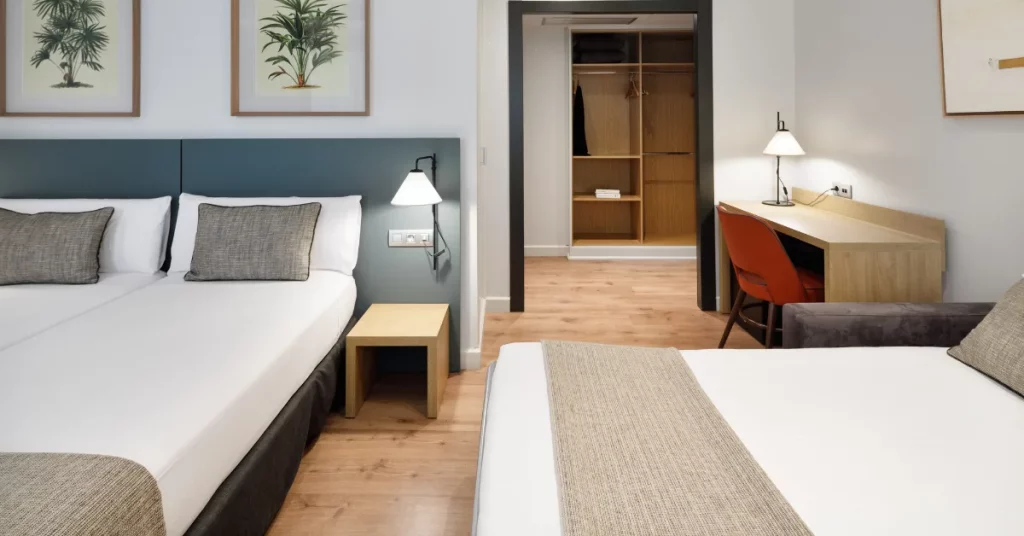
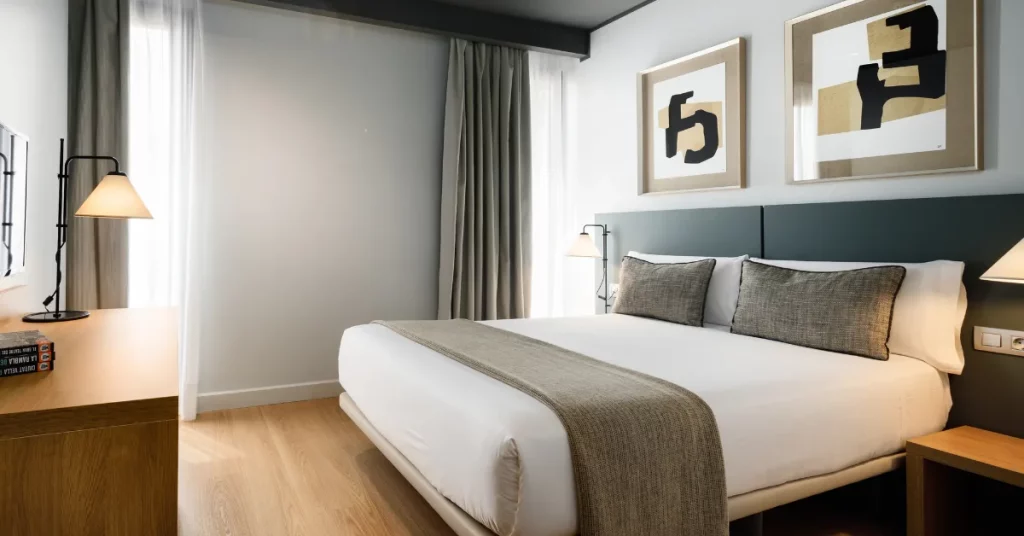
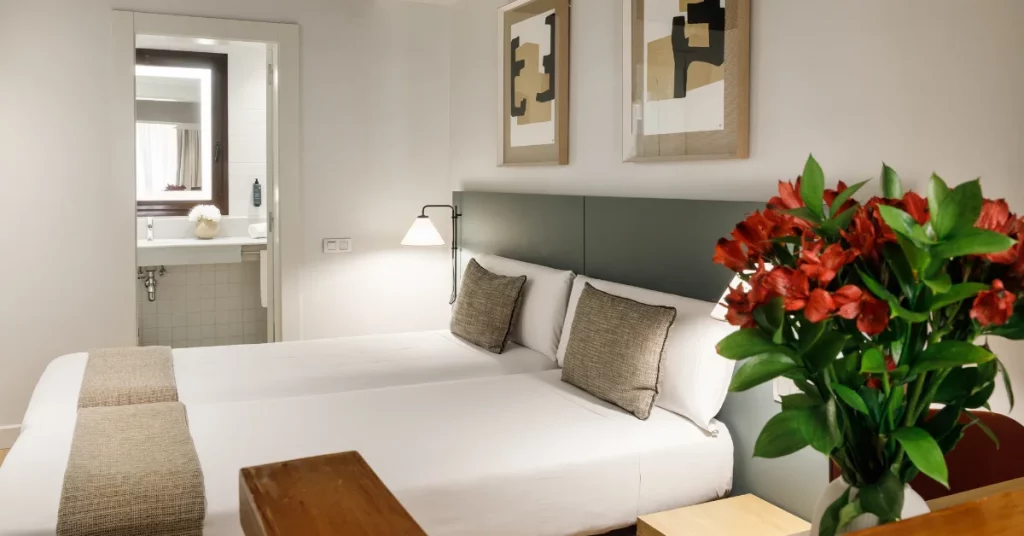
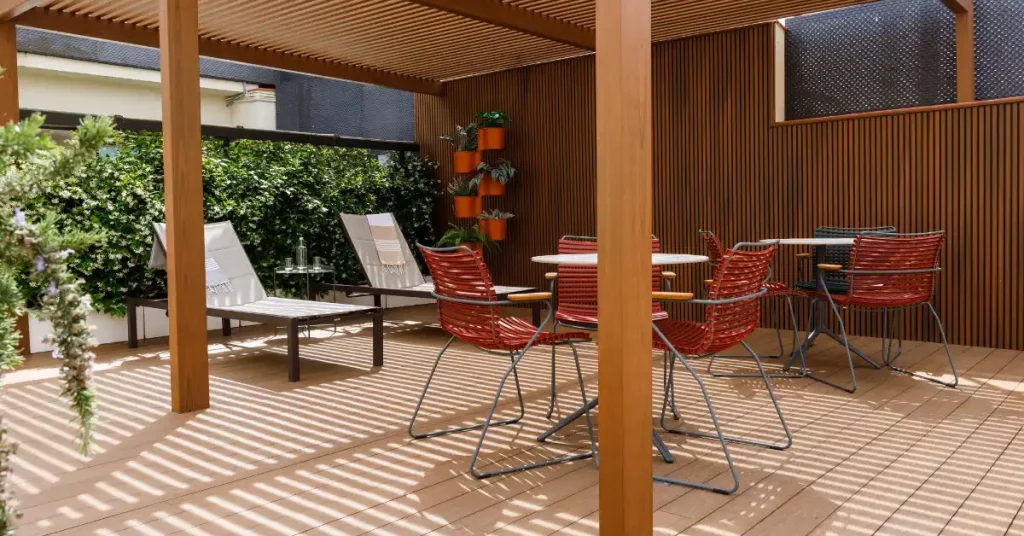
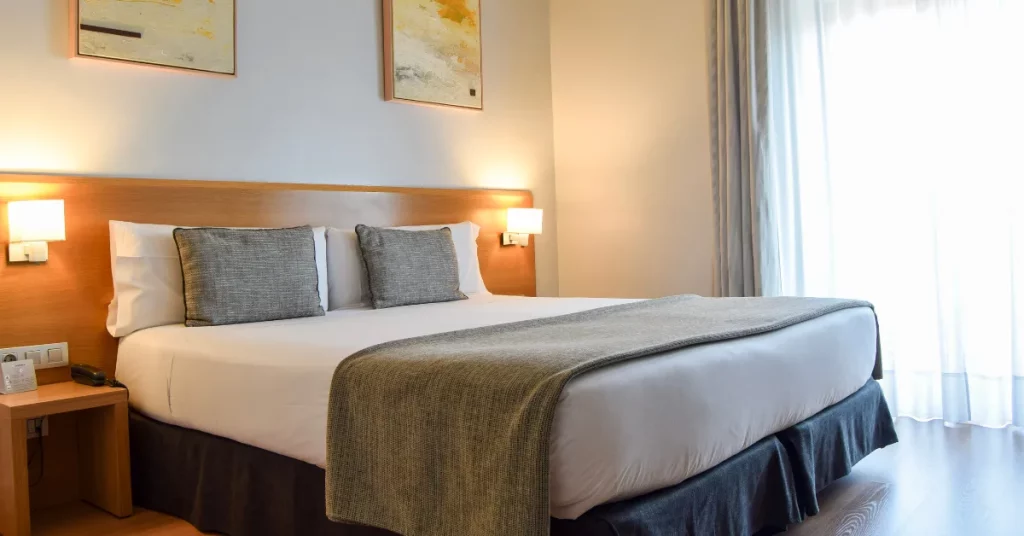
Staying in central Barcelona and want everything within easy reach? Hotel Arc La Rambla is located at La Rambla 19–21, just 12 minutes’ walk from the Palau de la Música Catalana and steps from the Gothic Quarter, the Boqueria Market and the waterfront. The Drassanes metro stop (L3) is 100 metres from the door, connecting you to the whole city in minutes. If you are planning a visit to the Palau and want a central, comfortable base with Barcelona’s historic heart on your doorstep, book using code ARCBLOG for a special rate.
Frequently asked questions
How long does a visit to the Palau de la Música take? Both the guided tour and the audio guide last approximately 50–55 minutes. If you want to browse the shop and stop for a coffee in the Foyer, allow just over an hour in total.
Do I need to book in advance? Yes, especially during high season (Easter, July and August). The earliest time slots sell out quickly. Booking online also saves you the €2 reprint surcharge charged at the physical ticket office.
Can children enter for free? Yes. Children under 10 enter free of charge on both the audio guide and guided tour visits.
Is photography allowed inside? Yes, photography for personal use is permitted during the visit. Flash and tripods are generally restricted — confirm the current rules on the official website or at the ticket office when you arrive.
What is the difference between the audio guide and the guided tour? The audio guide (€18) gives you complete flexibility and is available in 7 languages; you set the pace. The guided tour (€20) includes a live guide in 5 languages, provides richer historical context and lets you ask questions in real time. Both are excellent for a first visit — the choice comes down to whether you prefer freedom or depth.


