The five best things to do in Barcelona are: visit the Sagrada Família, explore Park Güell and Gaudí’s modernist trail, wander the Gothic Quarter and El Born, enjoy the Mediterranean at Barceloneta beach, and watch the sunset from Montjuïc. Together, these five experiences capture everything that makes Barcelona unique — Gaudí’s architecture, medieval history, beach life, Catalan food, and panoramic views — and they’re the perfect starting point for any first-time visitor.
This guide breaks down each one with 2026 prices, opening hours, and the local tips most travel blogs don’t tell you. There’s also a special reason to visit this year: 2026 marks the centenary of Gaudí’s death and the long-awaited completion of the Sagrada Família.
1. Visit the Sagrada Família (and witness history in 2026)

The Sagrada Família is Barcelona’s number-one must-see. Antoni Gaudí’s masterpiece, a UNESCO World Heritage Site, has been under construction since 1882 — and 2026 is the year it’s finally scheduled to be completed, exactly 100 years after the architect’s death. Visiting in 2026 means seeing the basilica at the most historic moment of its existence.
Practical info:
- Address: Carrer de Mallorca, 401 (Eixample district)
- Opening hours: April–September, Monday to Friday 9:00 am–8:00 pm; shorter hours in winter (closes at 6:00 pm)
- Tickets (2026): Basic entry with audio guide €26; with tower access €36; official guided tour €30; free for children under 11
- Time needed: 1.5 to 2 hours
- Closest metro: Sagrada Família (L2, L5)
Local tip: book the first or last time slot of the day to avoid crowds. Morning light through the Nativity façade fills the basilica in golden tones; late afternoon turns the Passion façade fiery red. Always book online with a timed slot — on-site tickets routinely sell out, and arriving without one wastes hours of your trip.
Pickpocket alert: the metro stop and the surrounding streets are a hotspot. Keep valuables in zipped front pockets.
2. Explore Park Güell and Gaudí’s modernist trail
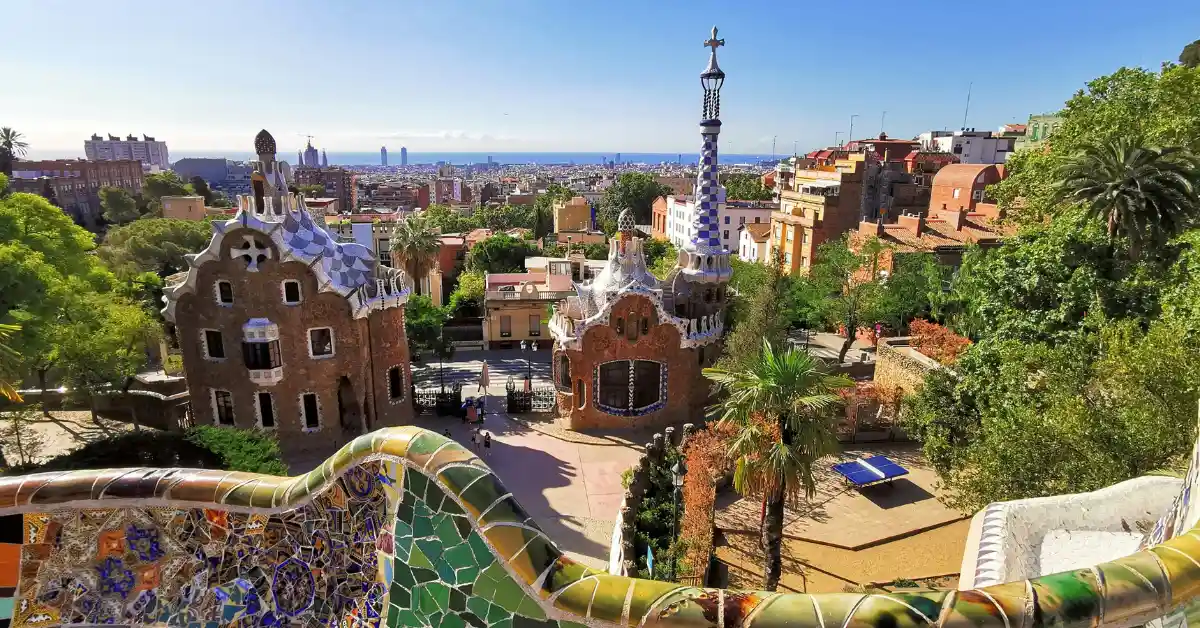
Park Güell is Gaudí’s other major work in the city and home to the iconic mosaic “serpentine bench” — one of Barcelona’s most photographed spots. Combined with Casa Batlló and La Pedrera (Casa Milà) on Passeig de Gràcia, it forms the modernist trio no first-time visitor should skip.
Practical info:
- Address: Carrer d’Olot, s/n (Gràcia district)
- Opening hours: Daily, approximately 9:30 am–7:30 pm depending on season
- Tickets: Monumental Zone €18 for adults; the rest of the park is free
- Time needed: 1.5 hours for the Monumental Zone
One-day modernist itinerary: start at Casa Batlló (Passeig de Gràcia 43, €35) in the morning, walk 10 minutes north to La Pedrera (Passeig de Gràcia 92, €28), have lunch in the Eixample, then take the metro or a 20-minute taxi to Park Güell for late afternoon — the light is best then and the crowds thin out.
Hidden gem most tourists miss: the Recinte Modernista de Sant Pau, designed by Lluís Domènech i Montaner, is also a UNESCO site and arguably the most beautiful Art Nouveau complex in Europe. It’s a 12-minute walk from the Sagrada Família, costs around €16, and you’ll often have whole pavilions to yourself. Locals consistently rank it above many Gaudí sites.
3. Wander the Gothic Quarter and El Born
Walking aimlessly through the Barri Gòtic (Gothic Quarter) is one of the best free things to do in Barcelona. Its medieval alleyways, hidden squares, and the towering Barcelona Cathedral make it one of Europe’s best-preserved old towns. Right next door, separated by Via Laietana, is El Born: more bohemian, packed with design boutiques, vermouth bars, and the breathtaking basilica of Santa Maria del Mar.
Suggested 2–3 hour walking route:
- Plaça Nova → Barcelona Cathedral
- Plaça Sant Felip Neri (a quiet square still bearing Spanish Civil War shrapnel scars)
- Plaça del Rei
- Carrer Argenteria → Santa Maria del Mar
- Passeig del Born → El Born Cultural Centre (housed in a stunning 19th-century market)
Local tip: avoid La Rambla at all costs except very early morning. It’s overrun with tourists, overpriced, and one of the highest pickpocket zones in Europe. For real local atmosphere and great food, go straight to El Born or to the streets behind the Cathedral.
Where to eat: skip the menus with photos. Try Bar del Pla (modern tapas), Bormuth (classic Catalan), or Cal Pep (counter seafood) — all in El Born.
4. Enjoy the Mediterranean at Barceloneta
Barcelona is one of the few major European capitals with a real city beach. Barceloneta, a former 18th-century fishermen’s neighbourhood, still keeps its tight grid of narrow streets, family-run seafood restaurants, and a 5 km waterfront promenade that connects to the Olympic Port and beyond.
Half-day plan:
- Morning: stroll along Port Vell and the marina; stop at the Barceloneta Market for local atmosphere
- Lunch: order paella or arròs negre (squid-ink rice) at a seaside terrace — expect €25–35 per person at decent spots
- Afternoon: swim, sunbathe, or rent a bike (€15–20/day) and ride the full 5 km to Forum Beach
Local tip: Barceloneta beach itself is packed and noisy in summer. Walk 15 minutes north to Bogatell or Mar Bella beaches — same Mediterranean, half the people, much cleaner sand. For authentic tapas, head up to Carrer Baluard or Carrer Sant Carles, where locals actually eat.
Budget note: lunch on the seafront is touristy and costly. Eating two streets inland easily cuts your bill in half.
5. Watch the sunset from Montjuïc
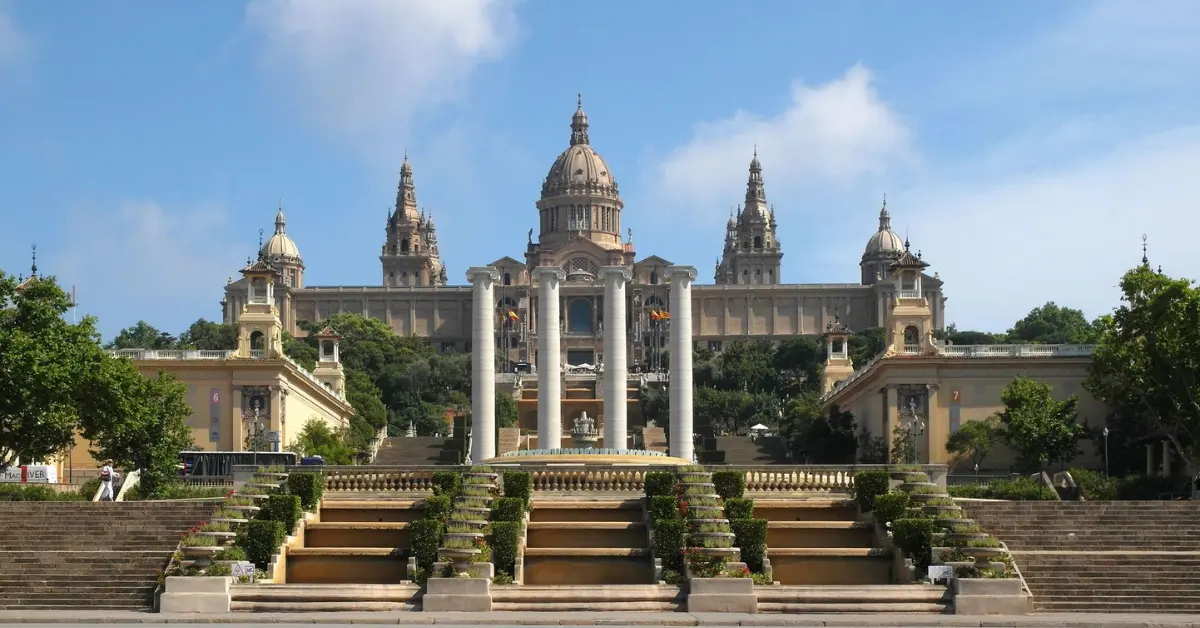
Montjuïc is Barcelona’s natural balcony — a hill packed with attractions and the perfect way to end your day. It includes Montjuïc Castle, the National Art Museum of Catalonia (MNAC), the Joan Miró Foundation, the city’s most beautiful gardens, and the famous Magic Fountain, which puts on a free music-and-light show on Friday and Saturday evenings.
How to get up there:
- Port Cable Car from Barceloneta — spectacular views, around €16 round trip
- Montjuïc Funicular from Paral·lel metro — included in your standard transport ticket (the cheapest option)
- On foot from Plaça d’Espanya, climbing the MNAC staircase
Recommended evening plan: take the funicular up around 5:00 pm, visit Montjuïc Castle (€12, 360º views of city and sea), walk down through the Mossèn Costa i Llobera Gardens — ranked among the world’s ten best botanical gardens and almost always empty — and finish in front of the Magic Fountain for the night show.
Hidden gem: the Bunkers del Carmel, on the opposite side of the city, offer the best free panoramic view of Barcelona. It’s a steep climb, but the 360º view at sunset is unforgettable. Bring water and arrive 30 minutes before sunset for the best spot.
How many days do you need to see Barcelona?
Three to four full days is ideal. With three days, you can comfortably cover all five experiences in this guide:
- Day 1: Sagrada Família + Park Güell + Casa Batlló (full Gaudí day)
- Day 2: Gothic Quarter + El Born + Barceloneta lunch and beach
- Day 3: Montjuïc + Magic Fountain + an optional day trip to Sitges, Montserrat, or Girona
If you only have two days, prioritise the Sagrada Família, Park Güell, the Gothic Quarter, and Montjuïc at sunset.
Frequently asked questions
Do I need to book attractions in advance in Barcelona? Yes, especially for the Sagrada Família, Park Güell, and Casa Batlló. In high season (April to October), these can sell out several days ahead. Book online at least one week in advance for guaranteed entry and the best price.
What’s the best time of year to visit Barcelona? May, June, and September offer the perfect balance — warm weather (20–26 °C / 68–79 °F), a swimmable Mediterranean, and far smaller crowds than July and August. October is also excellent for cultural visits and milder temperatures.
Is Barcelona expensive? Barcelona is Spain’s priciest city alongside Madrid, but still far more affordable than London, Paris, or Rome. Expect a daily budget of around €80–120 per person for mid-range travel: a menú del día lunch costs €13–18, a beer €2.50–3.50, and a 10-trip transport card (T-casual) is €12.55.
Is Barcelona safe? Barcelona is generally safe in terms of violent crime, but pickpocketing is a serious problem — among the worst in Europe. La Rambla, the metro, and crowded tourist sites are the main hotspots. Keep your phone, wallet, and passport in zipped front pockets and never leave belongings unattended on the beach or at café tables.
Can I visit Barcelona without a car? Absolutely. The metro, buses, and city bikes (Bicing) cover everything. A car is more of a hassle than a help — parking is expensive and most central streets are restricted.

Where to stay to make the most of these five experiences
Location matters more than you’d think — choosing the wrong neighbourhood can easily cost you an extra hour of commuting per day. The best-connected areas for this five-stop itinerary are:
- Eixample — central, equidistant from the Sagrada Família, Park Güell, and the Gothic Quarter; the best all-rounder for first-time visitors.
- Ciutat Vella / Gothic Quarter — ideal if you want to wake up surrounded by medieval streets and walk everywhere.
- Barceloneta — perfect for combining city sightseeing with beach time.
Staying in a well-located hotel can give you back up to one extra hour every day to actually enjoy Barcelona instead of riding the metro.