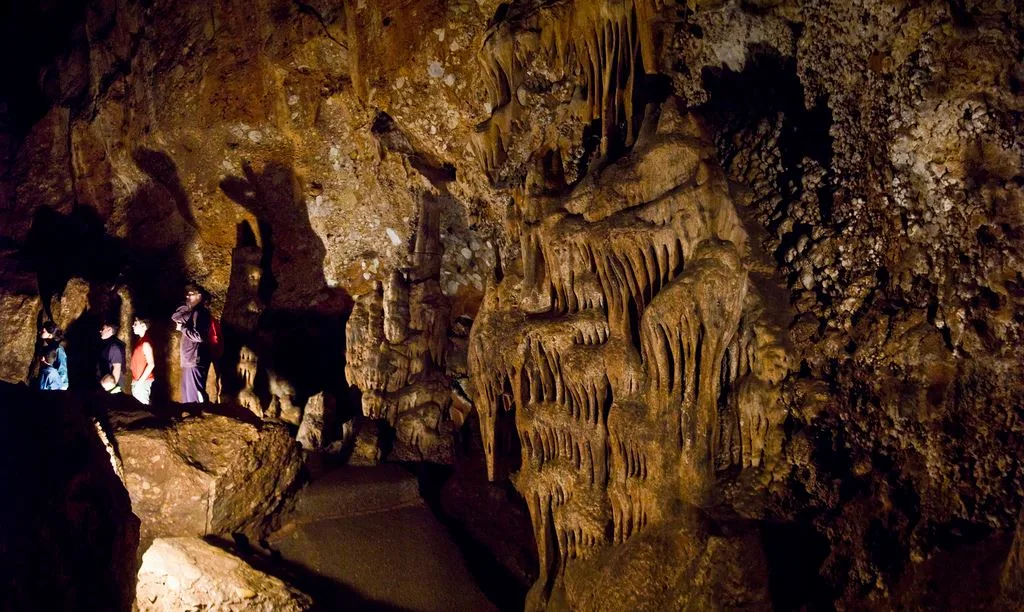
Nestled at the foot of the Montserrat massif, the Salnitre Caves hold much more than impressive rock formations. Beneath the surface lies a history spanning thousands of years. From early human settlements to inspiring none other than Gaudí himself, these caves are one of Catalonia’s most fascinating — and still little-known — treasures.
Geology, legend, and natural wonder
The caves formed over 36 million years ago from water erosion on Montserrat’s limestone rocks. Their name comes from “salnitre” (saltpeter), a nitrate once extracted here to make gunpowder. Beyond their spectacular size, the natural passages lead to chambers with evocative names like the Cathedral, the Mouth of Hell, and the Elephant Room.
Witnesses of history: from Prehistory to the 20th century
Prehistory: the first home
The caves were already inhabited in the Neolithic period, more than 5,000 years ago. Archaeological finds — tools, pottery, and bones — show they served as a home and refuge for prehistoric communities. Their sheltered location and water abundance made them an ideal settlement spot.
Middle Ages: the monks’ white gold
In the Middle Ages, the monks of the Montserrat Monastery found an unexpected treasure inside the caves: saltpeter, extracted from sediments and bat droppings, was an essential ingredient for making gunpowder. This natural resource became a source of income and a key asset in medieval military defense. Extraction and storage works were organized, and even working areas were set up inside the caves.
19th century: inspiration for modernisme
It was in this period that Antoni Gaudí visited the Salnitre Caves and was struck by the organic shapes of the chambers. The undulating columns, natural vaults, and mineral textures inspired elements of the Sagrada Família and other Modernist works. For Gaudí, nature was living architecture — an endless source of wisdom — and these caves became his underground laboratory.
Civil War: a refuge in dark times
During the Spanish Civil War (1936–1939), the caves served as a refuge for the civilian population, protecting them from the bombings that threatened the area. Their depth and internal structure provided a naturally secure hideout. Tales of smuggling and hidden weapons also circulated, though some became part of the rich local legends surrounding this site..
What’s the visit like?
The experience is guided and lasts approximately one hour. It starts with an audiovisual introduction that sets the scene:
- Route: over 500 steps inside and 244 steps to reach the entrance from outside.
- Main chambers: the Cathedral, the Elephant Room, the Cambril Cave, and the Mouth of Hell.
- Conditions: constant temperature of 14 °C and humidity near 98%.
- Recommendations: warm clothing (even in summer), sports shoes, and water.
The caves are open all year round, but we recommend booking in advance during high season to secure your spot, as demand tends to be higher.
How to get to the Salnitre Caves from Barcelona?
Planning a visit to the Salnitre Caves from Hotel Arc La Rambla is simple and convenient. There are several options depending on your preferences:
By car (recommended)
- Distance: approx. 45 km.
- Duration: between 45 and 55 minutes.
- Recommended route: Take the B-10 (Ronda Litoral) out of Barcelona toward L’Hospitalet. Continue on the A-2 until the Collbató exit. Once there, follow signs to the Salnitre Caves parking area, where a marked trail leads to the caves.
By public transport
Perfect if you prefer a more sustainable option or don’t have a car.
- Train + taxi or walk
- From Plaça Espanya, take the R5 line of Ferrocarrils de la Generalitat de Catalunya (FGC) to Monistrol de Montserrat or Montserrat-Aeri.
- From there, you can take a local taxi to Collbató (about 15 minutes) or arrange to walk or catch a bus if service is available (check in advance).
- From Plaça Espanya, take the R5 line of Ferrocarrils de la Generalitat de Catalunya (FGC) to Monistrol de Montserrat or Montserrat-Aeri.
- Bus (optional, with connections)
- Some regional bus lines (like Hife or MonBus) reach Olesa de Montserrat or Esparreguera. From there, you’ll need to continue by taxi or on foot.
Good to know:
- The final approach requires a 10–15-minute uphill walk from the parking area to the cave entrance.
- Wear comfortable shoes, bring a hat, and carry water — especially during warmer months.
- At the Hotel Arc La Rambla reception, we’ll be happy to assist you with maps, bookings, and tailored recommendations.
A perfect getaway from Hotel Arc La Rambla
Located on Barcelona’s Rambla, Hotel Arc La Rambla lets you enjoy the heart of the city while planning cultural getaways like this one. Just 45 minutes by car, the Salnitre Caves are a great option to combine nature, history, and architecture in a single day.
Book your stay and dive into history
Use the promo code ARCBLOG when booking at hotelarclarambla.com and enjoy an exclusive discount.
Follow us on Instagram @arclarambla and Facebook for more unique getaway ideas.