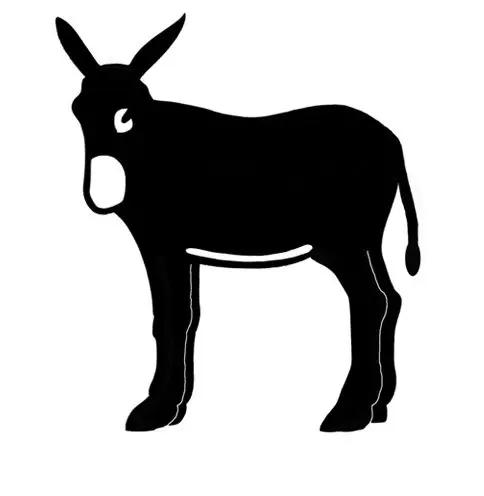
Have you ever wondered what the silhouette of a donkey represents when you see it on cars, stickers, or even walls around Barcelona?
The Catalan donkey, known locally as Ase Català or Ruc Català, is a native breed from Catalonia, particularly from the province of Girona. Today, it is considered an endangered breed, with only a few hundred specimens remaining, mainly in Catalonia and parts of southern France.
Historically, the Catalan donkey played an important role in rural life. This sturdy animal, with its dark coat and distinctive long ears, was widely used in agriculture and transportation. Known for its strength and endurance, it helped farmers carry goods, work the land, and travel between villages.
However, during the 20th century the introduction of modern agricultural machinery gradually replaced working animals. As tractors and other machines became common in rural areas, the Catalan donkey slowly disappeared from everyday farm life, and its population declined dramatically.
From Rural Animal to Cultural Symbol
For many years, the Catalan donkey received little attention. That changed unexpectedly in 2004, when two young designers from the town of Banyoles, Jaume Sala and Àlex Ferreiro, created a sticker featuring the silhouette of the animal.
Their idea was partly humorous and partly symbolic. The goal was to draw attention to the endangered breed while also creating a local symbol that people could proudly display on their cars. What started as a simple design quickly became popular throughout Catalonia.
Within a short time, the donkey silhouette began appearing everywhere: on cars, T-shirts, stickers, souvenirs, and even shop windows.
A Symbol with Meaning
Over time, the Catalan donkey evolved into more than just a fun design. For many people in Catalonia, it became a symbol of local identity and culture.
In some cases, the donkey is also used as a playful contrast to the famous Osborne bull, a symbol often associated with Spain. While the bull represents strength and power, the donkey is seen as representing perseverance, resilience, and humility—qualities many people associate with the Catalan character.
At the same time, the symbol has helped raise awareness about the importance of protecting this endangered breed. Environmental groups and animal conservation projects have also embraced the image as a way to highlight the need to preserve the species.
Keeping the Tradition Alive
Today, the Catalan donkey continues to attract attention both as a cultural symbol and as a real animal worth protecting. Conservation programs are working to maintain and increase its population.
In some inland towns in Catalonia, visitors can even see these animals participating in rural tourism activities, helping people reconnect with traditional ways of life and local heritage.
So next time you spot the famous donkey silhouette in Barcelona—whether on a car, a souvenir, or perhaps even the real animal—you’ll know the story behind this unique symbol of Catalan culture.
And if you do see one during your stay, don’t forget to share it with us! 😉